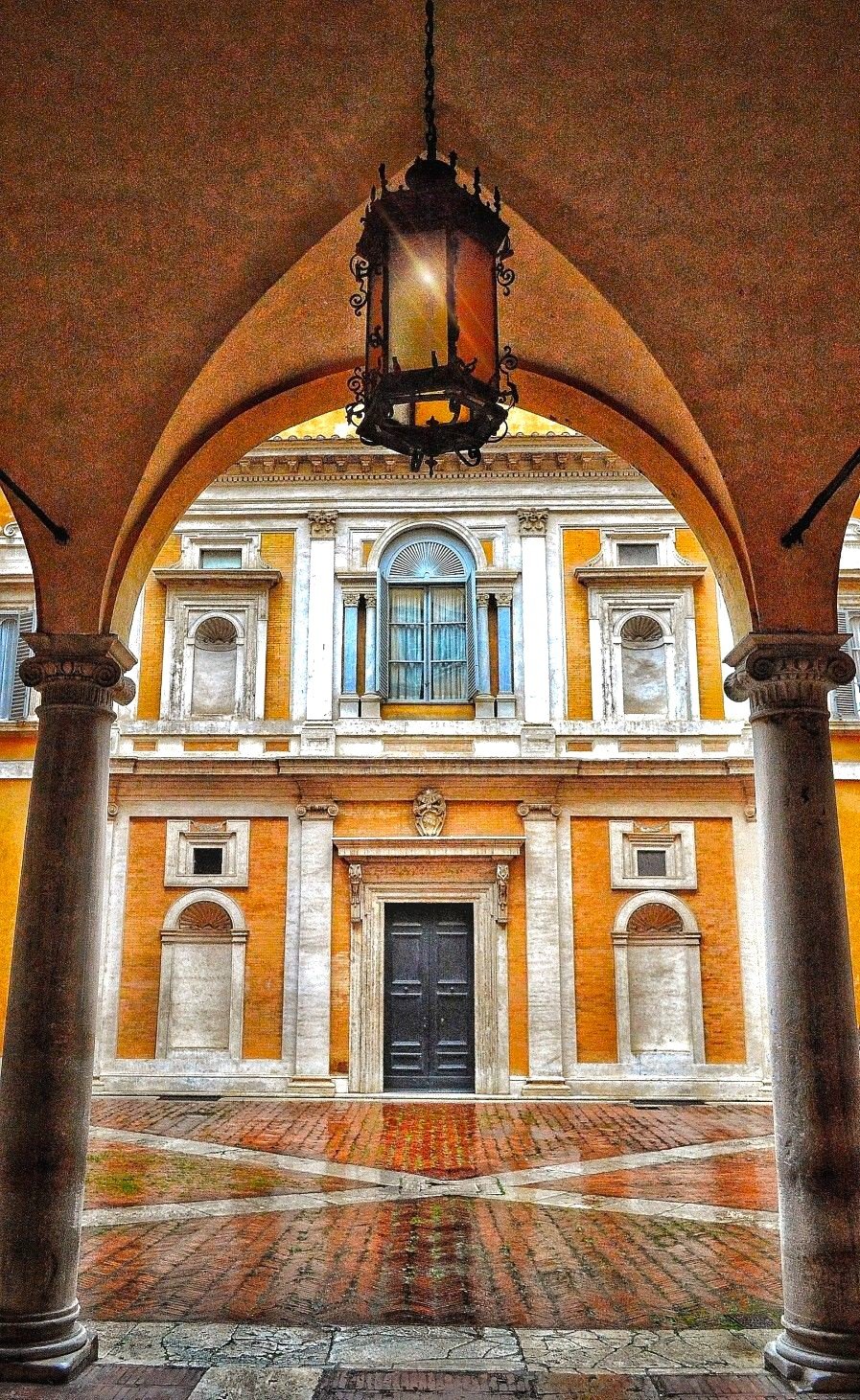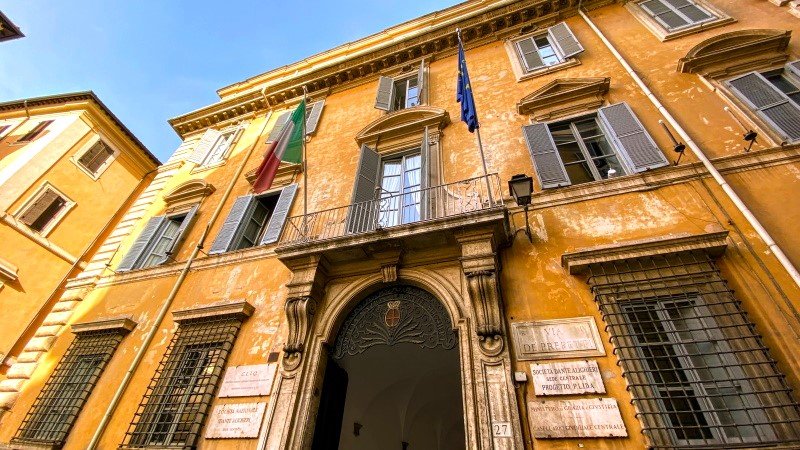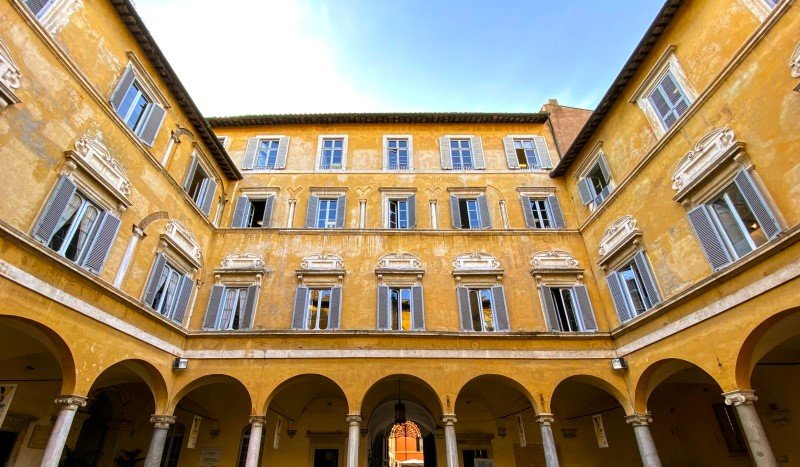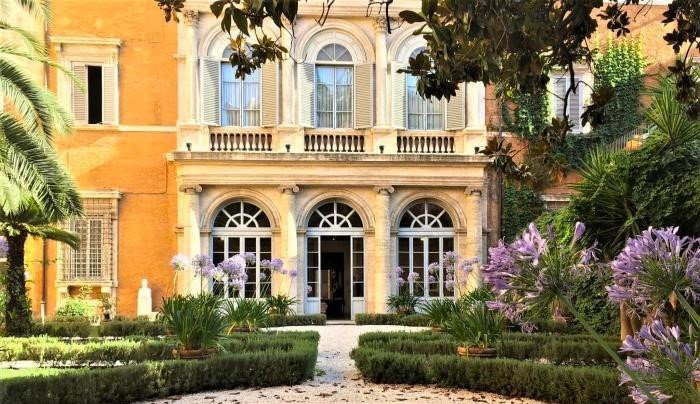
Palazzo Firenze is one of the places in Rome with the richest history: it was a papal residence, a noble residence, an Embassy, a Ministry and a circle of intellectuals.
It was built in the first half of the 16th century at the behest of Jacopo Cardelli, secretary to Pope Leo X, who in 1516 purchased a plot of land in the Rione Campo Marzio to build a residence there. In 1551, the building was acquired by Pope Julius III Del Monte, who carried out major renovations and embellishments, commissioning the Florentine architect Bartolomeo Ammannati to carry out the work and entrusting the Bolognese painter Prospero Fontana with the pictorial decorations. In 1561, the palace passed to the Grand Duke of Tuscany Cosimo I de’ Medici, who entrusted the renovation of the building to Baldovino del Monte, possibly based on a design by Vignola, while the painter Jacopo Zucchi (1540-90), a pupil of Vasari, took care of the decorations. The palace thus became the Roman residence of the Medici and the seat of the Embassy of the Grand Duchy of Tuscany; on the ground floor was the post office for Tuscany and Emilia, and the post coach to Florence departed from the square in front. Under the Medici, the palace was one of the main landmarks of Rome’s high society life: Cardinal Ferdinando I de’ Medici organised sumptuous parties and grandiose banquets. In 1737 it was the turn of the Grand Dukes of Lorraine, who took possession of the palace until, in 1872, it became the seat of the Ministry of Justice of the Kingdom of Italy.
Since 1926, it has been the headquarters of the Dante Alighieri Society, founded in 1889 by a circle of intellectuals led by Giosue Carducci and whose objective is the ‘promotion of culture and art, the protection and dissemination of Italian language and culture in the world, reviving the ties of compatriots abroad with their mother country and nourishing among foreigners a love for Italian culture, civilisation and language’.
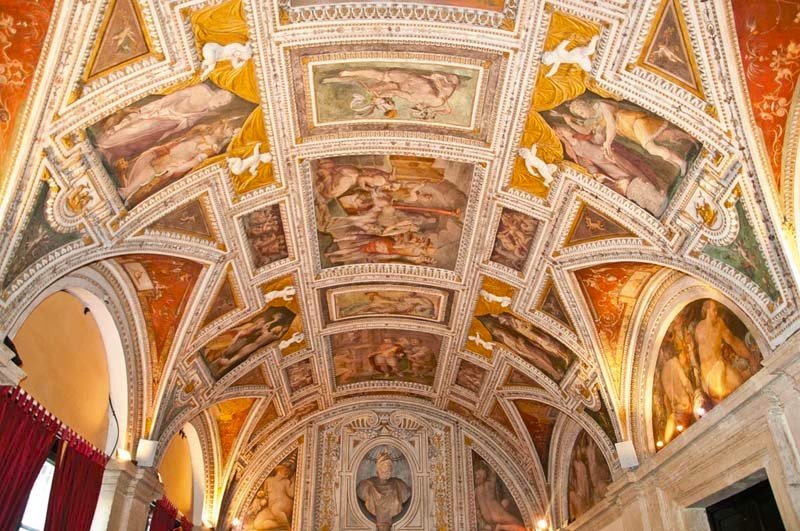
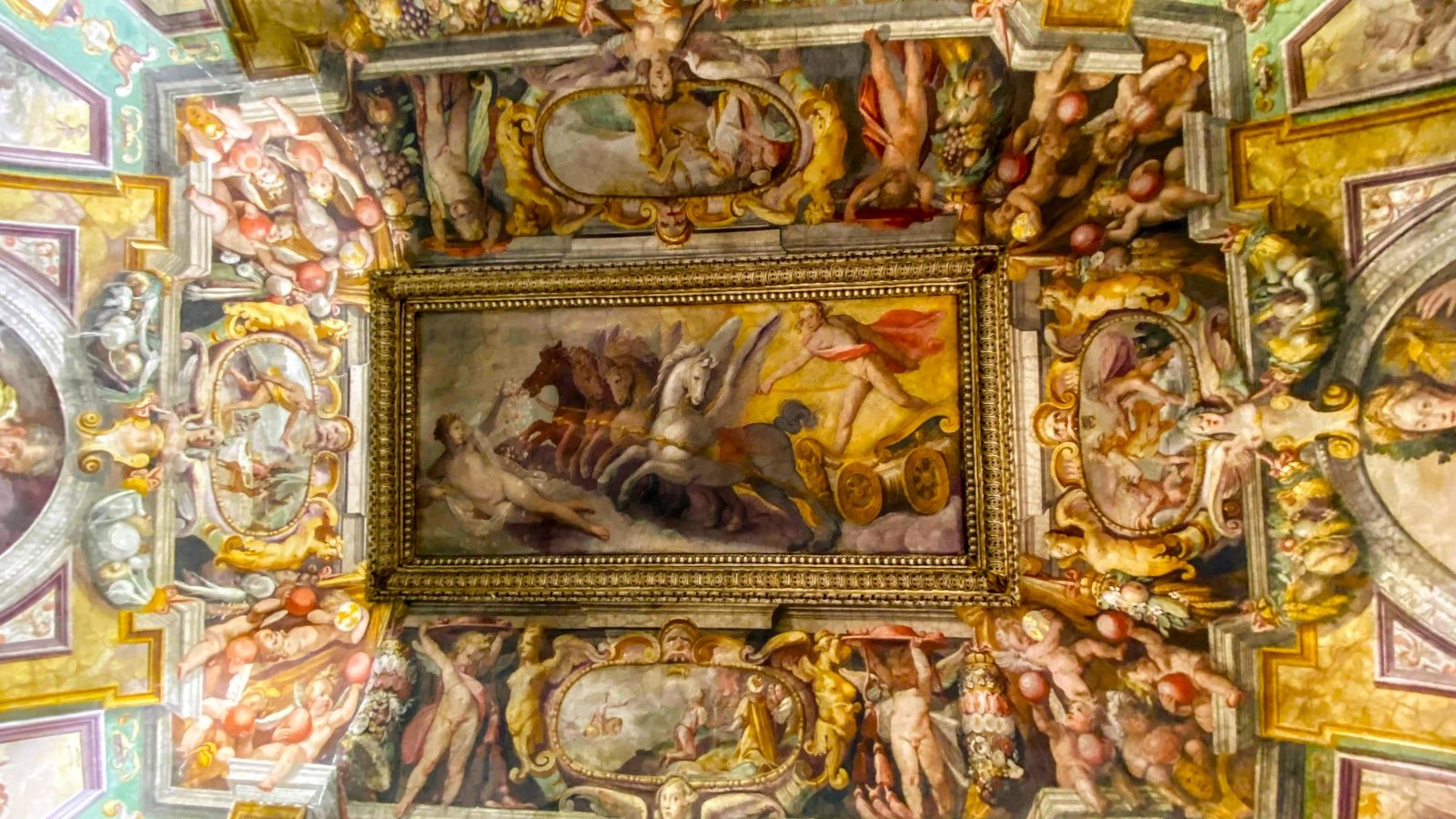
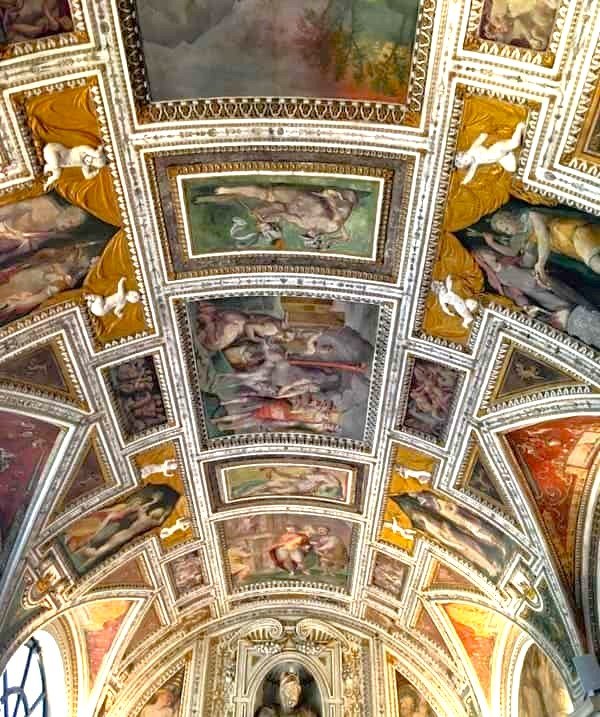
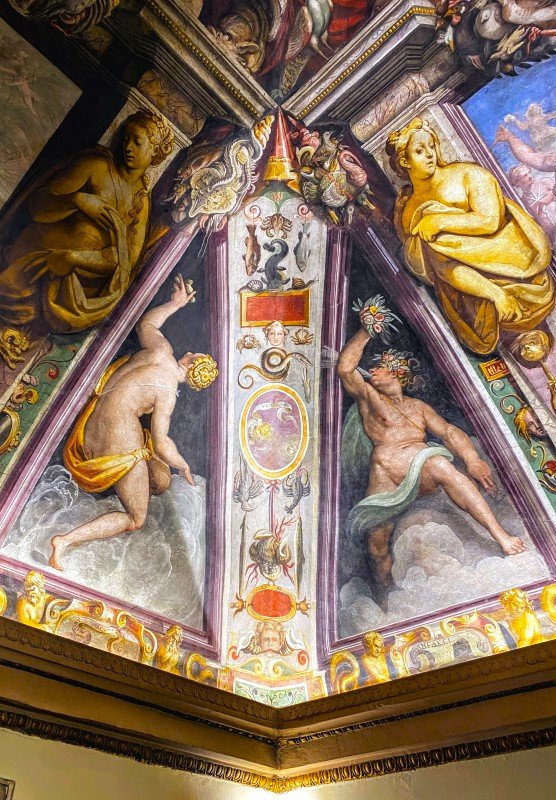
This exclusive visit will allow you to admire the sublime rooms of Palazzo Firenze: the famous Loggia del Primaticcio, the surprising room in Pompeian red known as the Camerino dei Continenti, so called because of the central panel depicting Asia, Africa and Europe, and the Sala del Granduca, all decorated by Prospero Fontana between 1553 and 1555; and also the sumptuous rooms ‘of the elements’ and ‘of the seasons’, created between 1574 and 1575 by Jacopo Zucchi.