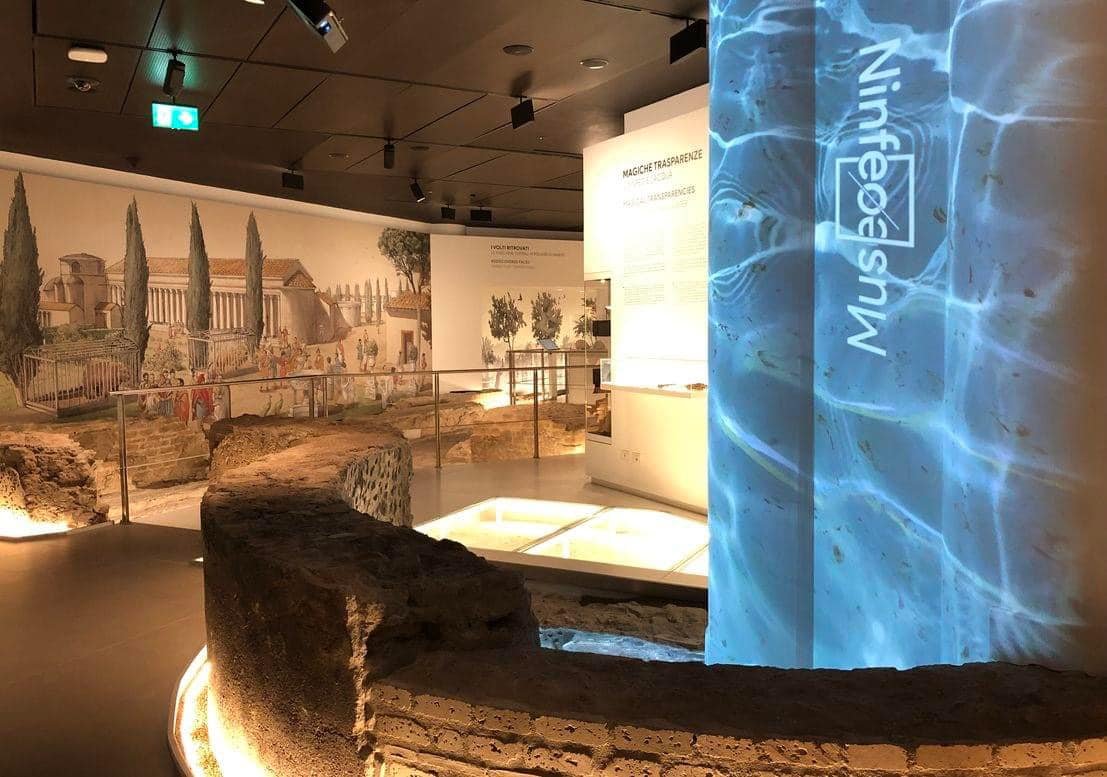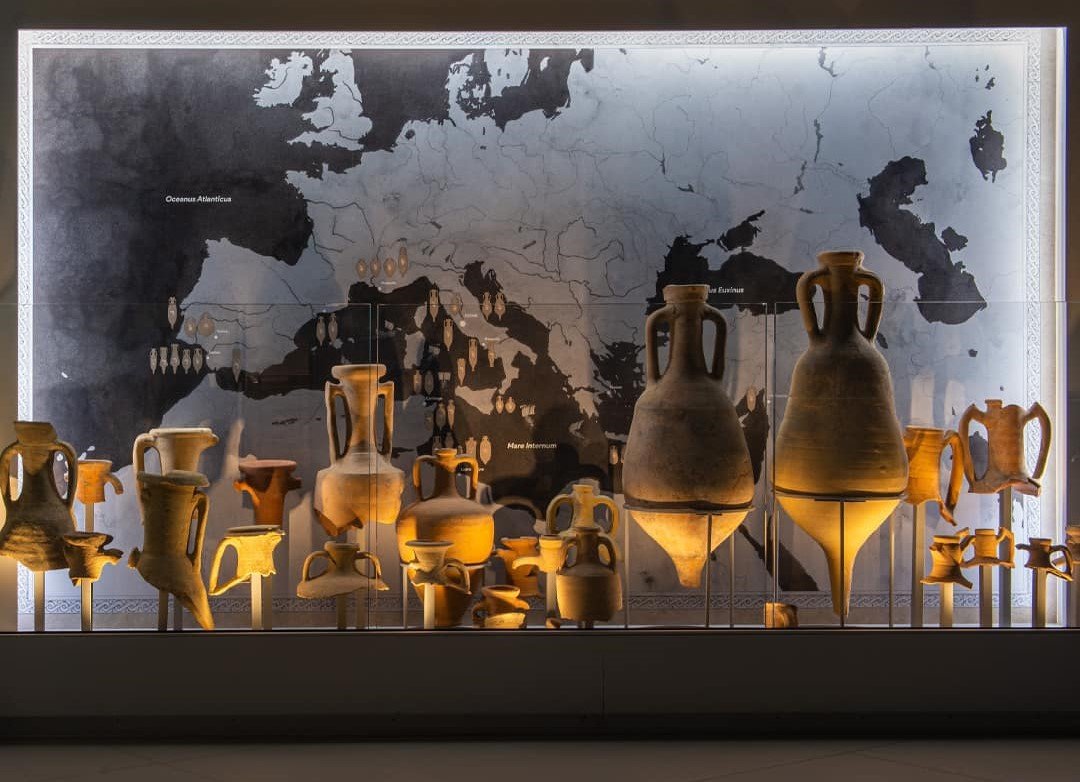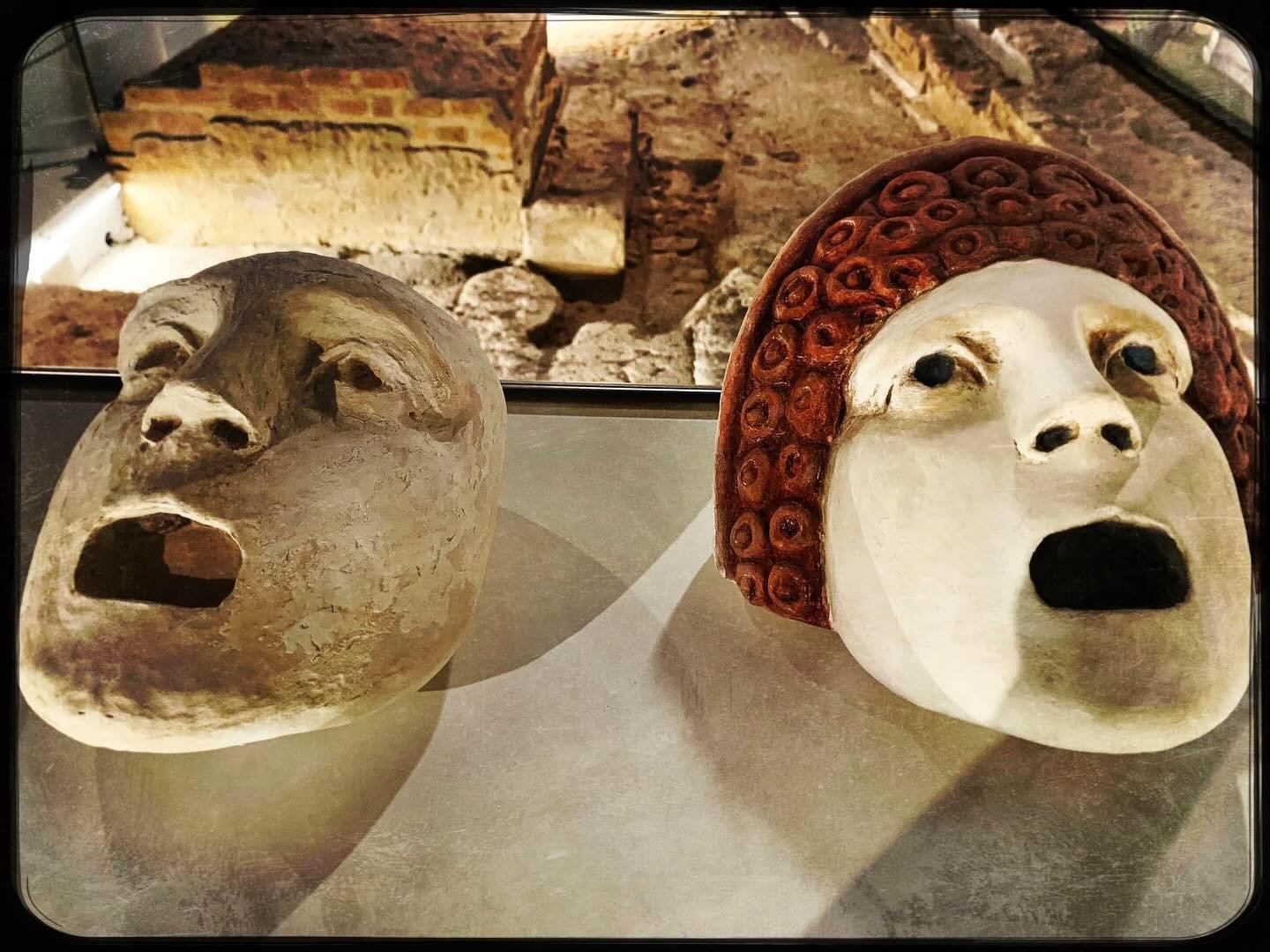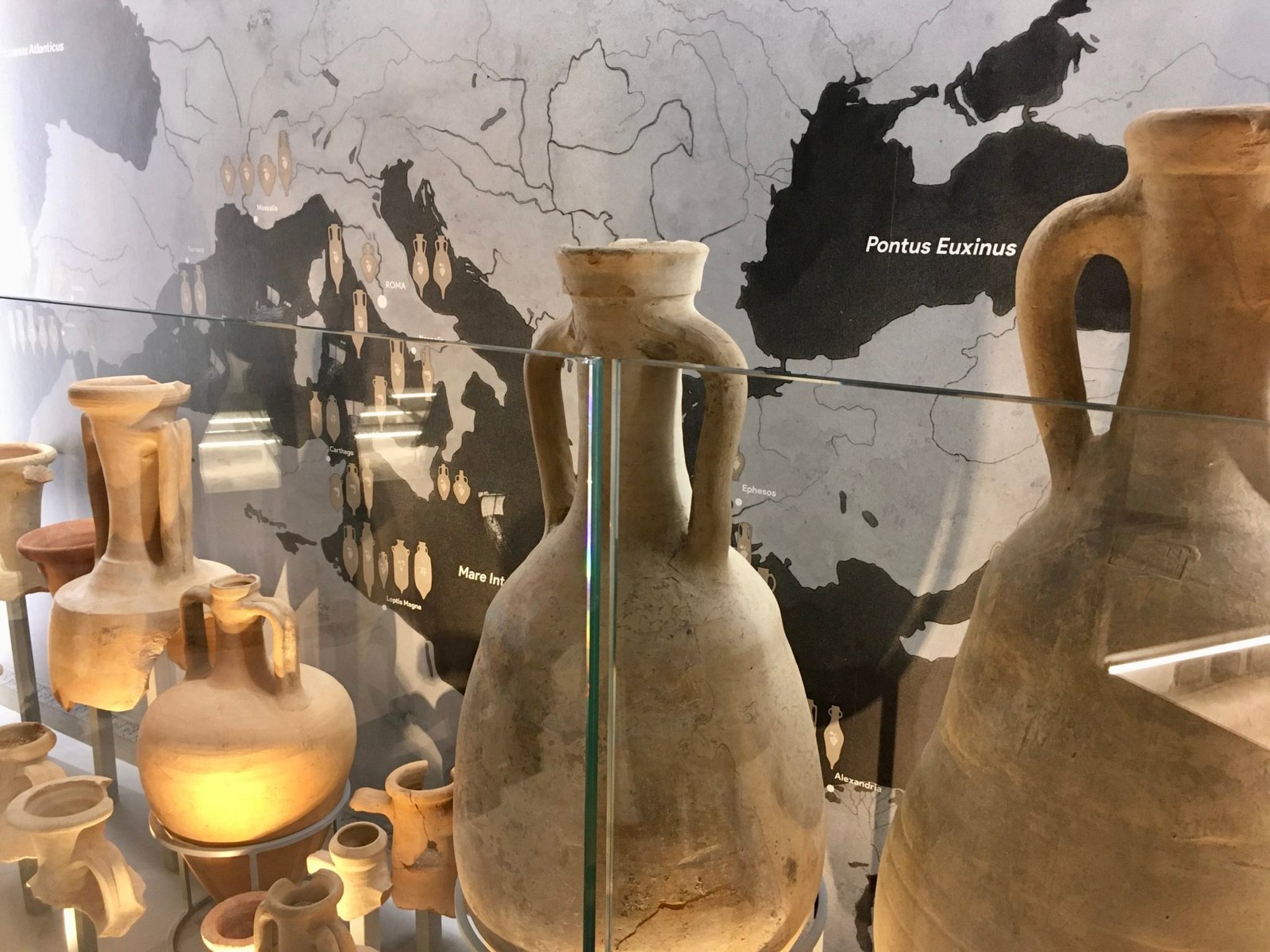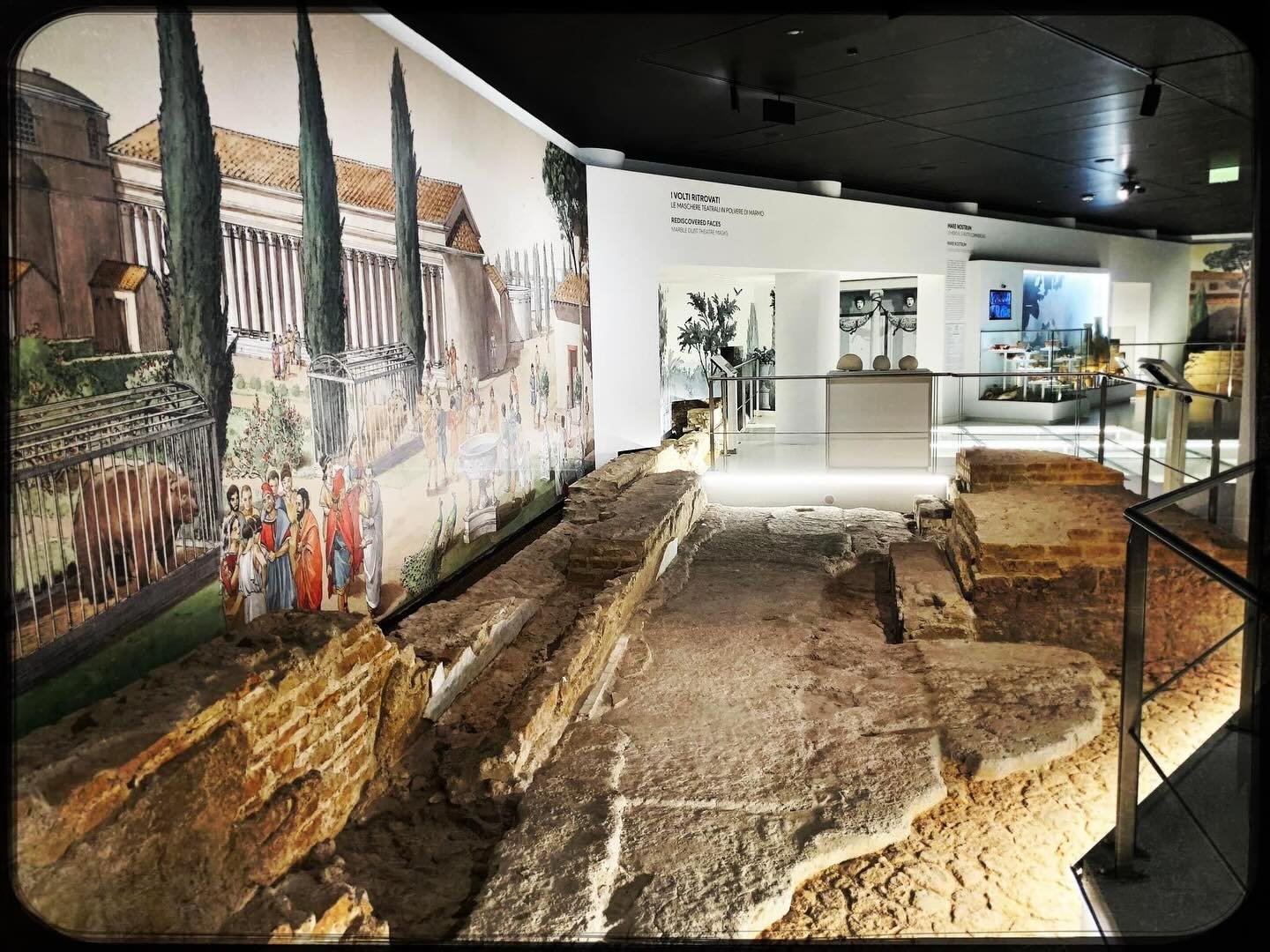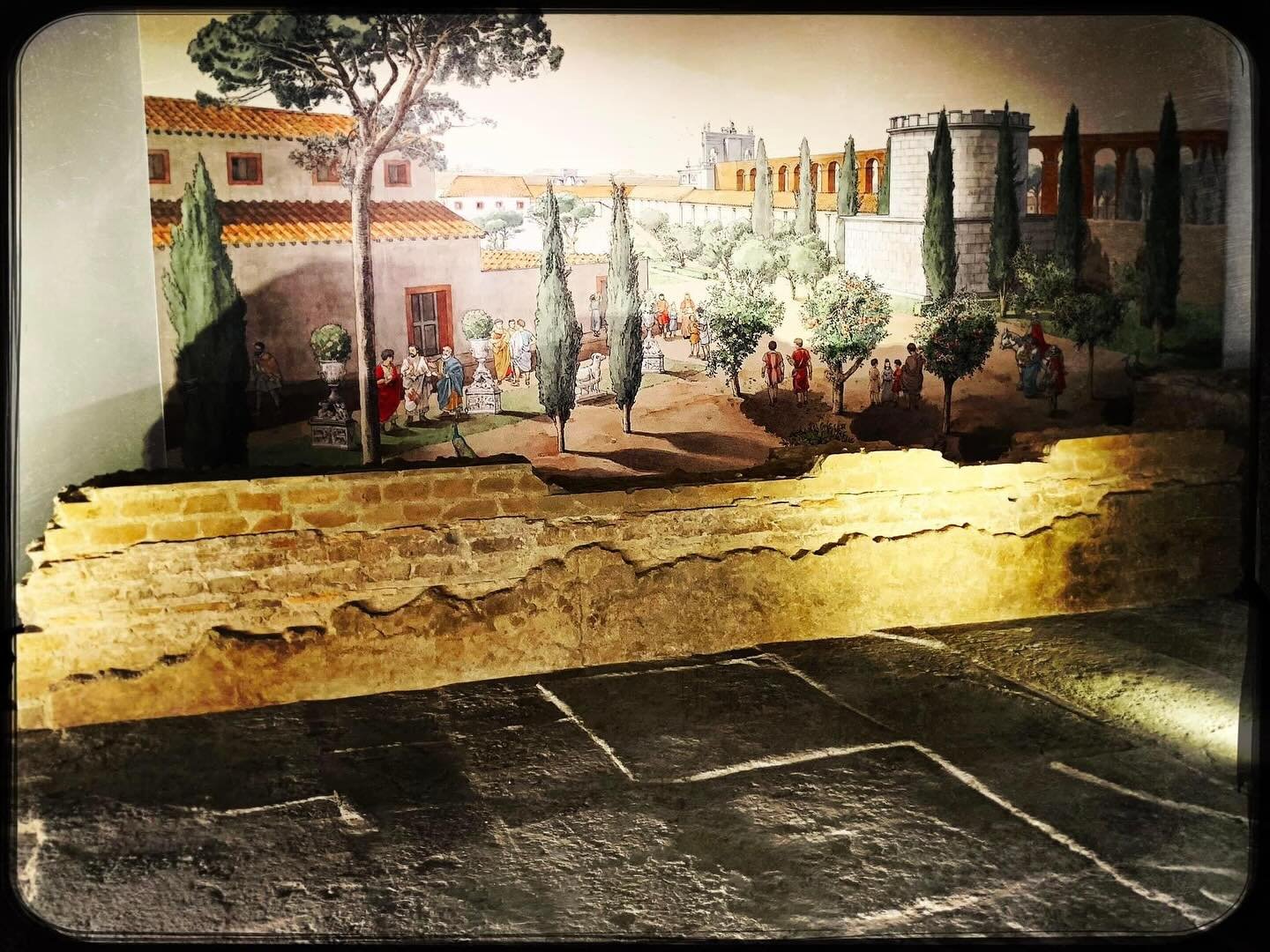
The Nymphaeum Museum covers an area of more than 1,000 square meters and gives the city one of its most fascinating and mysterious places, showing the transformation over the centuries of the Esquiline Hill. Initially occupied by a vast necropolis, in the early first century AD. Lucius Aelius Lamia, a powerful politician, built there his sumptuous villa embellished with vast gardens, the Horti Lamiani. As early as the middle of the first century AD it became imperial property, and the succession of emperors who lived there gave rise to continual remodeling, as each wanted to personalize the residence to his own taste. Hellenistic in style, the interior of the Horti consisted of buildings, temples, gardens, squares and groves, where finds also reveal the presence of wild animals, such as lions, fawns and ostriches, and exotic plants. Among the most valuable finds are the remains of a large plaza with a nymphaeum, dating back to the time of Emperor Alexander Severus; two Greek theater masks made from a mixture of marble dust and traces of color – blue in the eyes and red in the hair; a large fresco reassembled thanks to the discovery of 90,000 fragments; and four small bowls bearing inside them the color pigments used to paint it. Thanks in part to an innovative museum exhibit featuring reconstructive illustrations, animations and 3-D reconstructions, the guided tour allows visitors to discover the original contexts and daily life of the ancient Romans. In fact, thanks to an enormous amount of varied exhibits-from pictorial and marble decorations to objects used in daily life-the visitor is catapulted on a journey to discover the customs and traditions, trade and fashions, as well as the foods and amusements of the first centuries of the Roman Empire.