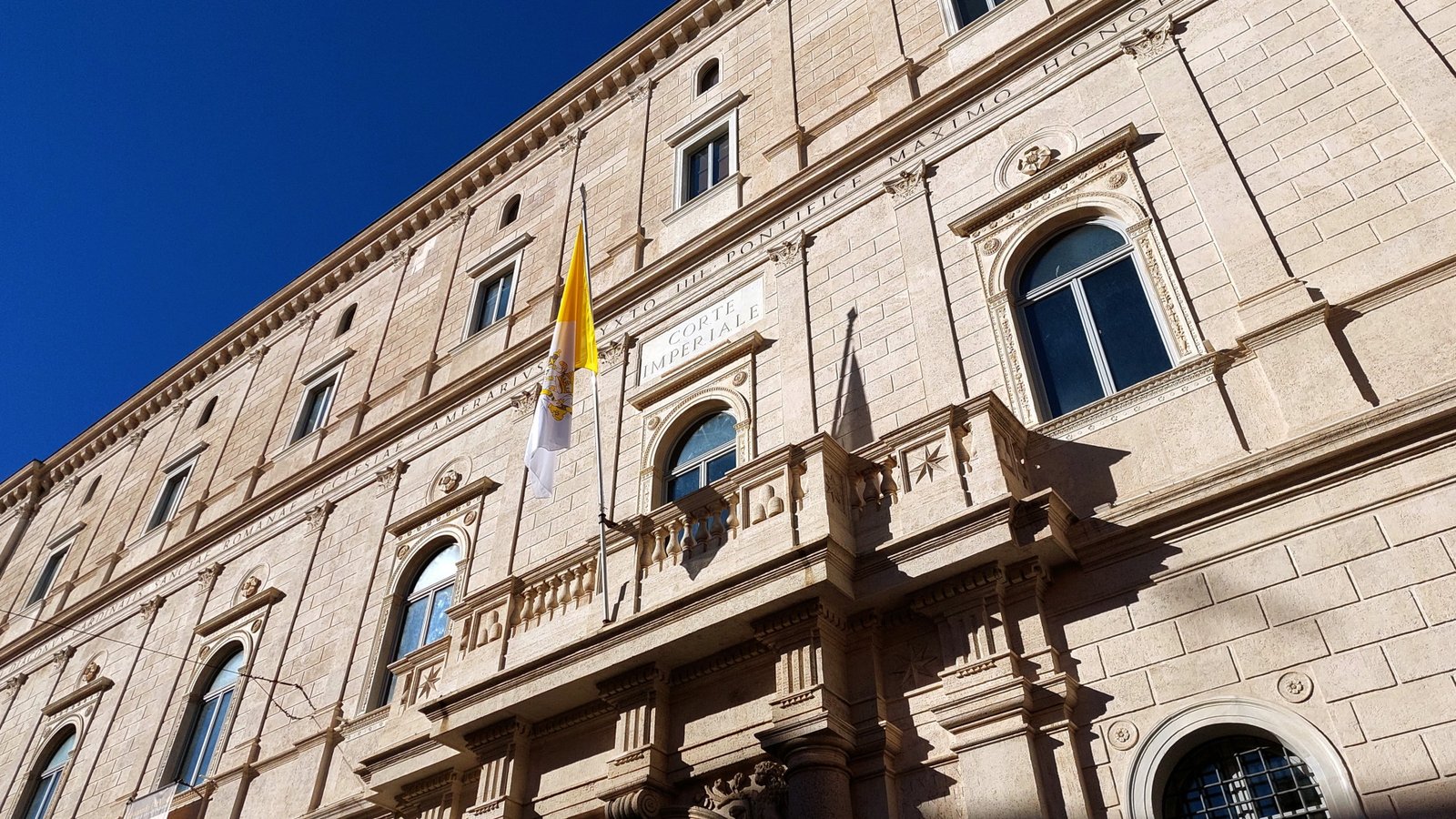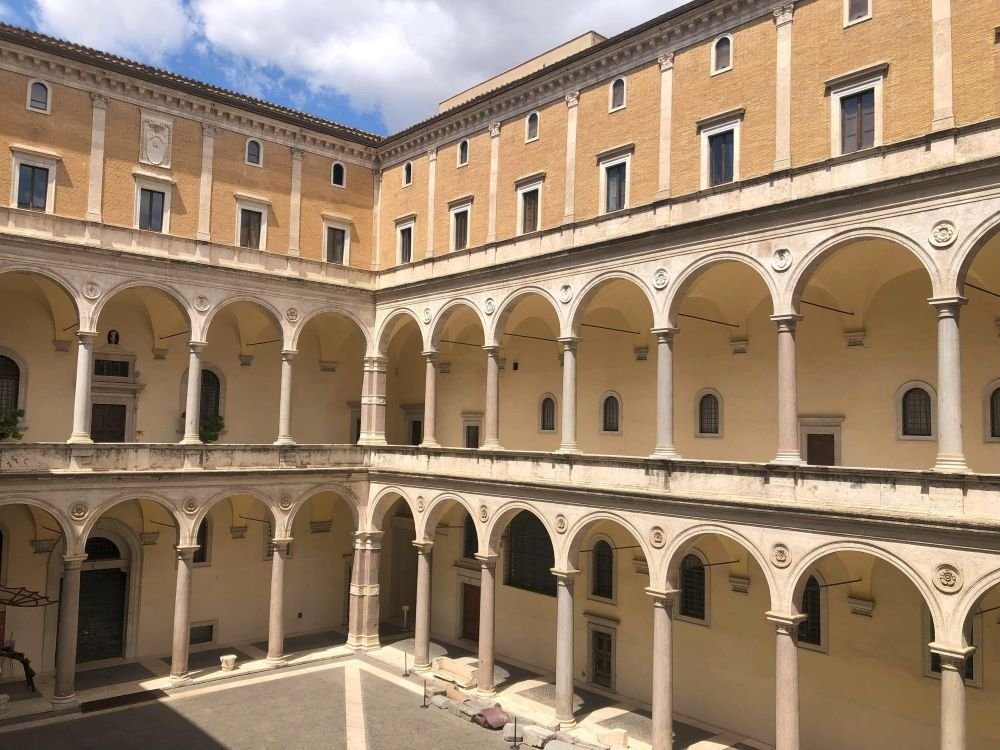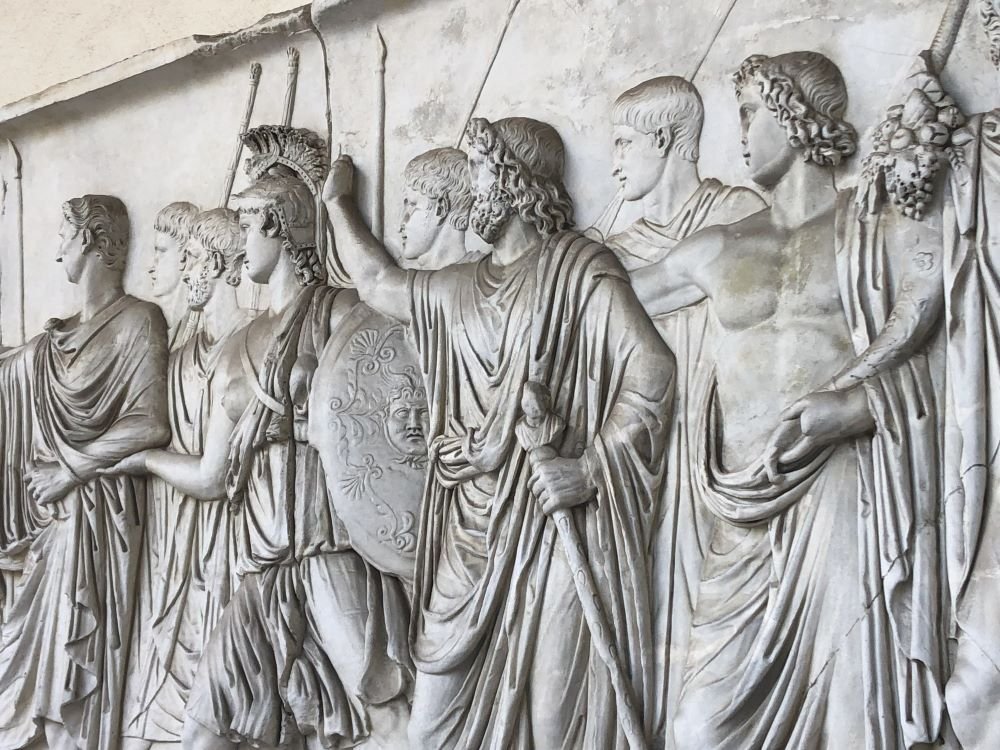
The Palace of the Chancellery, which stands behind Campo dei Fiori, is one of the great architectural masterpieces of the Renaissance. Made between 1485 and 1513, it was commissioned by Cardinal Raffaele Riario, nephew of Pope Sixtus IV. Legend has it that the cardinal, an inveterate gambler, managed to finance his lavish residence from the proceeds of a resounding one-night gambling winnings.
The construction of the palace was entrusted to the best architects and artists then around, including Bramante, considered the best interpreter of Renaissance architecture, Andrea Bregno, Giorgio Vasari, Perin del Vaga, Jacopo Barozzi da Vignola, and Francesco Salviati.
Shortly after its completion, however, the Palace was confiscated from Cardinal Riario, following a scandal involving him in a conspiracy against Pope Leo X, and became the seat of the Apostolic Chancery; it is still owned by the Holy See and a number of ecclesiastical tribunals, such as the Sacra Romana Rota, as well as the Pontifical Roman Academy of Archaeology and the Pontifical Commission for the Cultural Heritage of the Church, are based there.
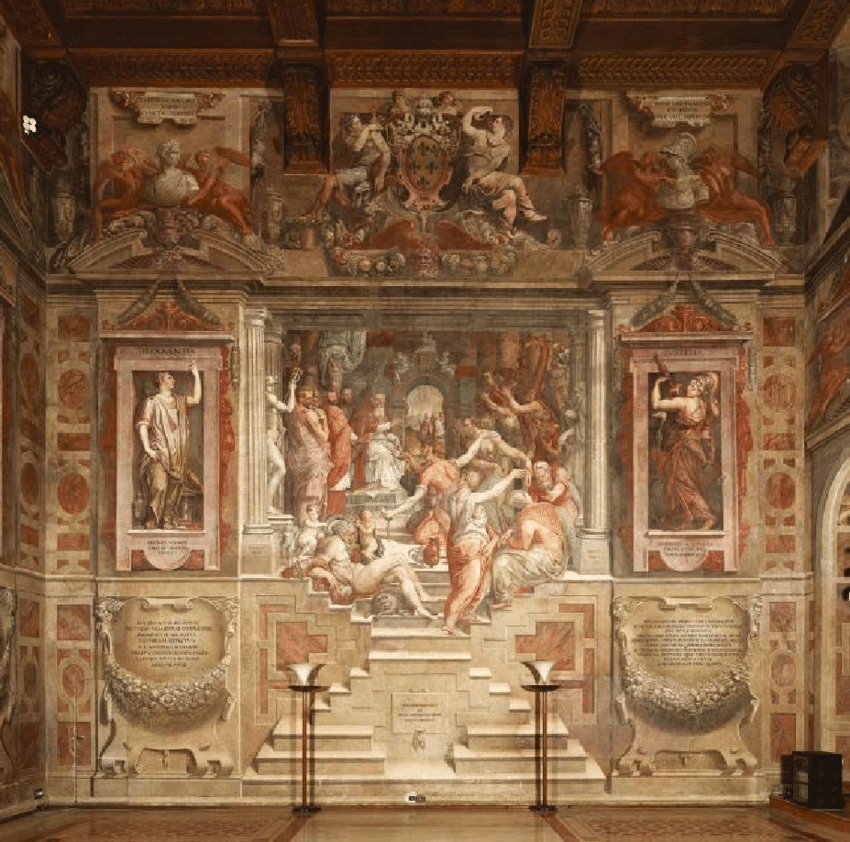
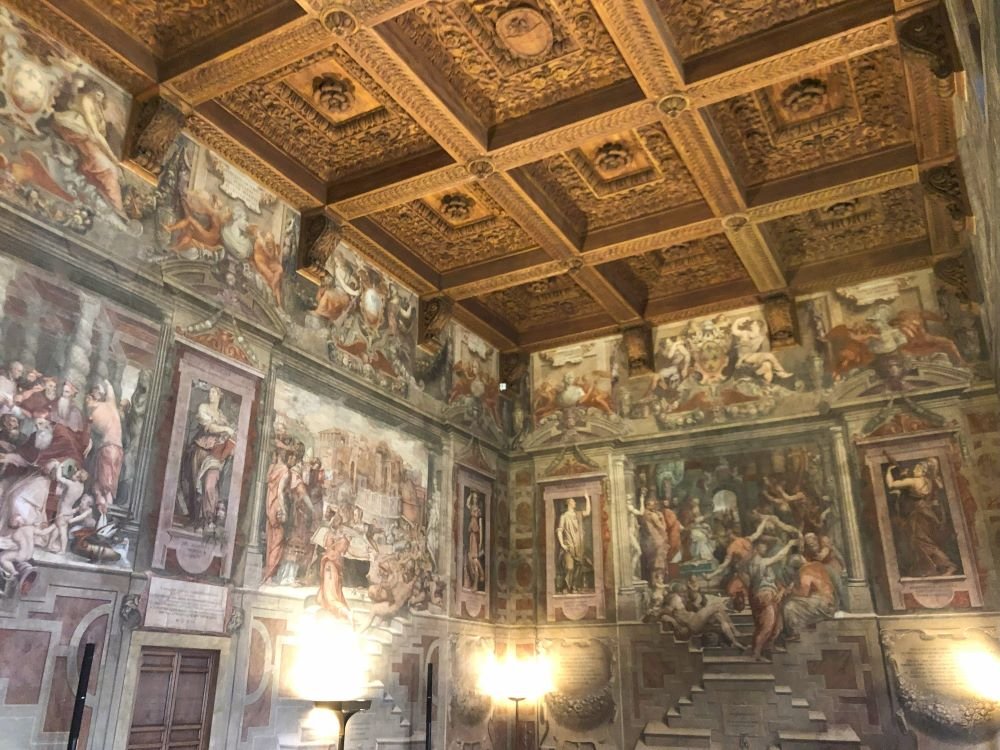
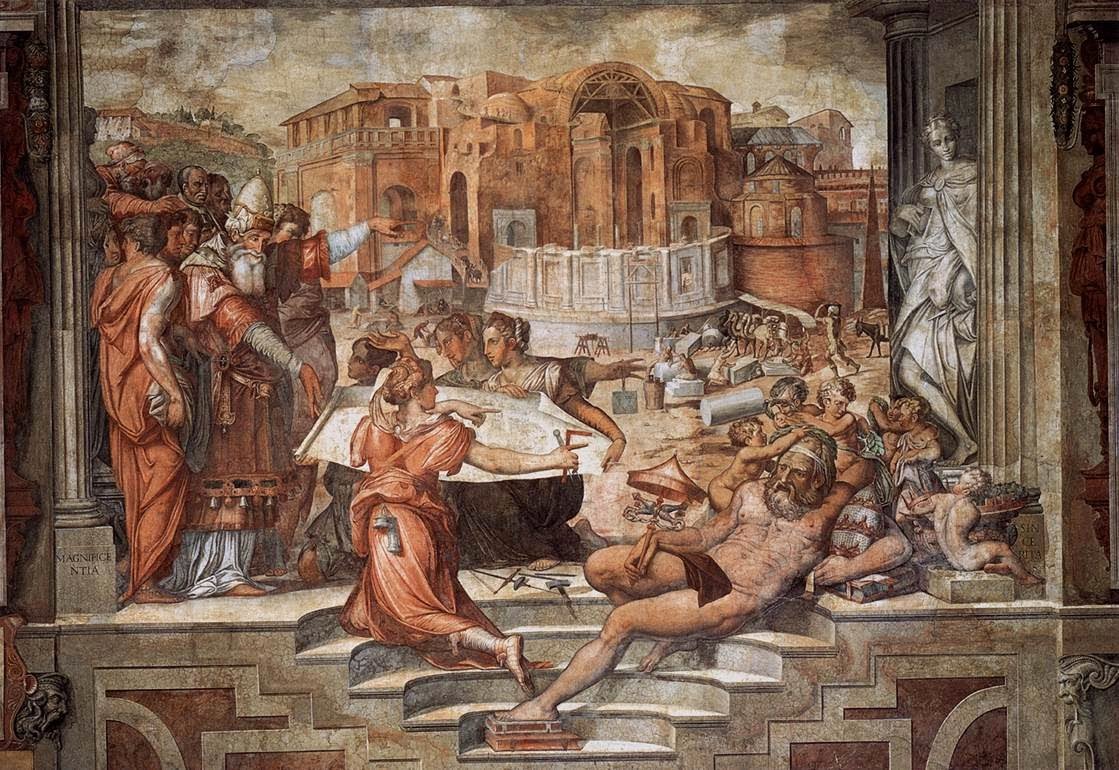
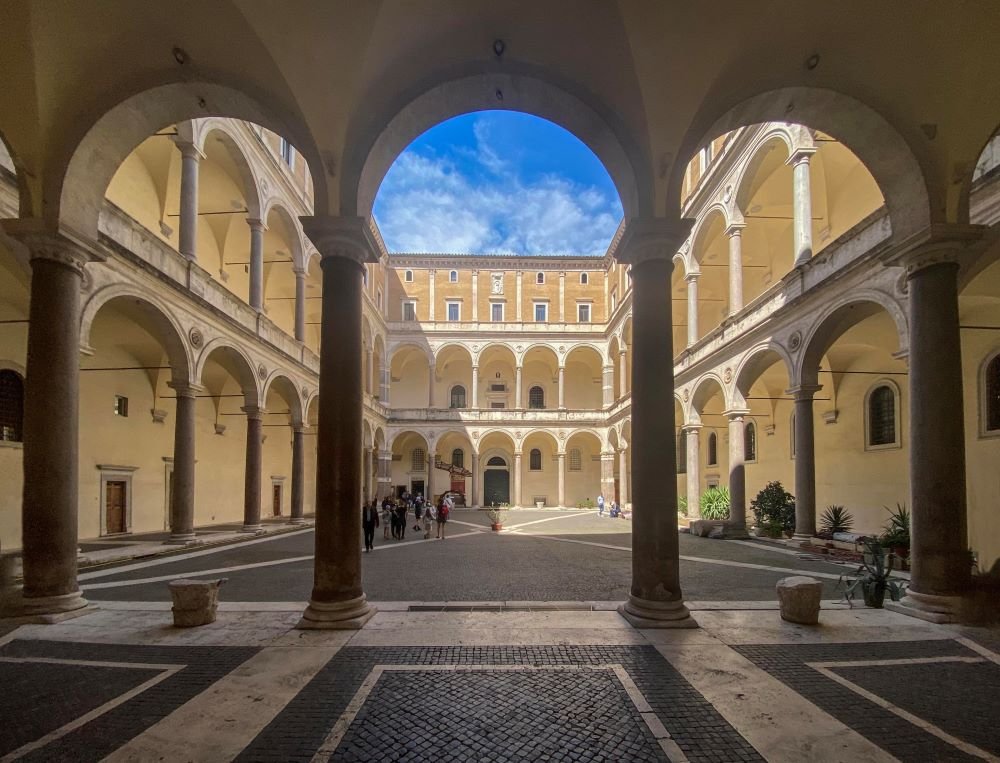
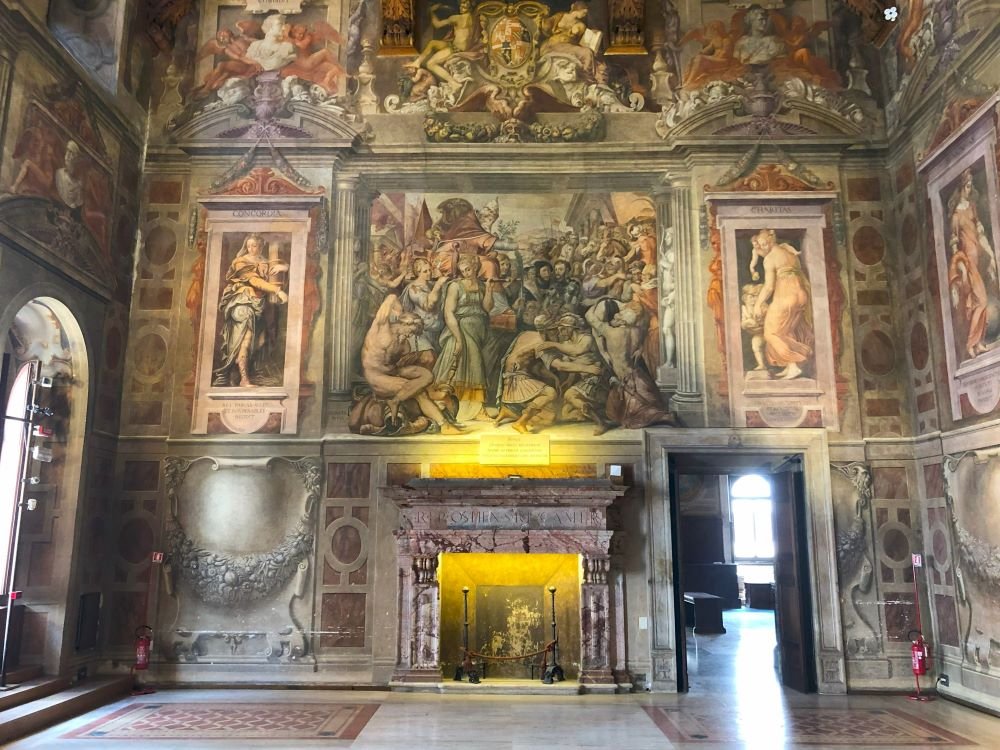
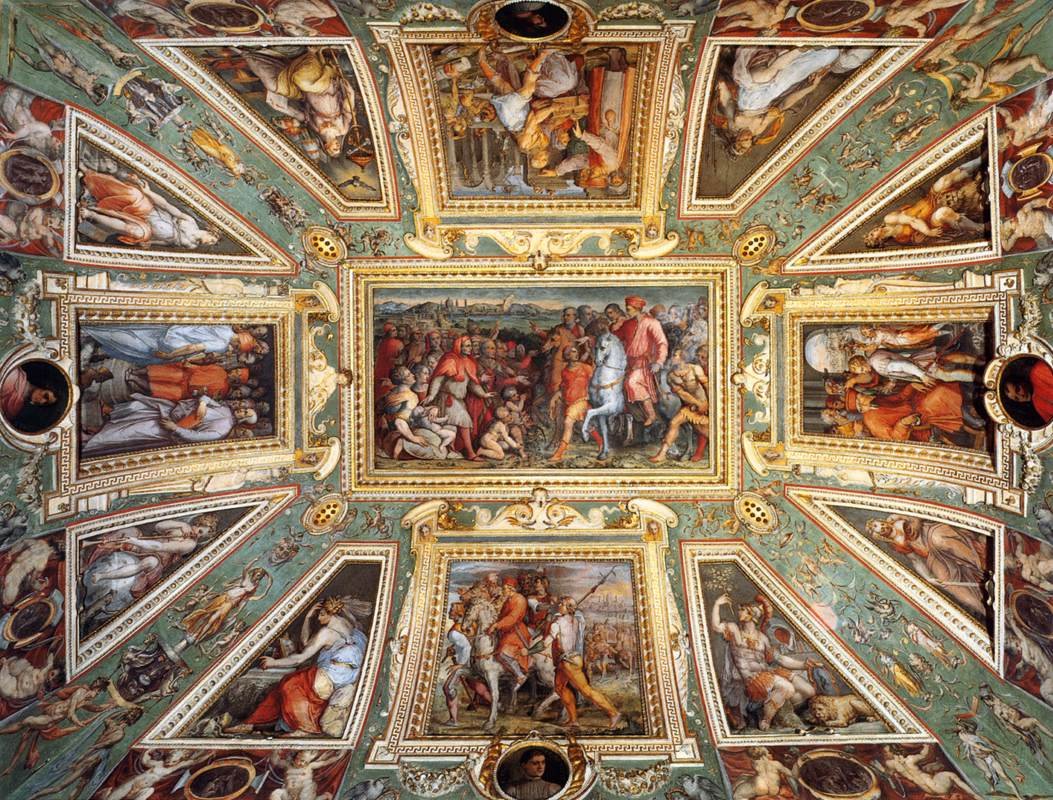
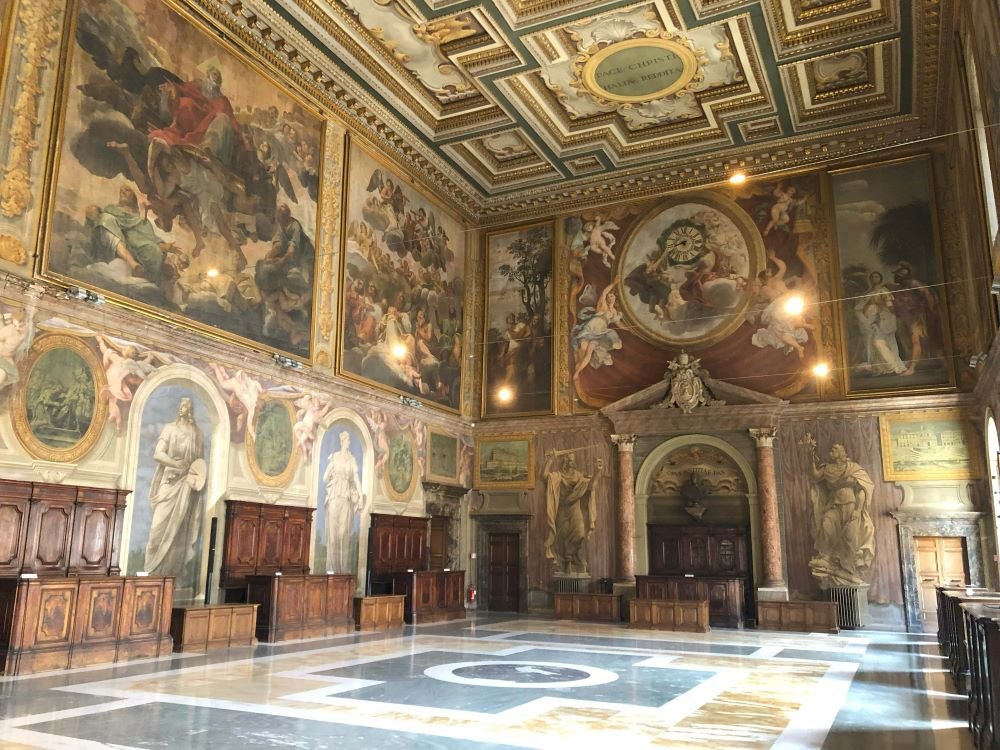
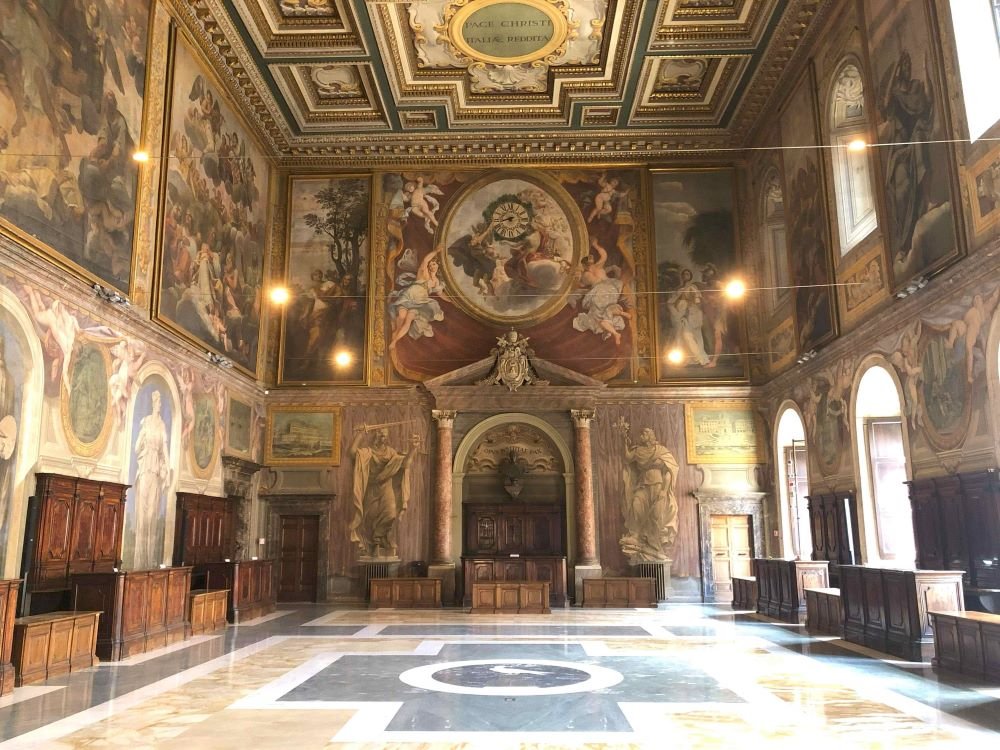
This not-to-be-missed tour leads to the discovery of the artistic-architectural marvels that the Palace holds, including the magnificent three-order inner courtyard attributed to Donato Bramante, a true jewel of Renaissance architecture; the Hall of Honor, entirely frescoed in 1546 by Vasari in just 100 days, to comply with the client’s requests, and for this reason known as the “Hall of the Hundred Days.” the Sala Riaria or Aula Magna, seat of the Tribunal of the Sacred Rota, with the famous “clock face” painted by Baciccia; the Chapel of the Pallio, embellished with stuccoes and paintings by Francesco Salviati; and the Salone di Studio, with a vault frescoed by Perin del Vaga.