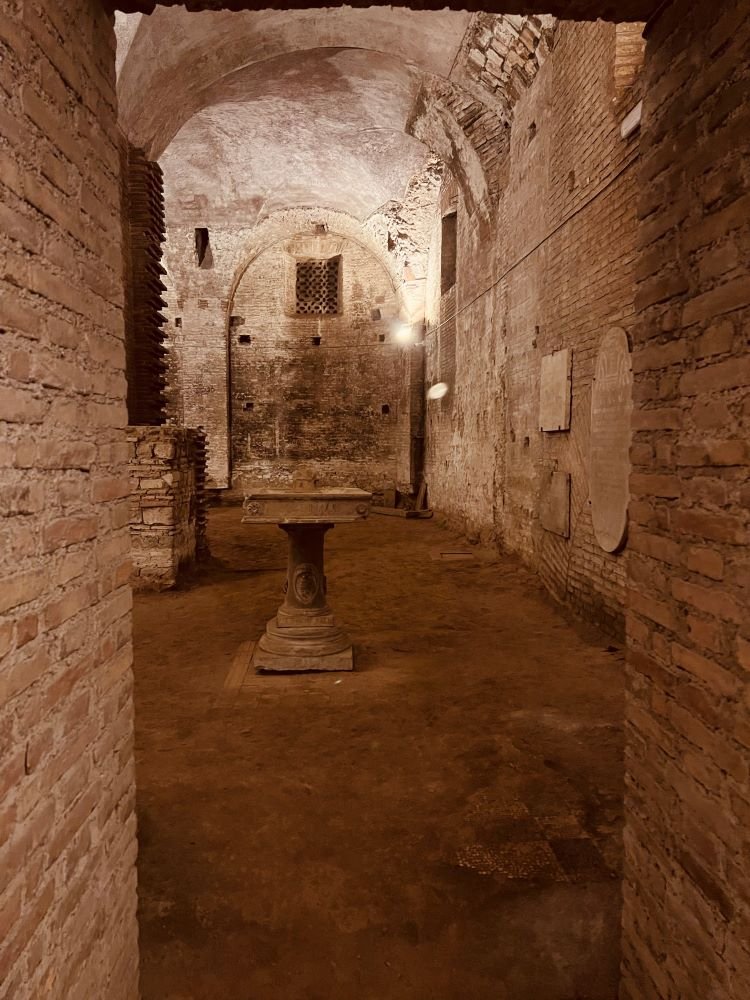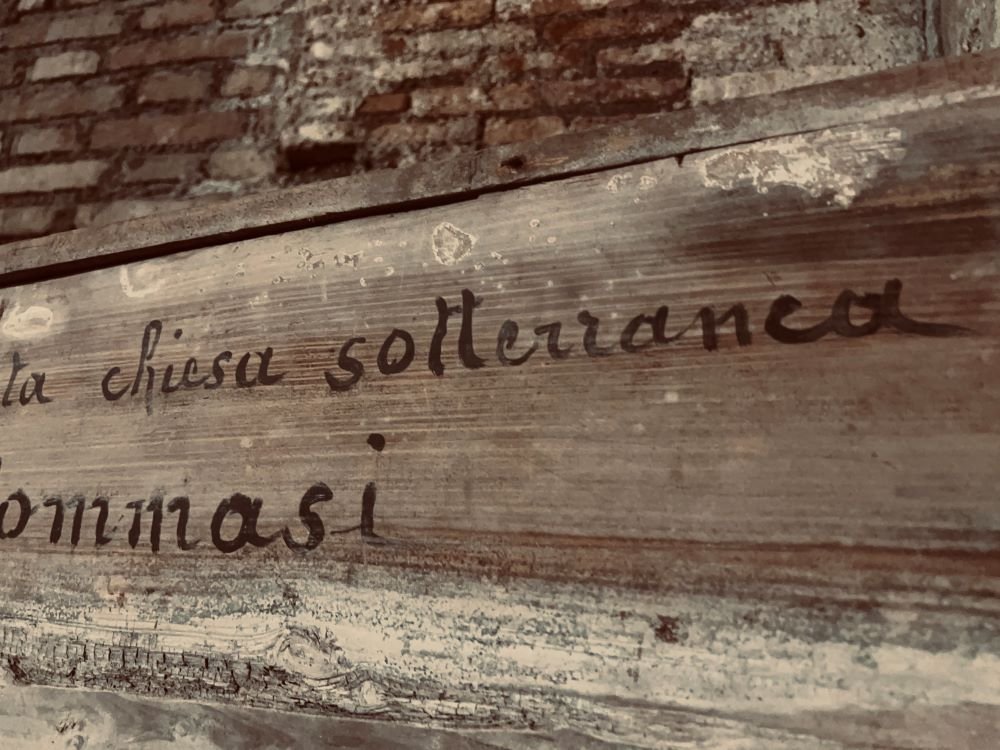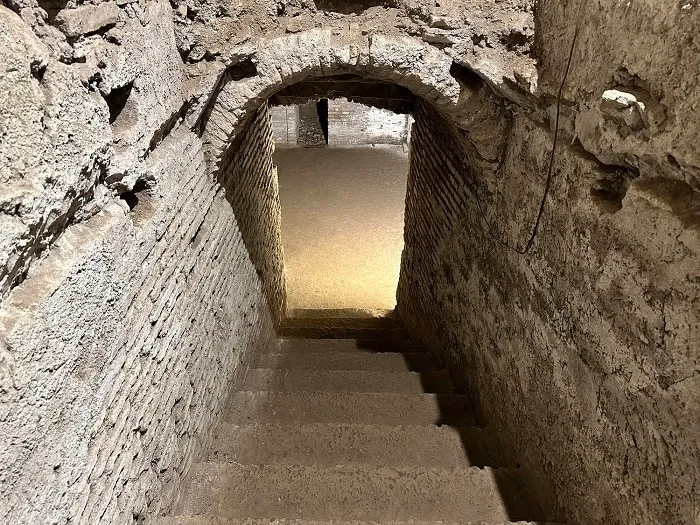
Visiting the Basements of the Basilica of Saints Sylvester and Martin ai Monti at Colle Oppio is like taking a trip back in time, going back almost two thousand years, to Imperial Rome, when Christianity was not yet the official religion.
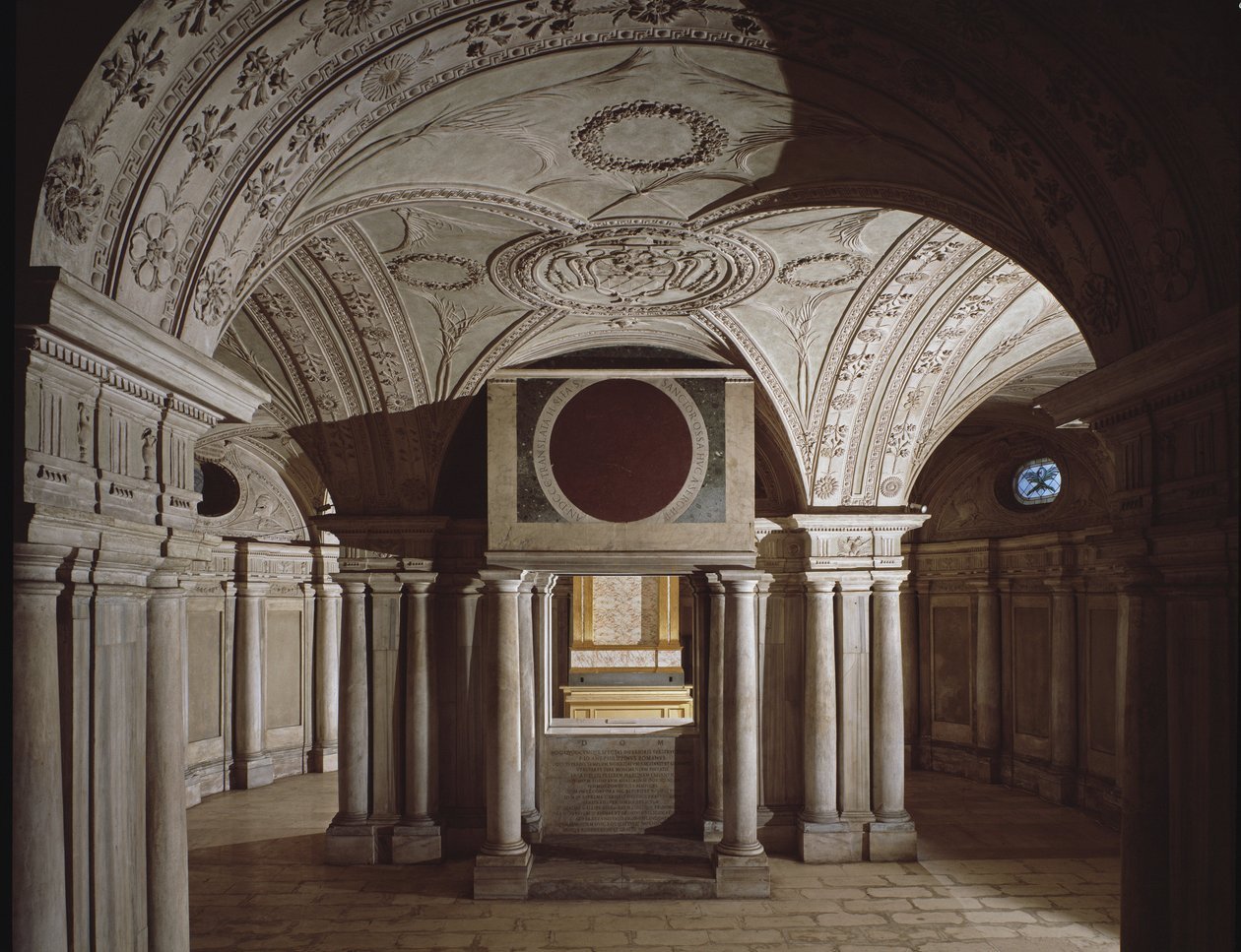
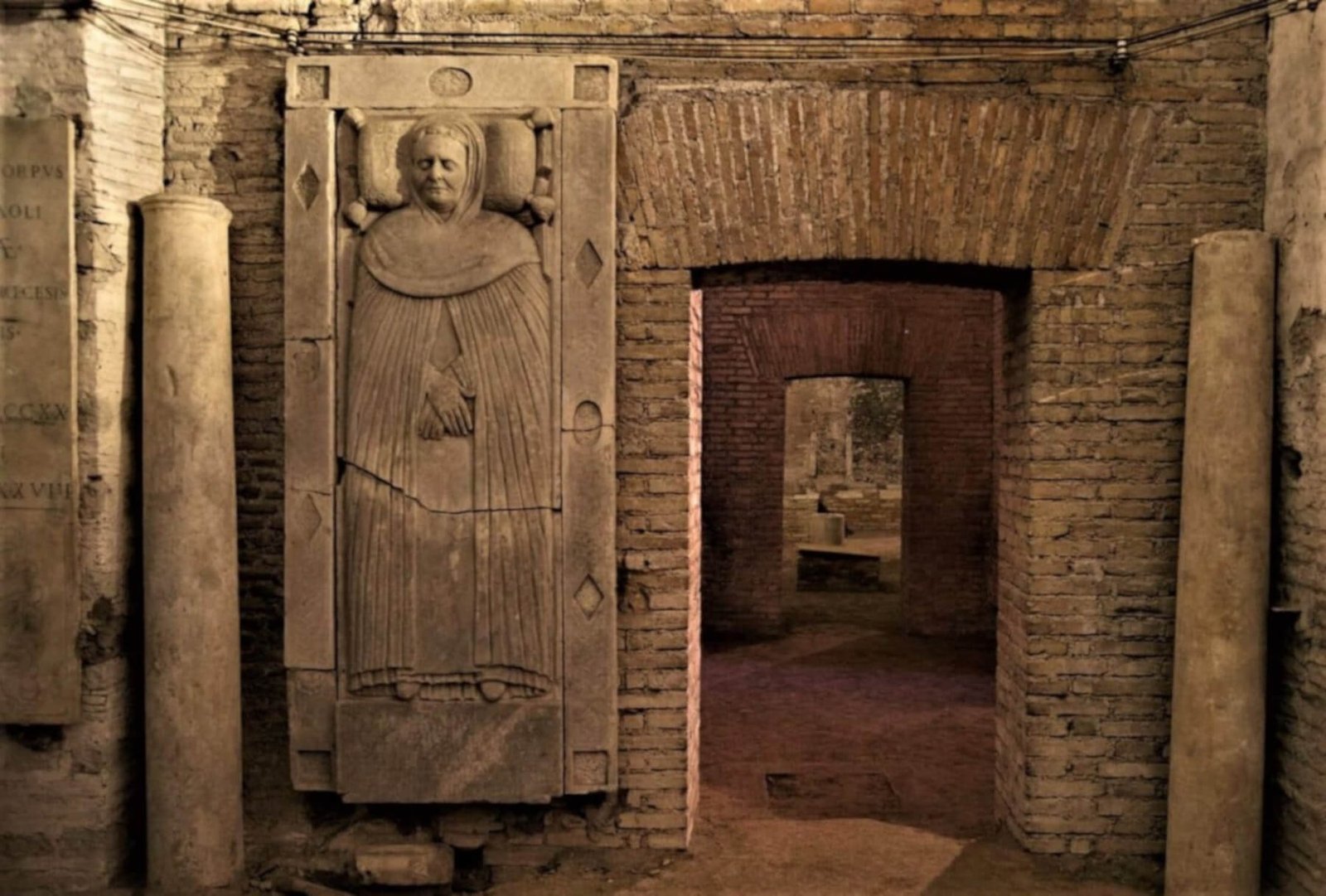
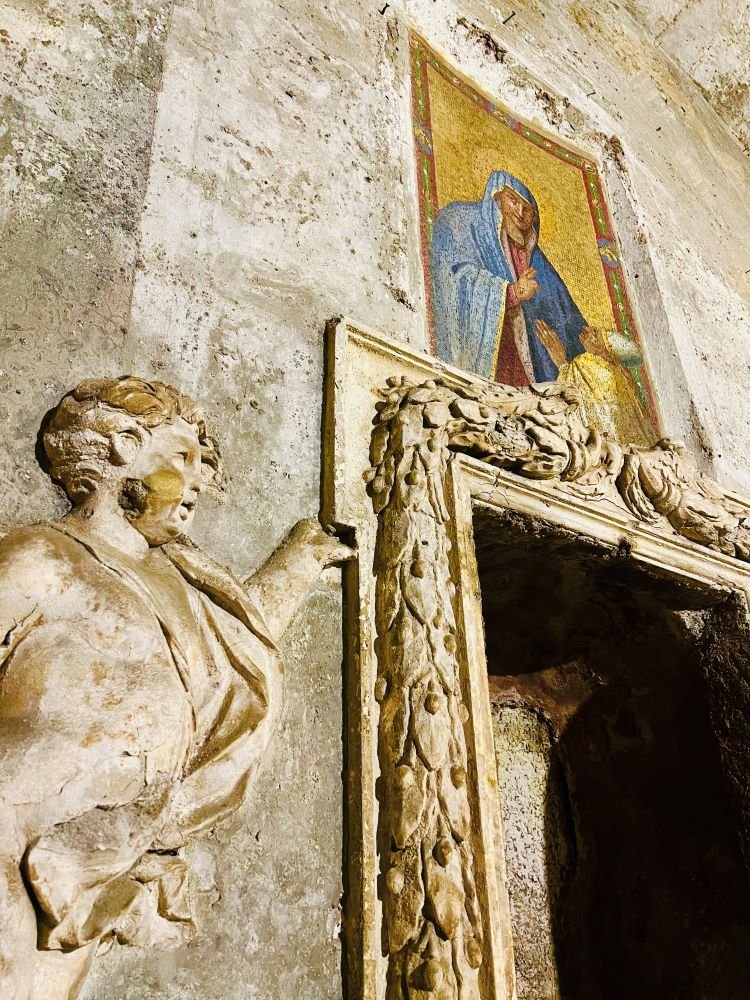
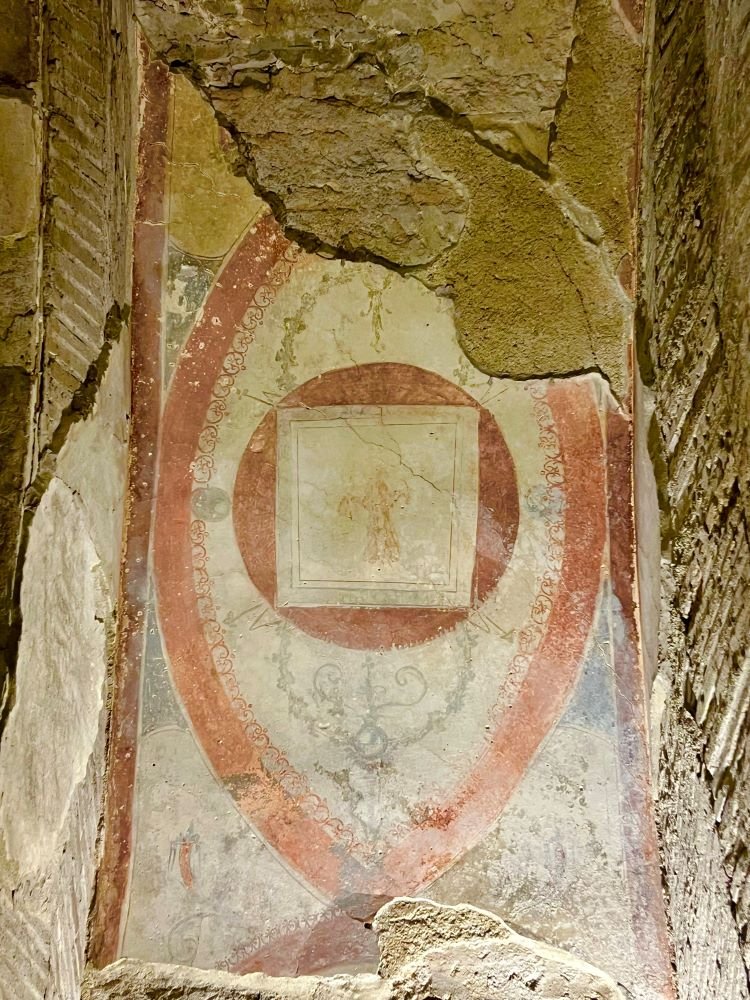
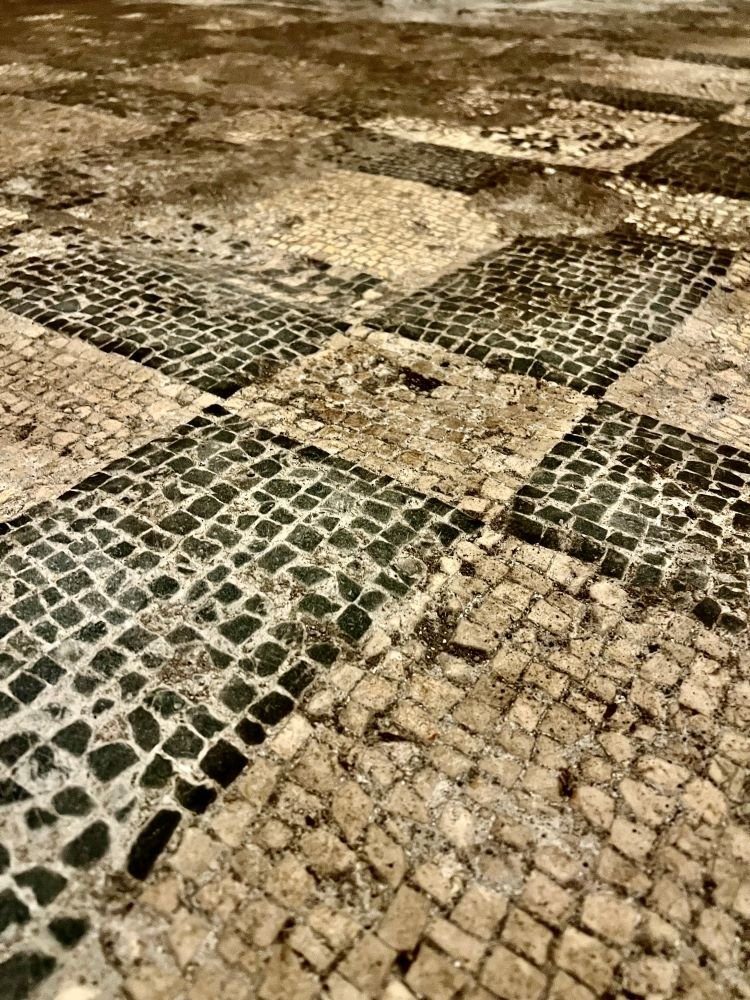
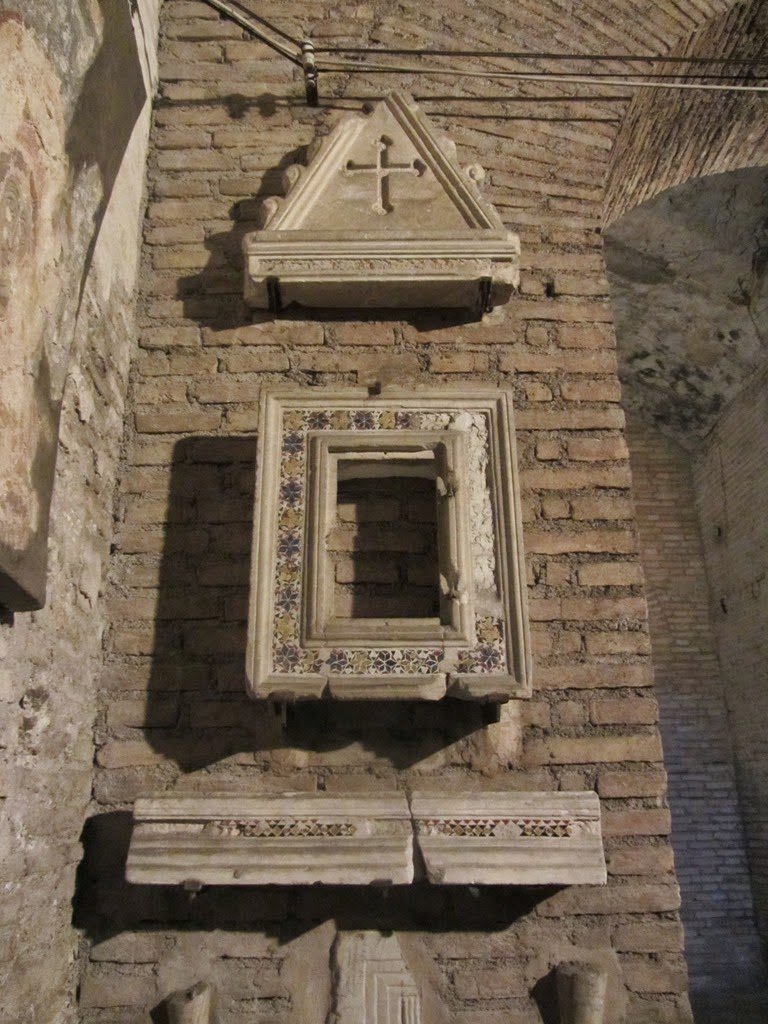
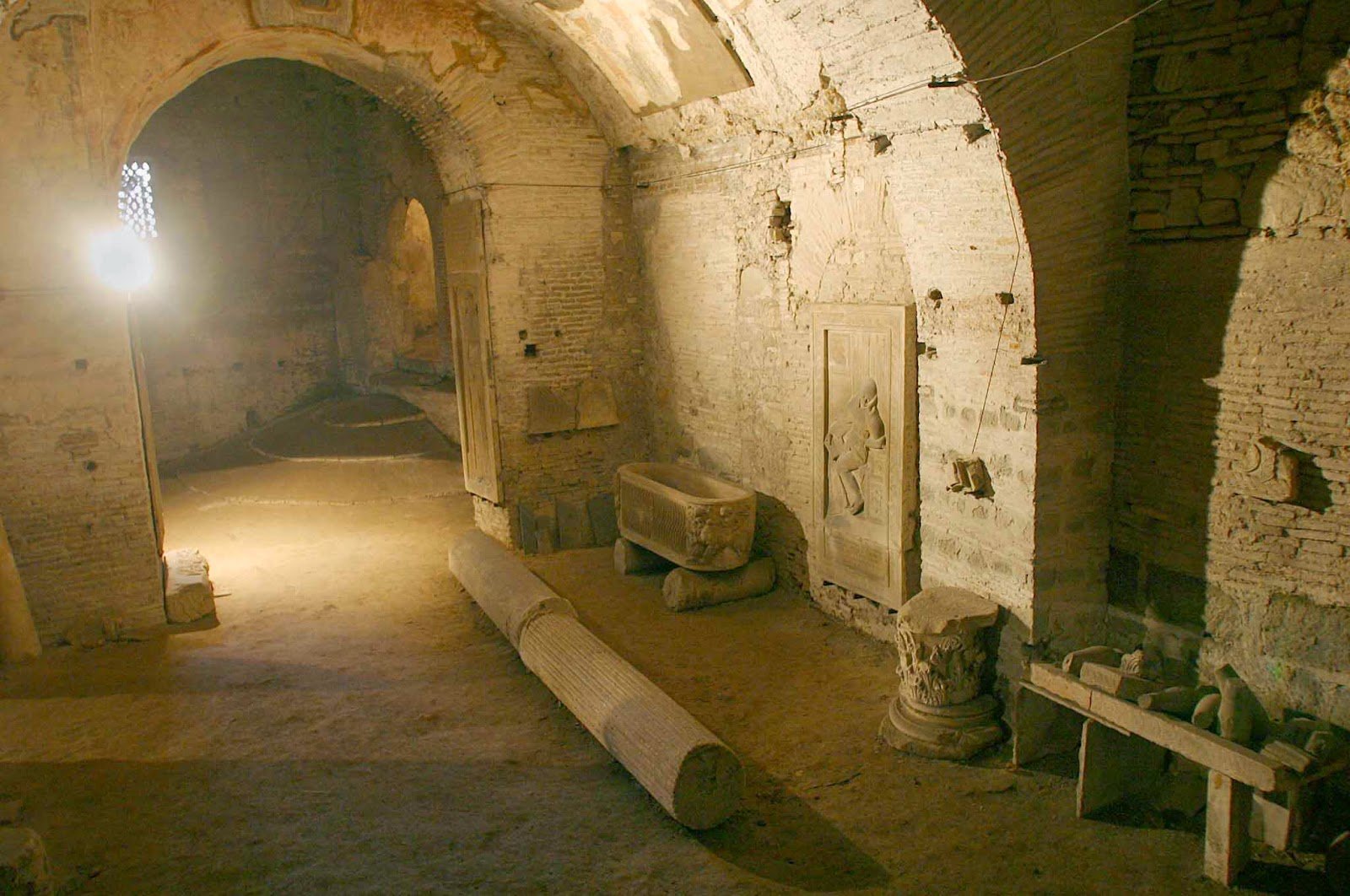
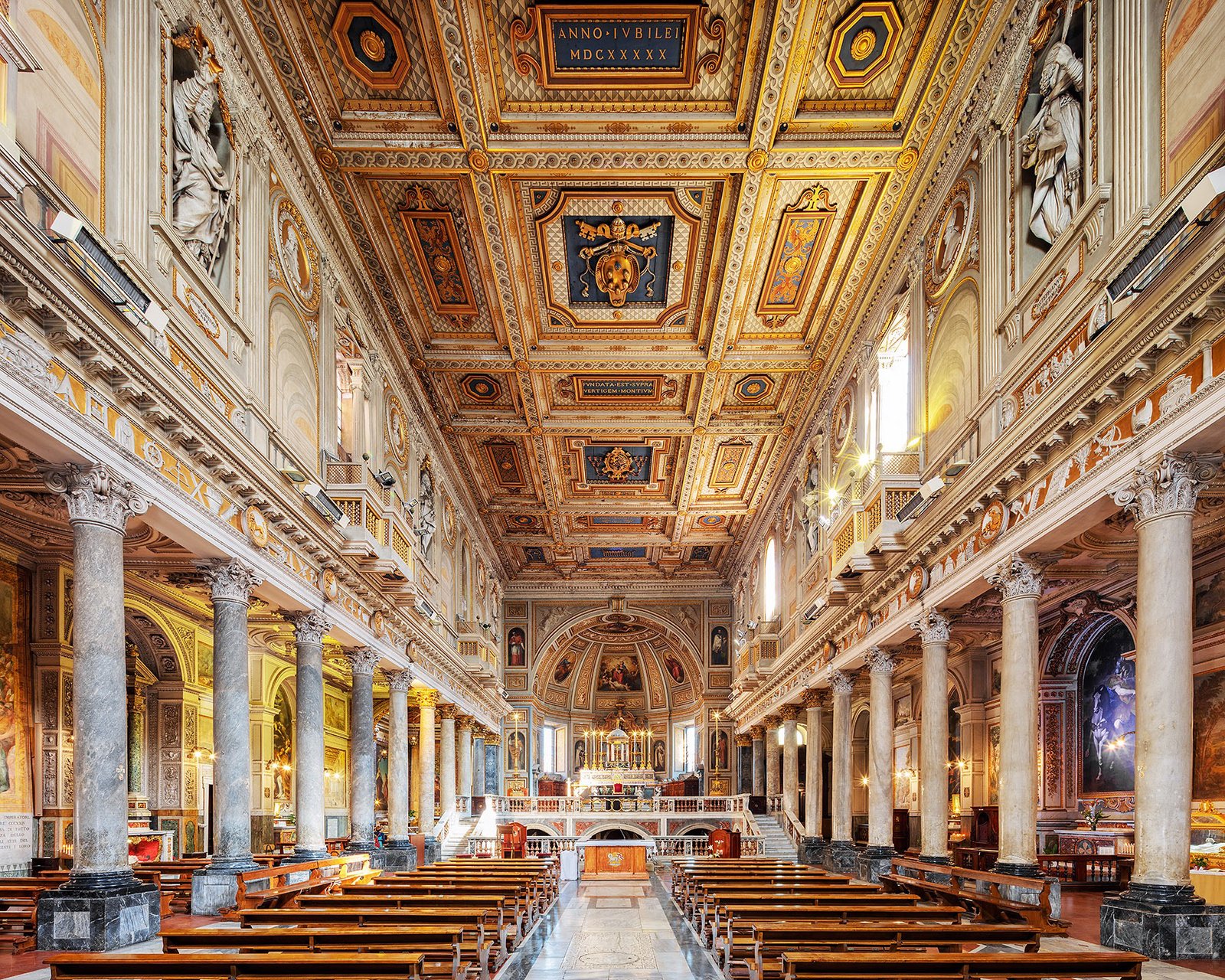
In fact, the Basilica is built on top of a Roman building, dating back to the third century AD, which was originally perhaps a private residence and was later used as a commercial exercise or warehouse. It is a large rectangular room, divided into three naves by six pillars. We know the name of the owner: his name was Equitius, and the building bears his name: Titulus Equitii (in ancient Rome the titulus was a marble slab that was affixed to the exterior of a building and indicated the owner’s name). Before the famous Edict of Emperor Constantine, which in 313 AD made Christianity religio licita, Christians were often victims of religious persecution, had no proper houses of worship, and gathered in domus ecclesiae, rooms made inside private homes dedicated to the exercise of Christian worship. Equitius did just that; that is, he transformed this building he owned into a domus ecclesiae, and traces of both the ancient domus are still visible today – including a wonderful mosaic floor with black and white tiles and a painting with the characteristic red color “Pompeian” with geometric shapes, which decorated the house-both of the later reconversion of this room into a place of worship: an altar with a mosaic depicting St. Sylvester, dating back to the sixth century, a wall mosaic, some frescoes on the ceiling vault, decorations depicting palms and a dove, as well as tombstones, marble transennas, sarcophagi and architectural elements. After the enactment of the Edict of Constantine, Pope Sylvester I consolidated this place of worship and, in 509, Pope Simmachus decided to build a basilica exactly above the previous one, dedicating it to Saints Martin of Tours and Pope Sylvester I. The basilica arrived at its present appearance in the 17th century but, as if to create a time bridge of more than a thousand years, the aisles are divided by 24 columns from the very ancient place of worship. The present-day interior makes San Martino ai Monti a jewel of Baroque art that holds, among other things, striking frescoes by Gaspare Dughet illustrating the Roman countryside in the 1600s, a marvelous crypt created by Filippo Gagliardi, and a remarkable polychrome wooden coffered ceiling, both dating from 1650.