The building’s history is a perfect example of why Rome is called the Eternal City. Erected on the ruins of the Theater of Marcellus, Palazzo Orsini is located in one of Rome’s most historically and artistically interesting areas, between the Forum and Tiber Island. The building is very imposing and unique, having been used over the centuries first as a theater, then as a fortress and finally as the noble residence of the powerful Savelli, Sforza Cesarini and Orsini families. An entire wing of the palace, arranged on four floors, became the property of the Sovereign Military Order of Malta in 1994, thanks to the generous bequest of Countess Valeria Rossi di Montelera Litta Modignani, taking the name Casa Litta – Palazzo Orsini. Today Casa Litta – Palazzo Orsini houses the Embassy of the Sovereign Order of Malta to the Holy See.
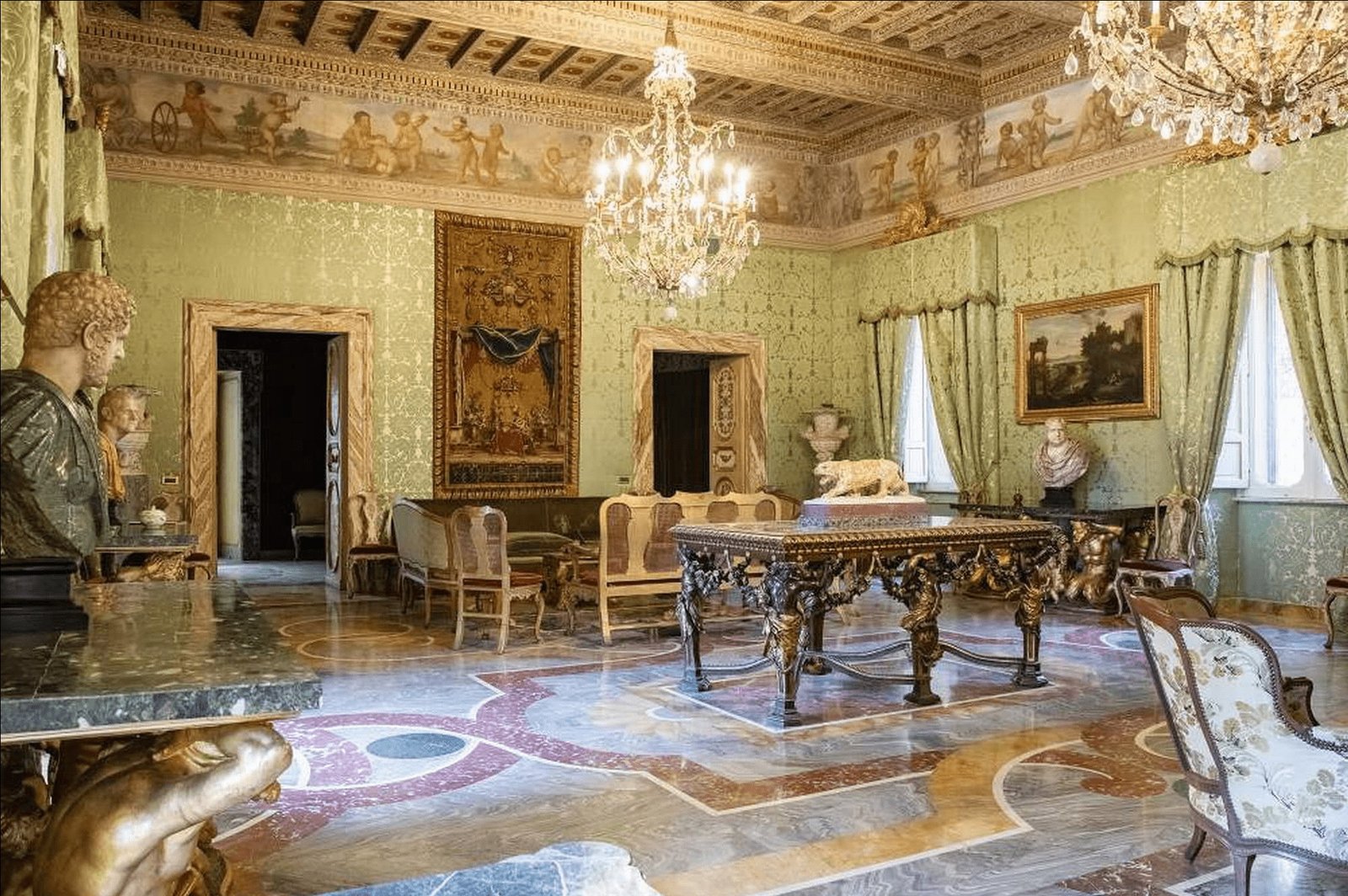
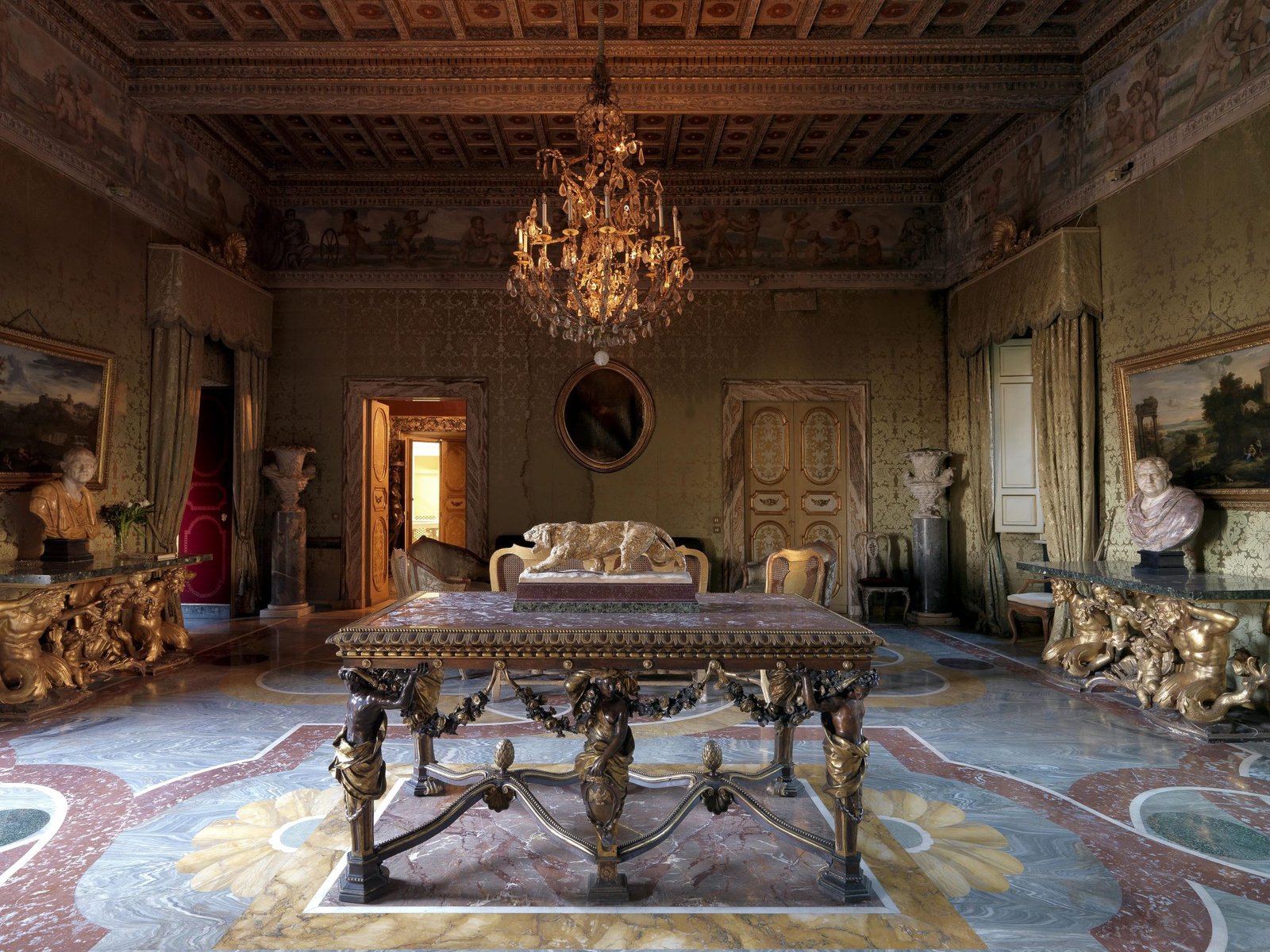
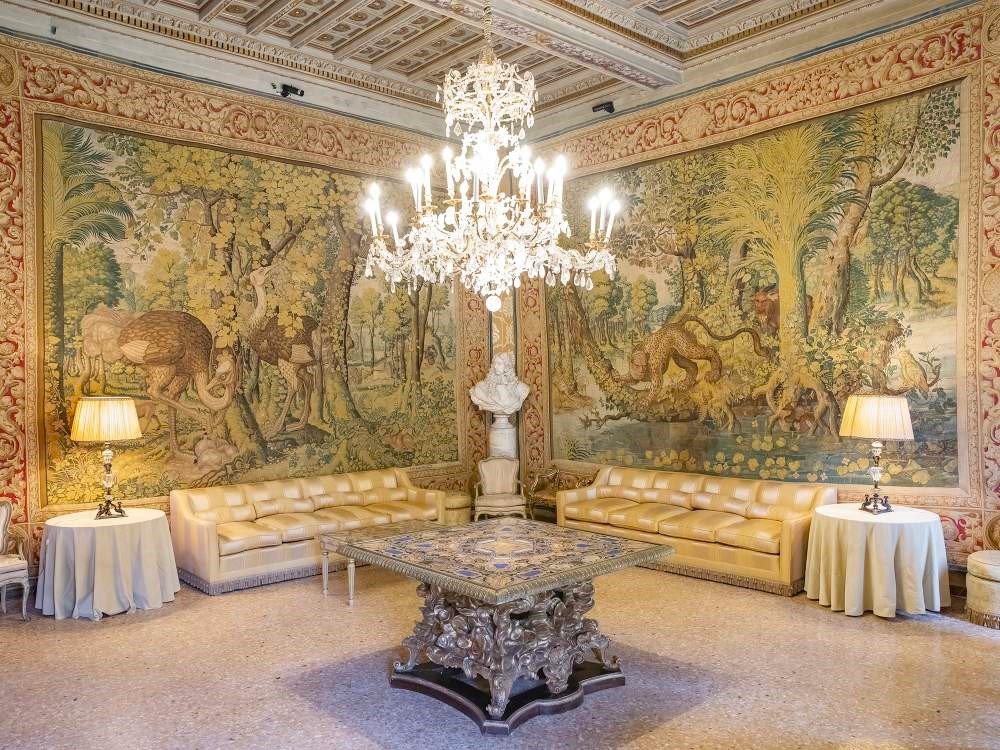
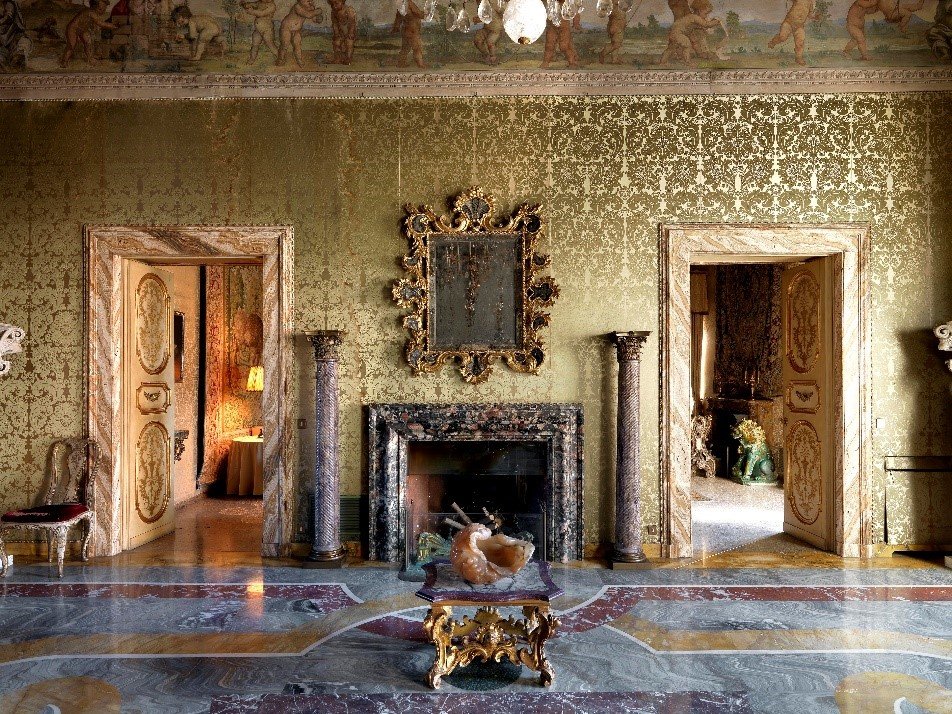
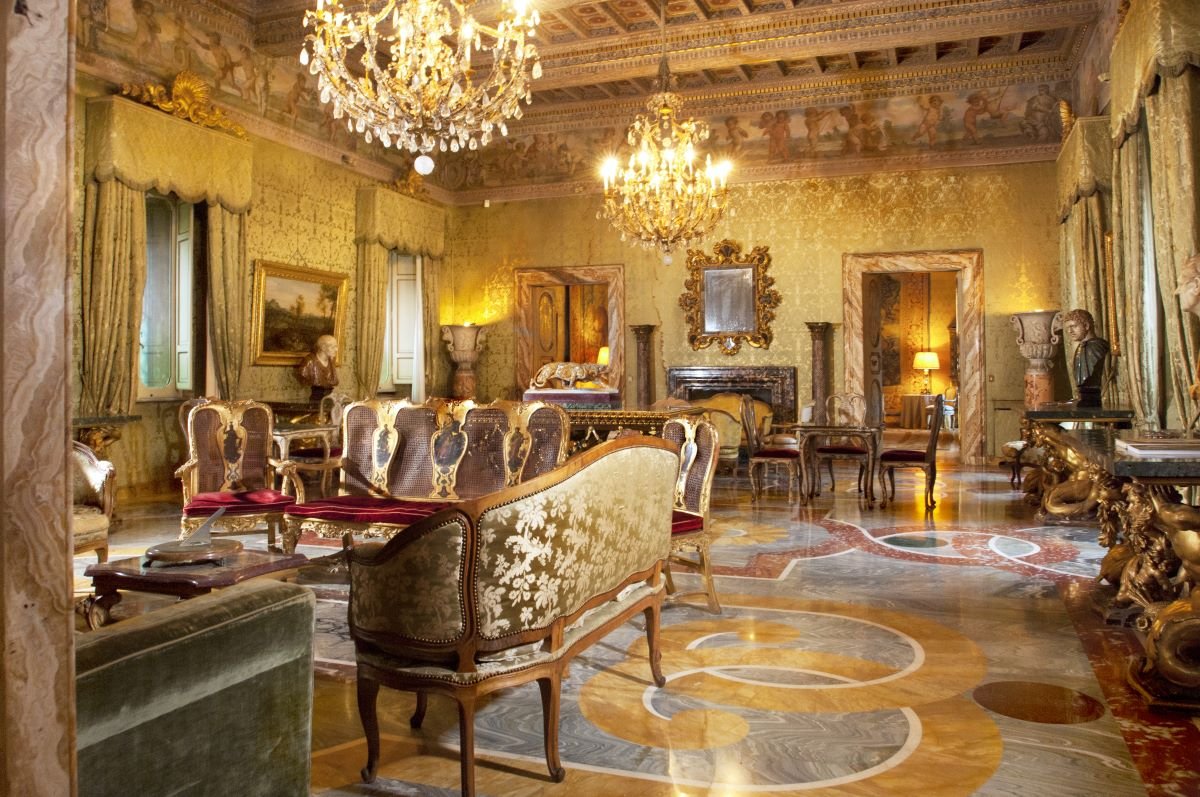
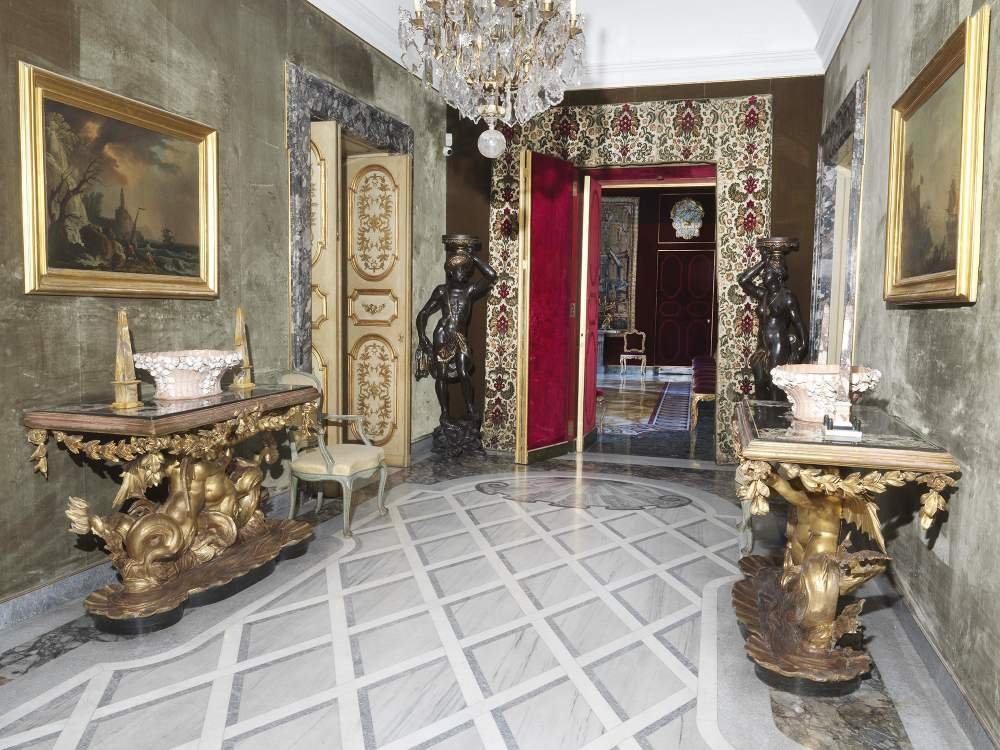
A major restoration campaign was completed in 2021, aimed at recovering and protecting an important part of the Palace’s art heritage. Thanks to a special permit granted by the Embassy of the Order of Malta to the Holy See, it is possible to visit the Palace and the sumptuous rooms, which hold masterpieces of art and fine furnishings, including the Green Salon, the Yellow Salon and the Dining Room. The Salone Verde features a wooden coffered ceiling painted with floral motifs and decorative frescoes around the perimeter of the walls, depicting putti at play, interspersed at the four corners by female figures holding coats of arms and heraldic symbols; the real jewel of this room is the Borghese Table, a work created between 1634 and 1635 by Alessandro Algardi for Prince Marcantonio Borghese, modified by Valadier and later included in the collections of Casa Litta: it is a stunning example of the most sumptuous Roman Baroque. The Yellow Salon houses two tapestries-of the eleven in existence in the world-which are part of the Landscapes with Animals series, made between 1611 and 1614 by the atelier of Caterine van Den Eynde, who had started and directed one of the most famous manufactories active in Brussels between the end of the Renaissance and the beginning of the Baroque. The first tapestry, Landscape with Ostriches, was made by Jan Raes II, the most important weaver in Brussels, in the early 17th century. The second tapestry, also by Jan Raes II, is Leopard on a Pond, belonging to the same series commissioned by Cardinal Alessandro Peretti Montalto, one of the great cardinal collectors of the 16th and 17th centuries, and first exhibited in Rome some 400 years ago; the tapestries later became part of the collections of the Chigi, Torlonia, and Sforza Cesarini families. Six other magnificent grotesque tapestries adorn the Dining Room; they were designed by Jean-Baptiste Monnoyer and date from about 1690 to 1711.