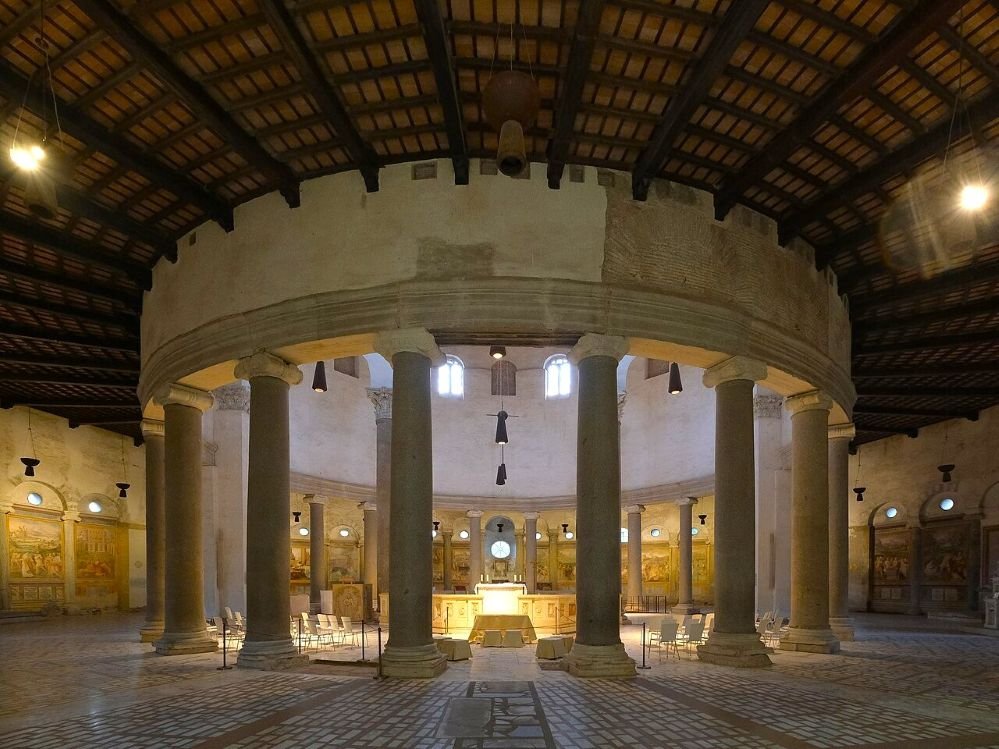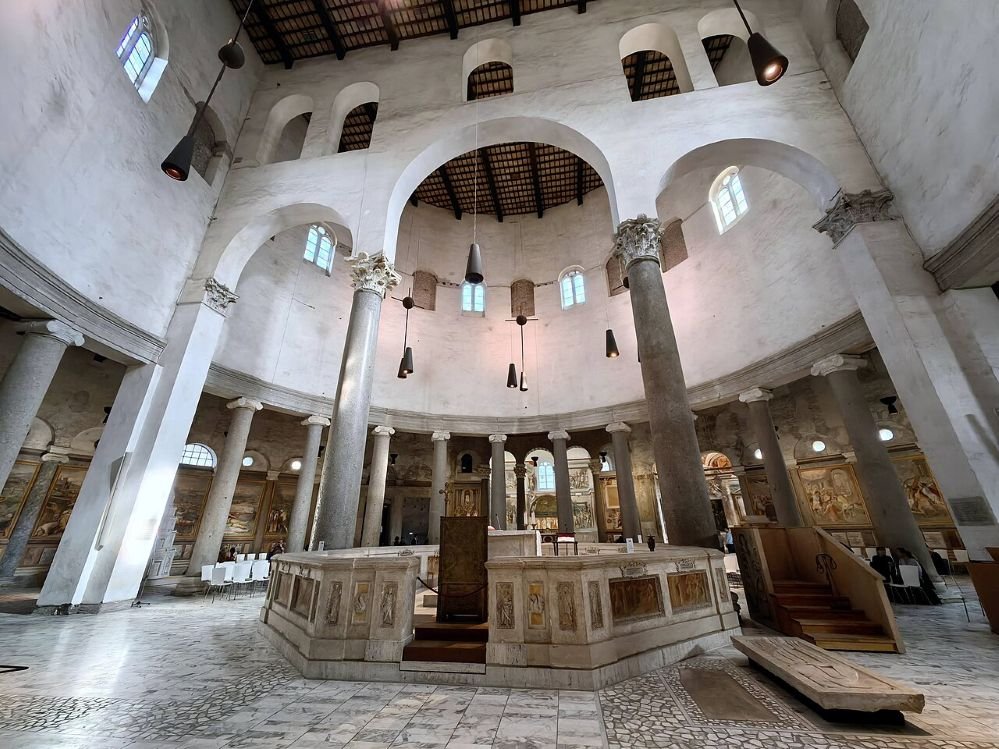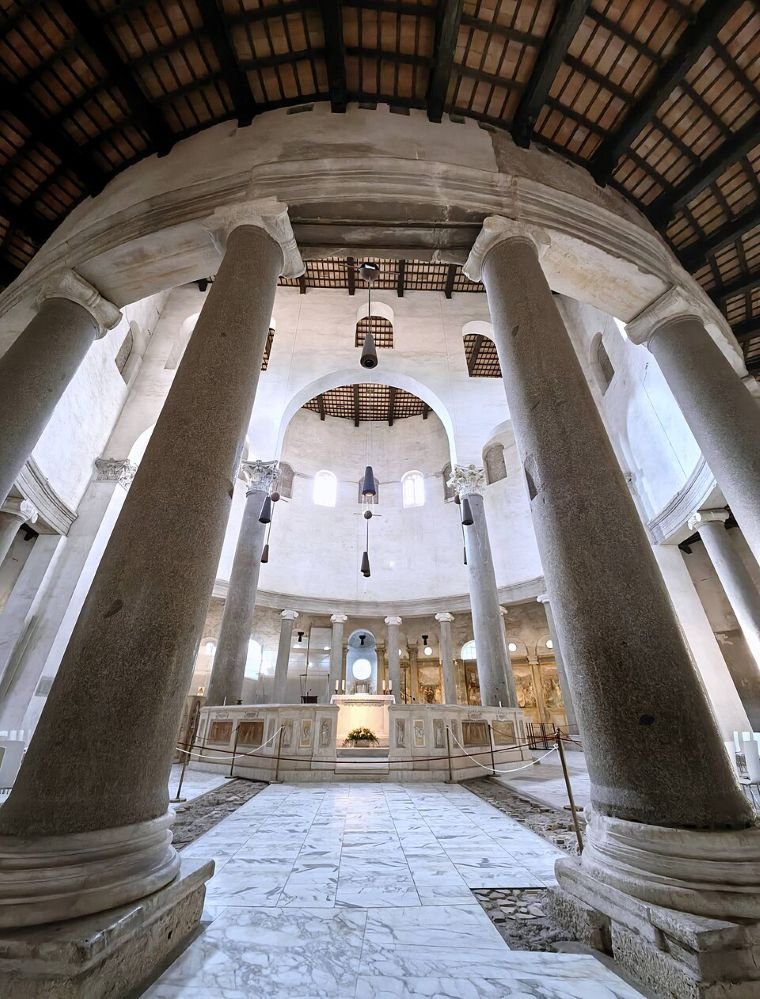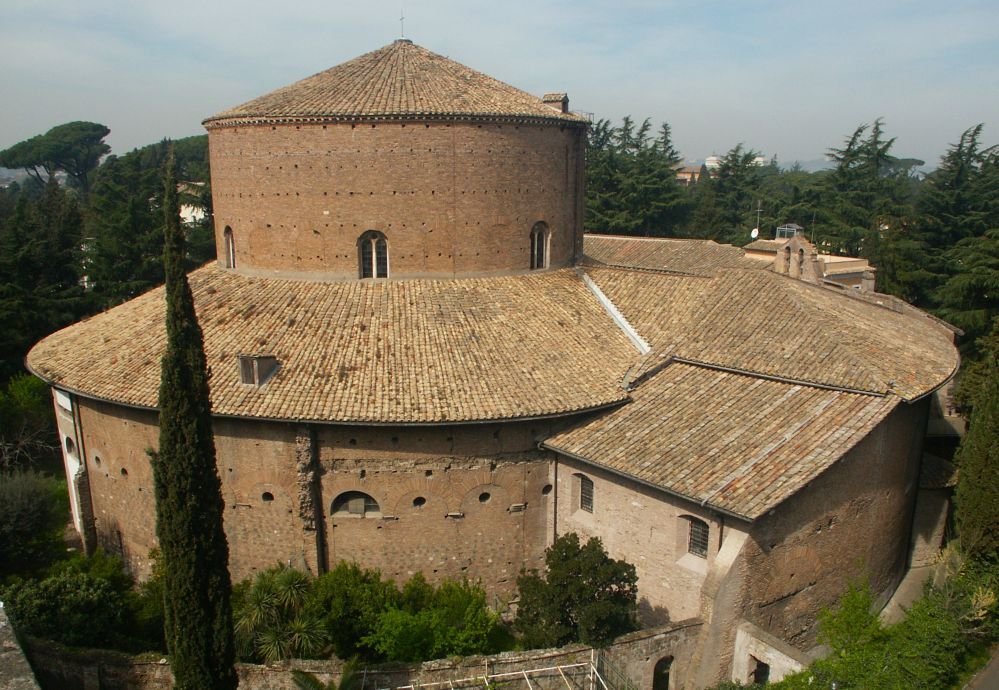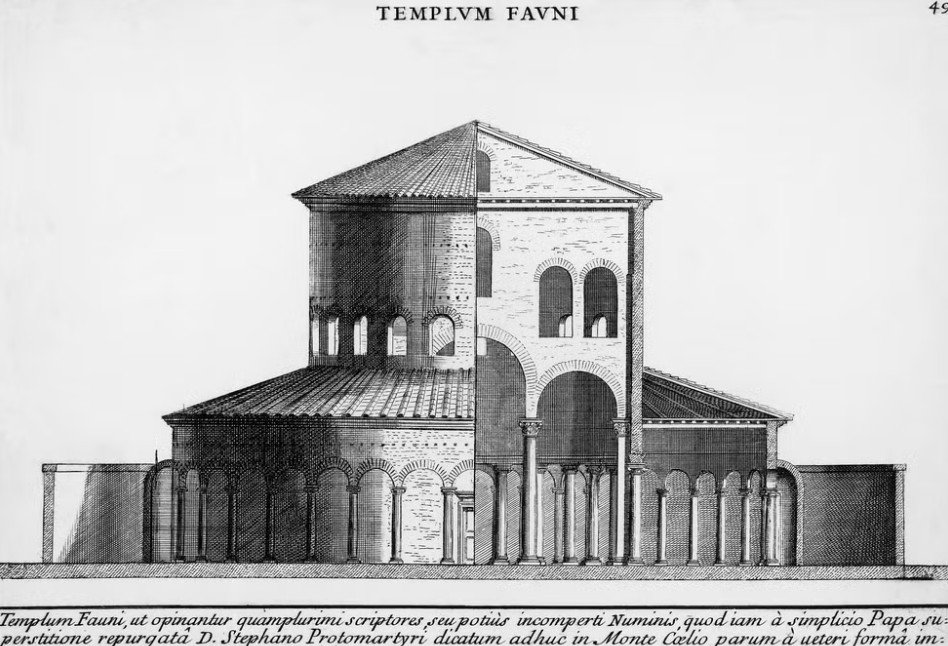
There is a place on the Celio hill that, more than any other, embodies Rome’s millennial heritage. A place that appears intimate and discreet from the outside, but once you cross the threshold, reveals breathtaking architecture: Santo Stefano al Celio, one of the oldest early Christian churches with a circular plan. Here, a space opens up that is unrivalled.
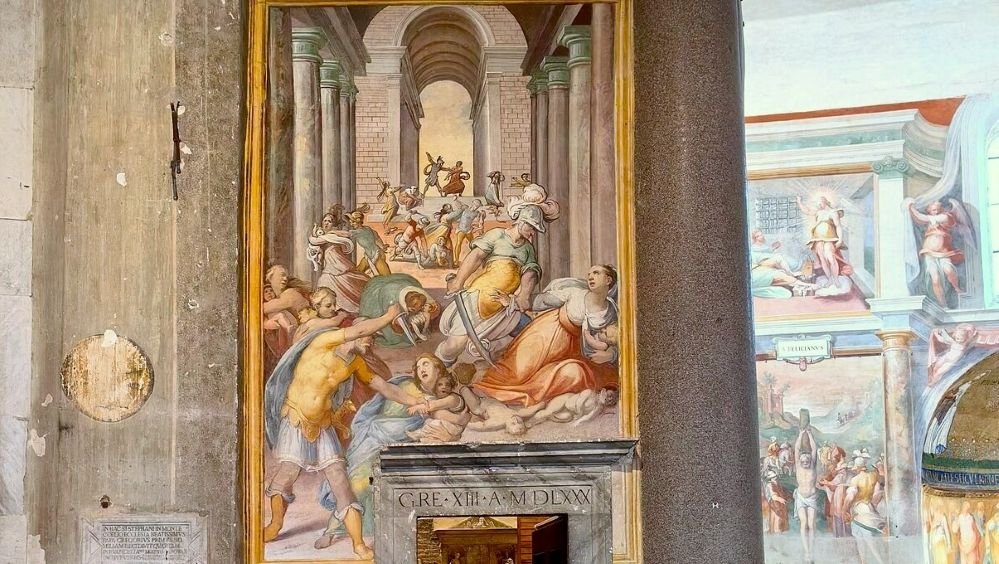
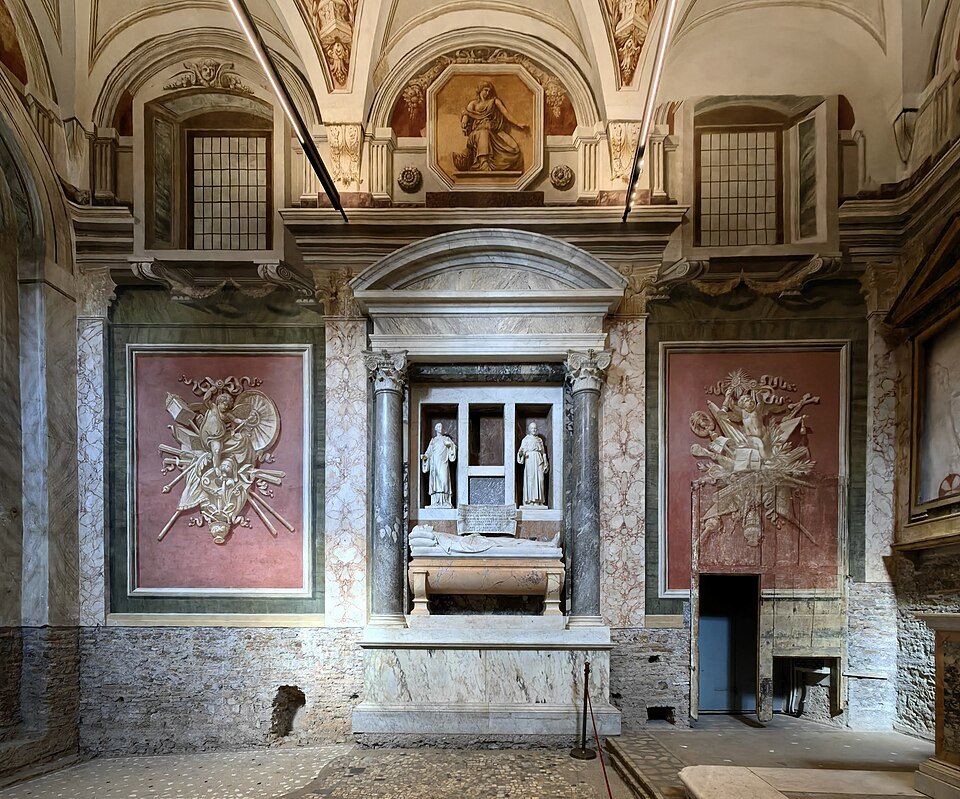
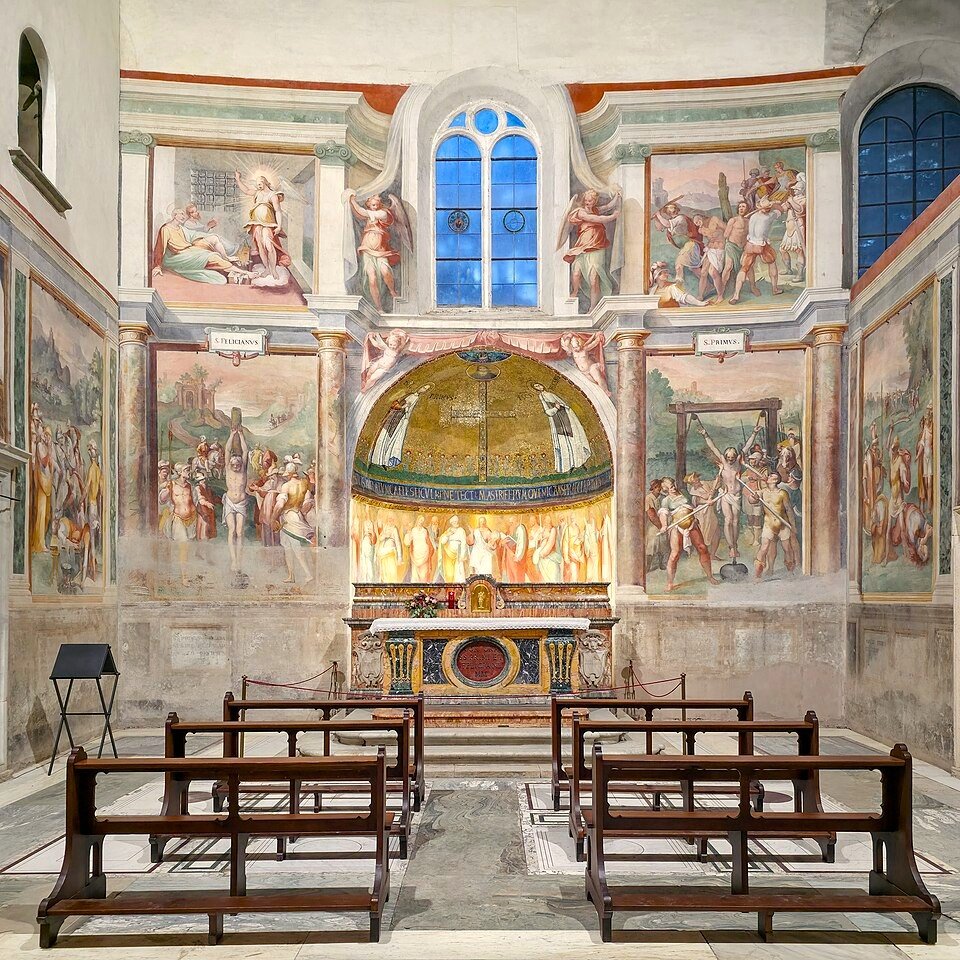
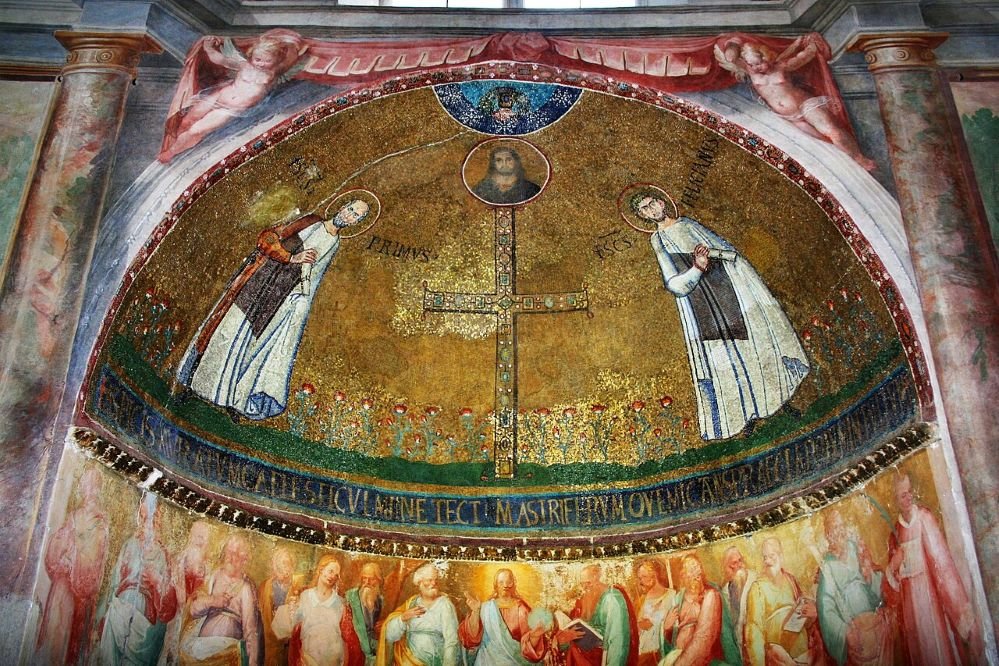
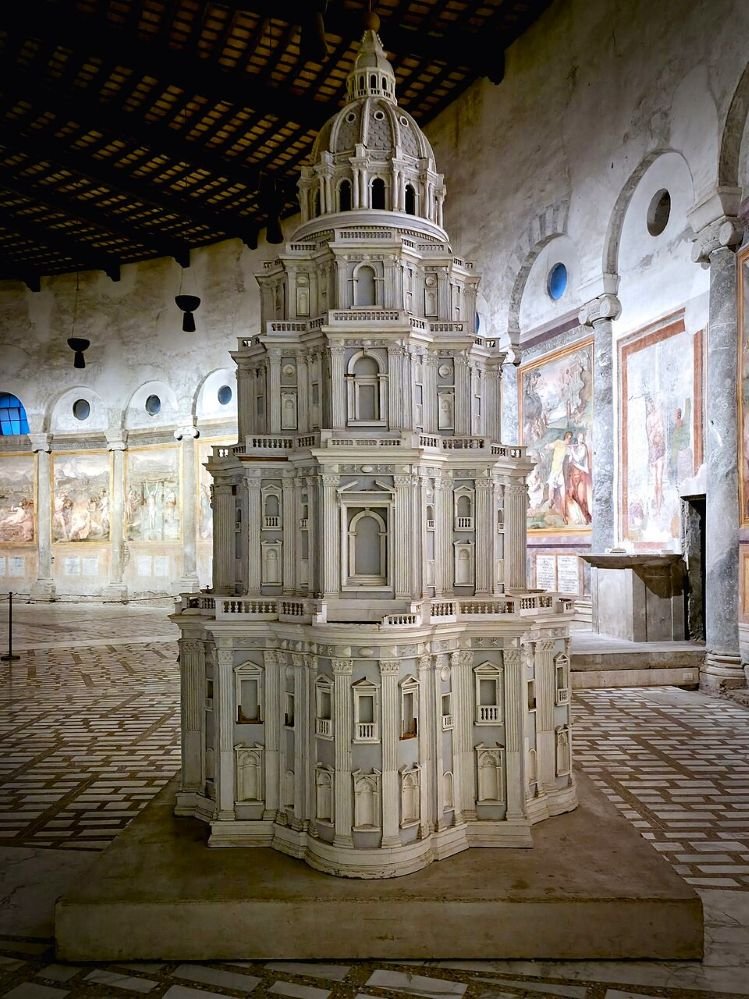
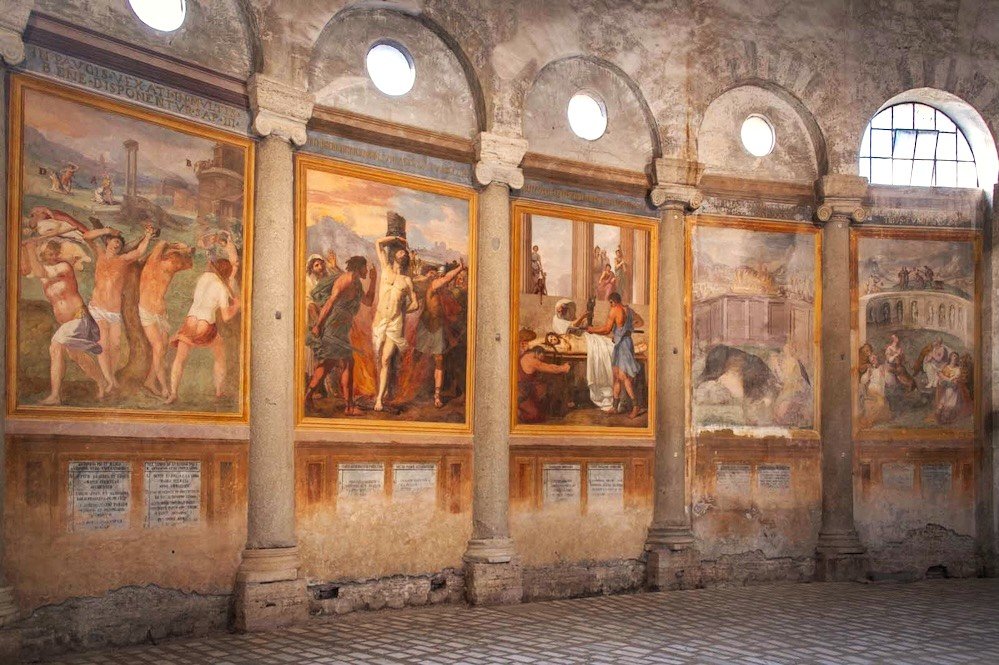
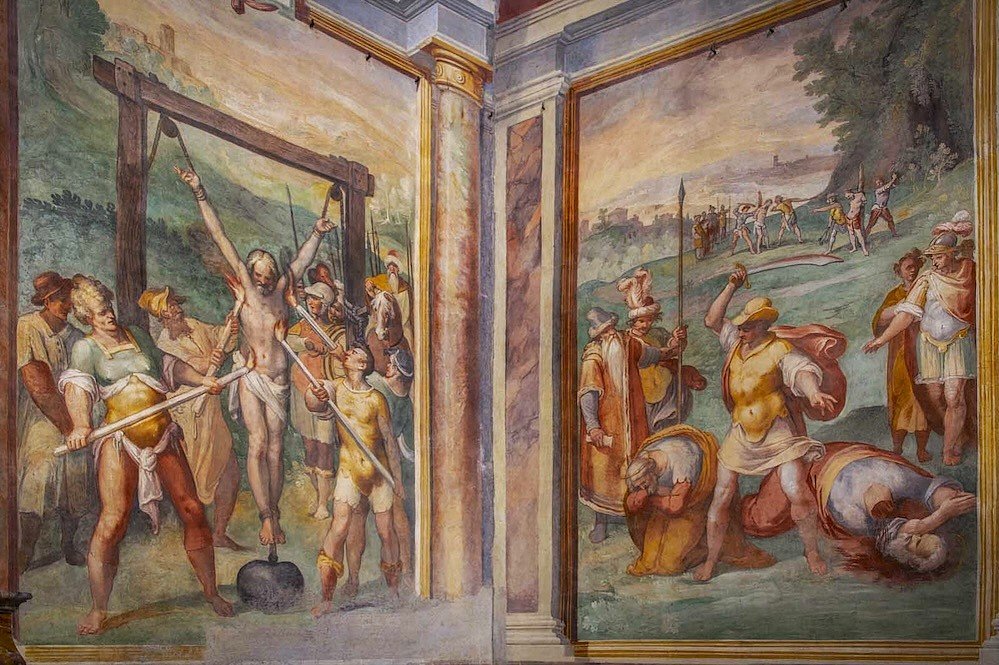
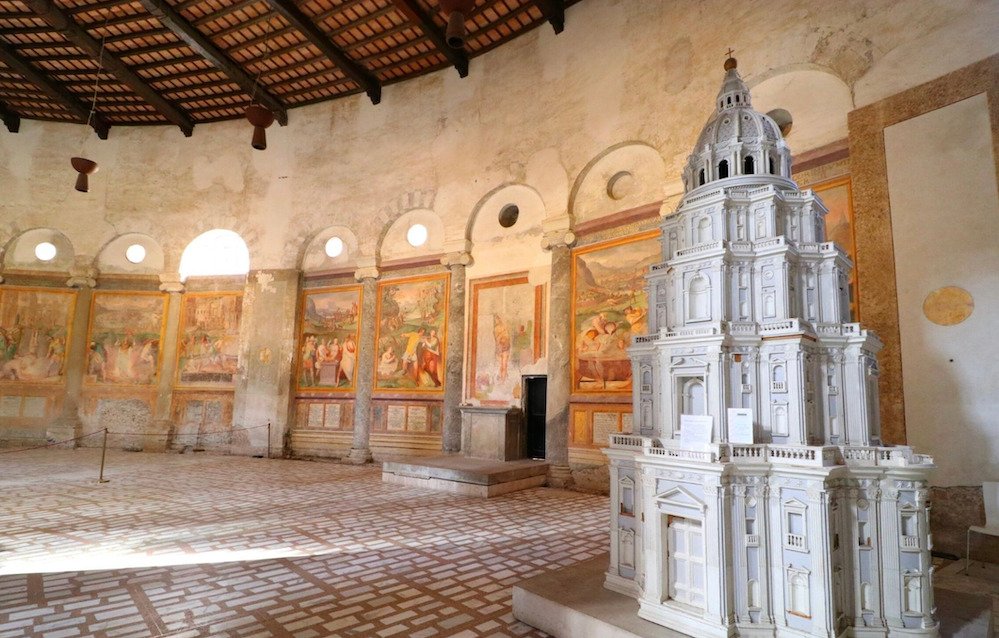
The church, dedicated to Saint Stephen the Martyr, is nestled in the green hillside, preceded by a medieval portico that leads to a monumental interior: a vast circular space supported by twenty-two marble columns, arranged in concentric rings that evoke the structure of the Holy Sepulchre in Jerusalem. Since the Middle Ages, its unusual shape has fuelled legends and imaginative attributions: it was thought to be a pagan temple dedicated to the god Faunus or Emperor Claudius. The interior was originally decorated with mosaics and marble cladding. In the 7th century, the relics of the martyrs Primo and Feliciano were transferred there, for whom a splendid chapel was built, a precious treasure chest that preserves extraordinary mosaics. The building’s history saw centuries of neglect and rebirth. In the 12th century, Pope Innocent II undertook major restoration work, but it was in the 15th century that the church regained its splendour: Pope Nicholas V, determined to restore Rome to its former glory, entrusted Bernardo Rossellino with transforming the building into a Renaissance jewel. Since then, Santo Stefano al Celio has been the seat of the Hungarian Pauline Order, until the foundation of the Germanic and Hungarian College, which still preserves it today. The tour continues with the basilica’s most impressive work: the Martyrology, a series of paintings painted by Pomarancio in 1583. Thirty-four paintings occupy the entire ambulatory, creating an overwhelming visual sequence: veritable “theatrical paintings” depicting ancient martyrs subjected to extreme torment, in a climax of cruelty that fully reflects the spirit of the Counter-Reformation. Goethe, Stendhal, De Sade and many other famous travellers were shocked by this sort of “encyclopaedia of horror”, which still has a powerful emotional impact today.
The visit is an extraordinary journey through two thousand years of history: from early Christian origins to Byzantine splendour, from the Middle Ages of pilgrims to Renaissance elegance, to the dramatic theatricality of the Martyrology.