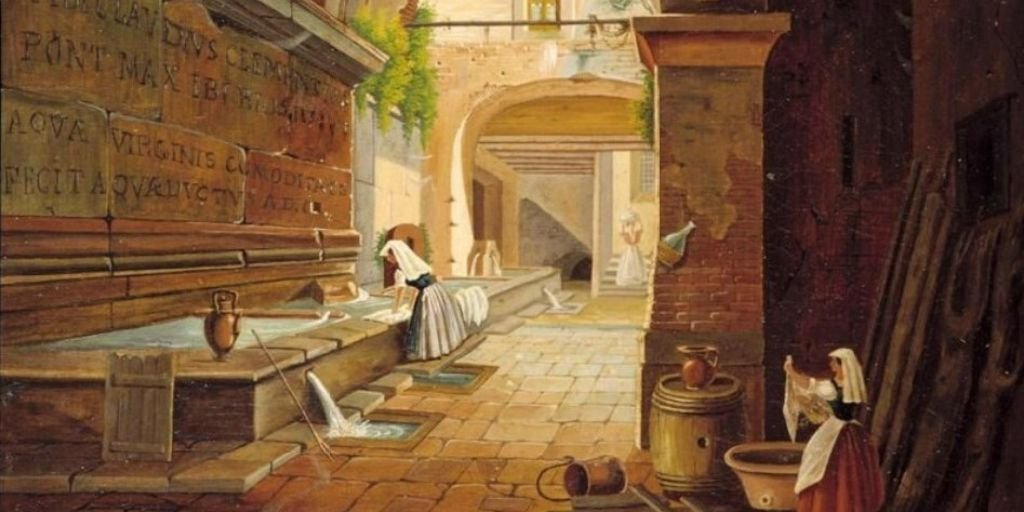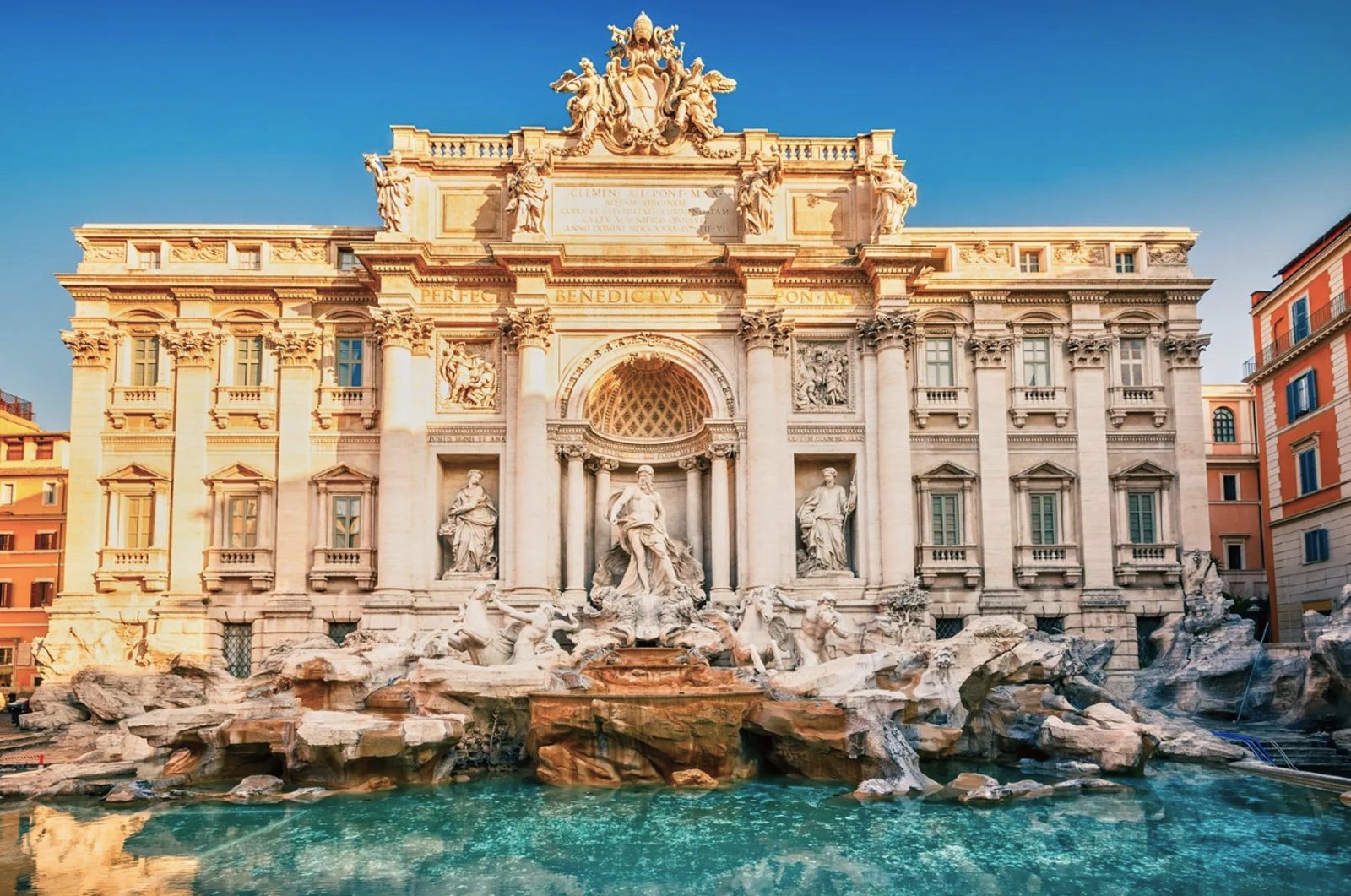
The Aqueduct Virgo (Aqua Virgo) is the only aqueduct in ancient Rome that has remained in continuous operation to the present day. Built by Agrippa, a son-in-law of Emperor Augustus, in 19 B.C. to supply the Baths in the Campus Martius, it is an extraordinary work of hydraulic engineering.With a length of more than 20 kilometers, the water flowed from its source near the Aniene River to the center of the city in a mostly underground route with a daily flow rate of 2.504 quinaria (equal to 1,202 liters per second), a maximum gradient of 30 centimeters per kilometer, and a drop of only 6 meters from the source to the terminal point.In 1731 Pope Clement XII announced a competition, won by Nicola Salvi, for the construction of a large monumental fountain at the end point of the Aqueduct Virgo, the Trevi Fountain. After thirty years of work, the fountain was inaugurated on May 22, 1762, under the pontificate of Pope Clement XIII. Even today, the Aqueduct Virgo feeds several monumental fountains, including the Barcaccia in the Spanish Steps and the Fountain of the Four Rivers in Piazza Navona, as well as the Trevi Fountain, which receives a continuous stream of 120 liters per second.
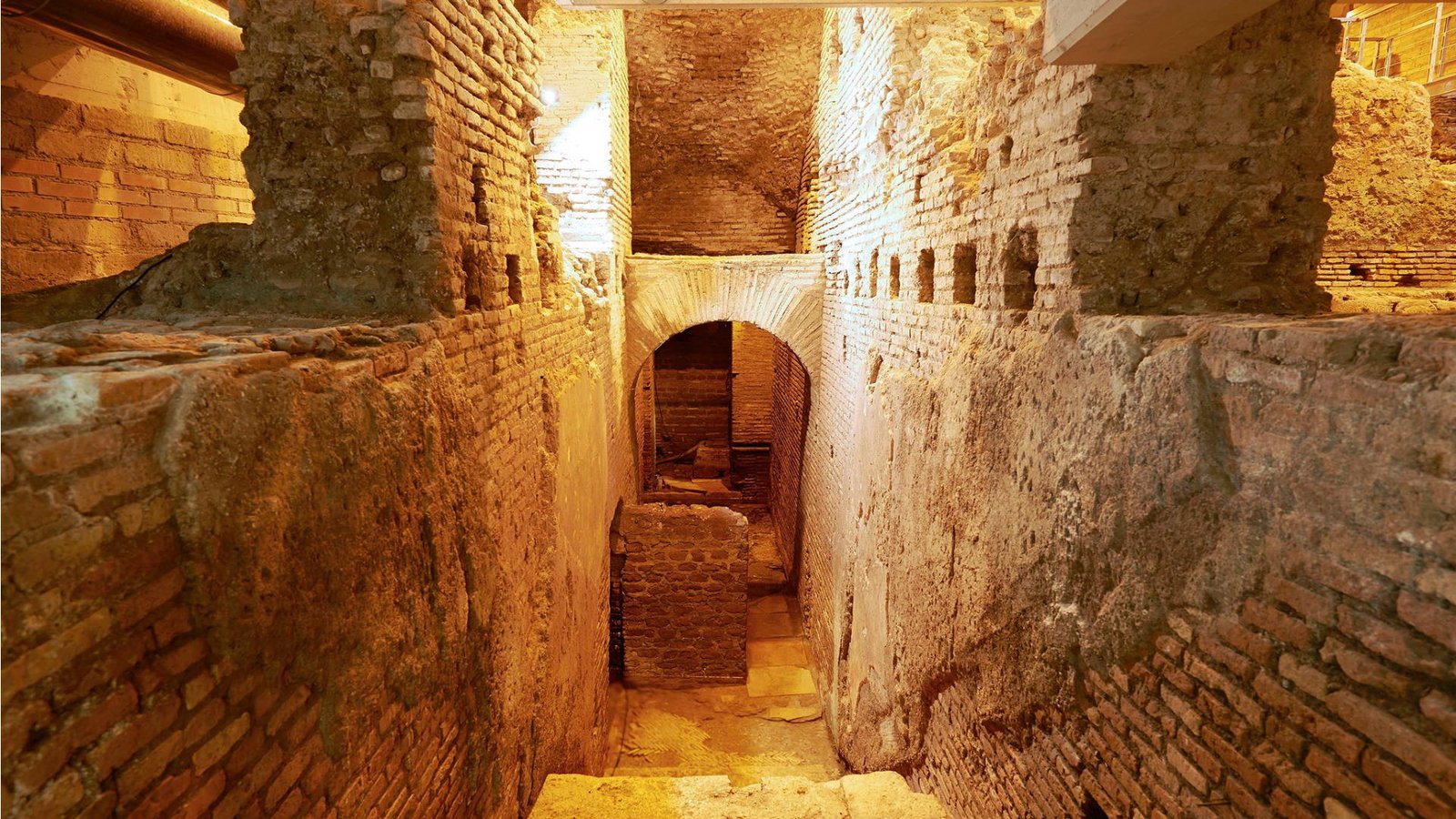
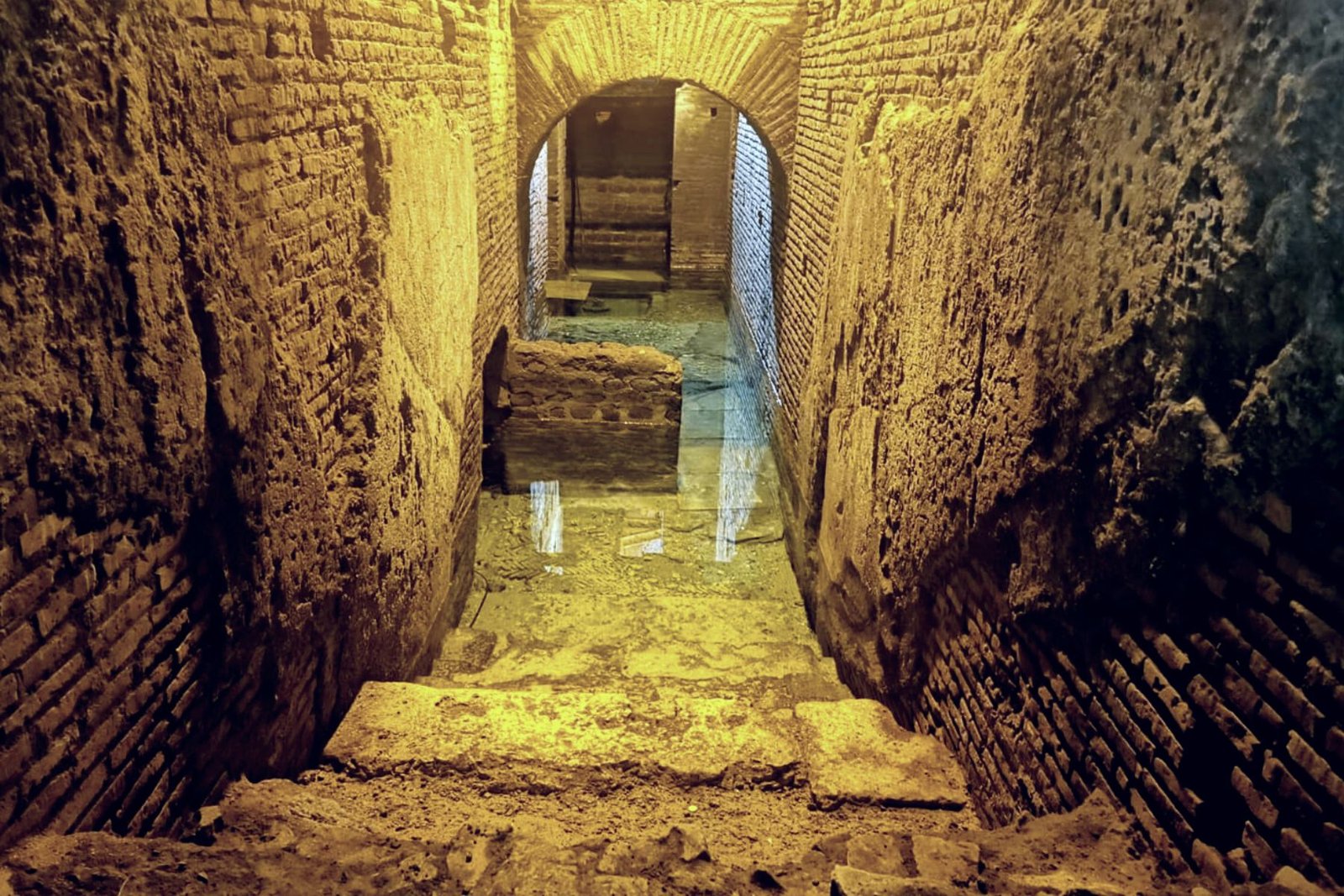
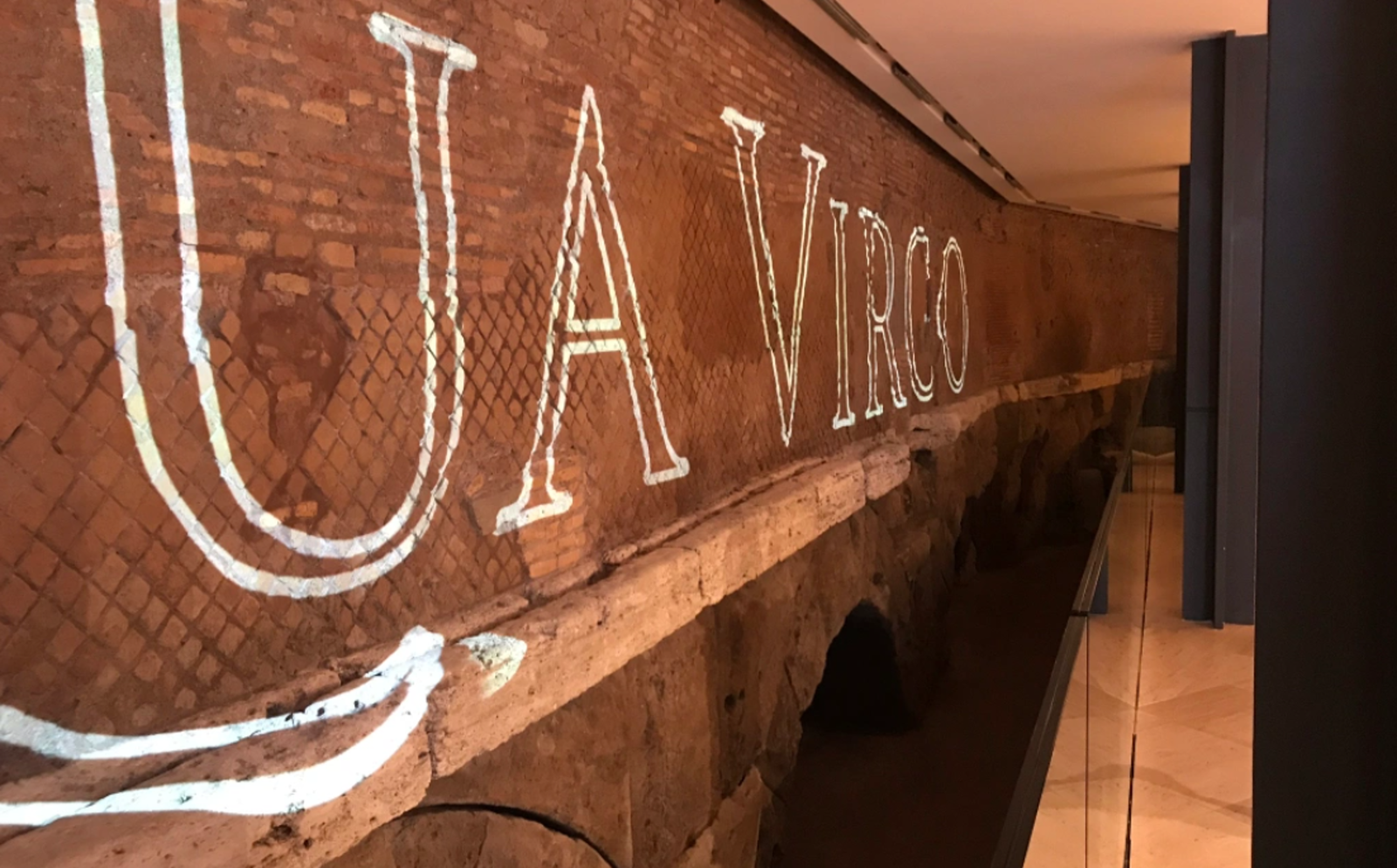
This extraordinary tour, divided into three stages, leads “behind the scenes” to discover the still functioning Aqueduct under the Trevi Fountain. First we descend underground to visit the archaeological area of Vicus Caprarius, where it is possible to admire the castellum acquae, the ancient water reservoir of the Aqueduct where water still gushes out after two thousand years. We then continue to the basement of shopping mall La Rinascente, to observe a large section of the Aqueduct found during renovation work: as many as 15 arches that testify to the grandeur of the Aqua Virgo, thanks in part to an evocative virtual narrative projected directly onto the arches of the Aqueduct. Finally we return to the surface and the tour ends in front of the Trevi Fountain to learn more secrets of one of the world’s most famous monuments.