The Church of the Gesù in Rome represents one of the highest expressions of Baroque art; it holds extraordinary masterpieces including monumental illusionistic paintings, astonishing mechanical machines, and sumptuous decorations in gold and precious stones, and saw some of the most important artists of the time engaged in its creation.
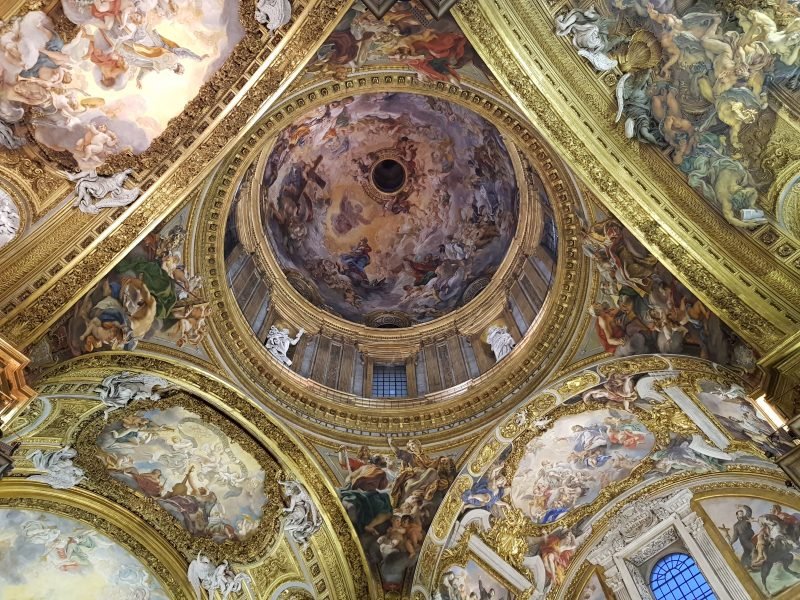
It was built at the behest of Ignatius of Loyola; the design, entrusted in 1551 to the Florentine architect Nanni di Baccio Biggio, was modified by Michelangelo, carried out by Jacopo Barozzi, known as “Il Vignola,” and completed by Giacomo Della Porta in 1584. The impact, upon entering the church, is spectacular, thanks to a single, vast nave that directs the attention of the faithful to the altar.
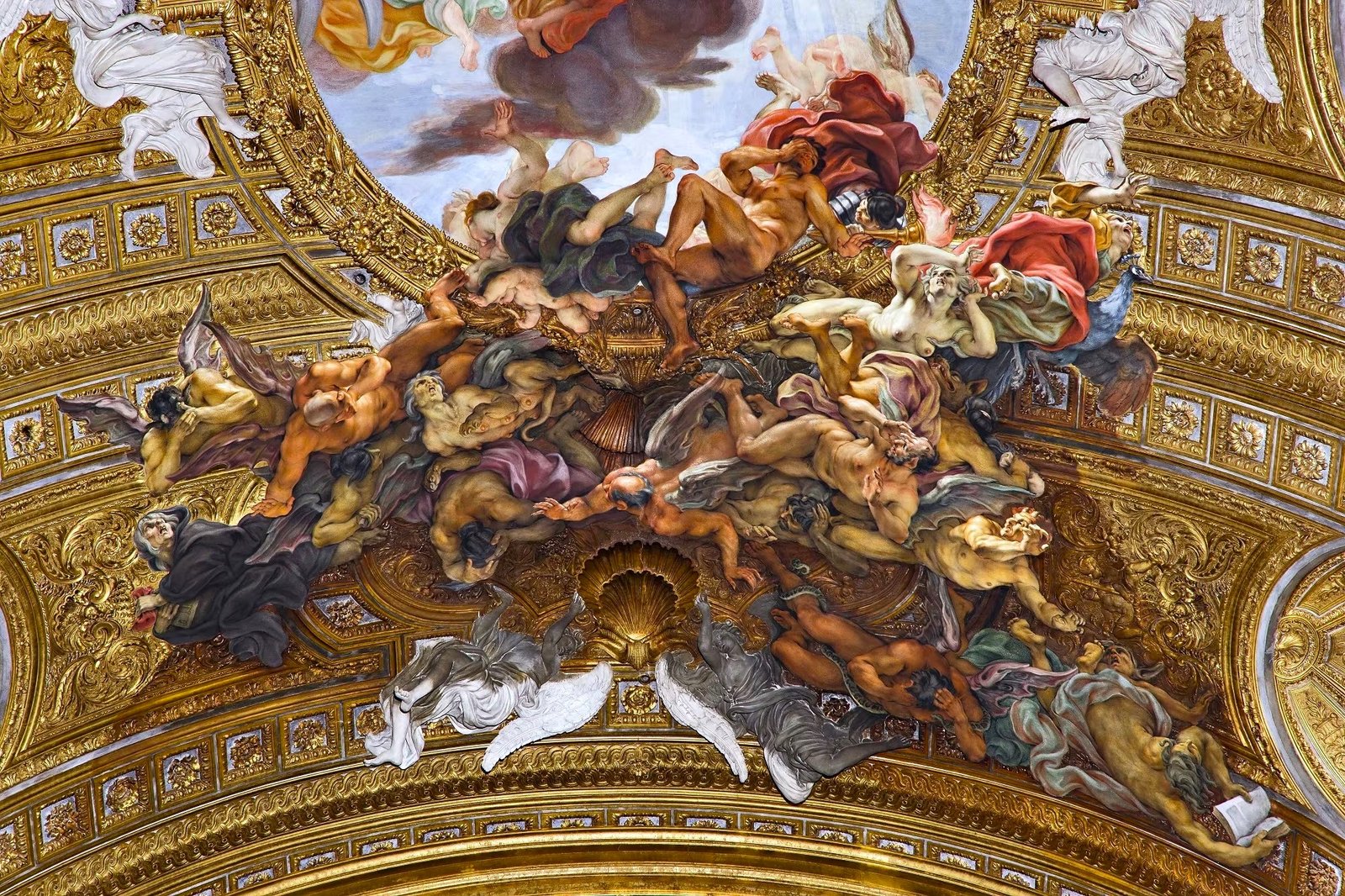
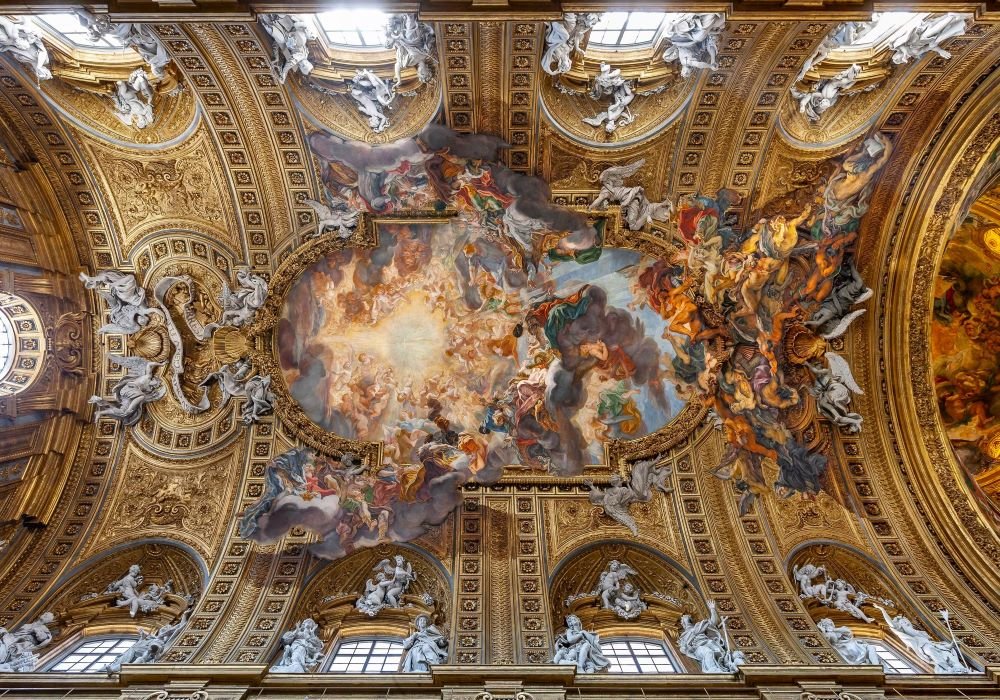
The spectacular vault, painted between 1674 and 1679 by Giovanni Battista Gaulli, known as Baciccia, is considered one of the great masterpieces of 17th-century Rome. It is a monumental illusionistic painting, the Triumph of the Name of Jesus, in which, thanks to the unscrupulous use of the effect of aerial perspective, the characters depicted “break through” the frame of the fresco; some seem to rise, drawn by divine light, others-the rebellious angels-seem to plummet downward, as if falling toward the faithful.
Baciccia is also credited with the creation of the sumptuous Chapel of St. Ignatius of Loyola; an incredible architectural and pictorial project that, between 1695 and 1699, involved more than a hundred craftsmen and artists. The Chapel holds the saint’s tomb, decorated with gold, bronze, marble and precious stones.
The church’s other incredible masterpiece is the altar, which holds a secret: the jaw-dropping “baroque machine,” which is activated every day at 5:30 pm. Thanks to a rocker mechanism, the large Andrea Pozzo painting covering the altar niche rises and falls as if it were a theatrical curtain, revealing a statue dedicated to St. Ignatius of Loyola, with background musical accompaniment. It is a scenic work, designed by Andrea Pozzo himself to amaze and enchant the faithful.
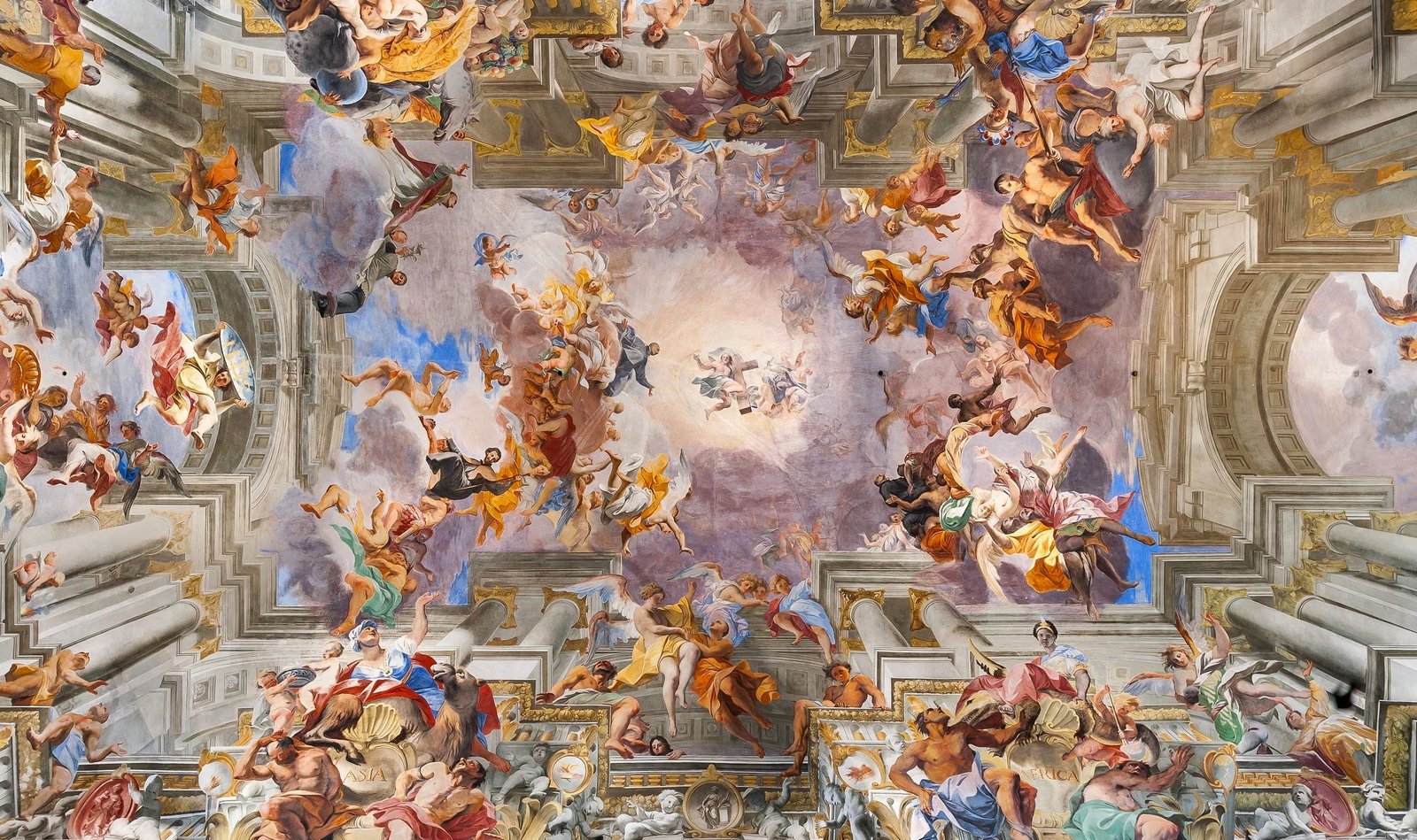
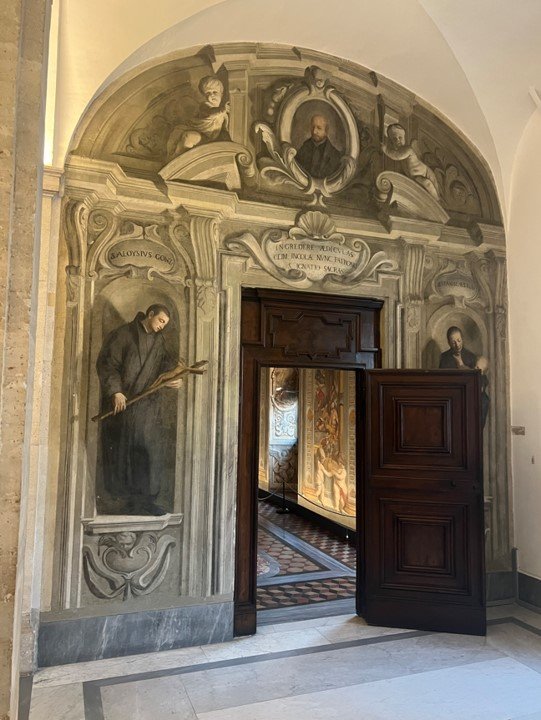
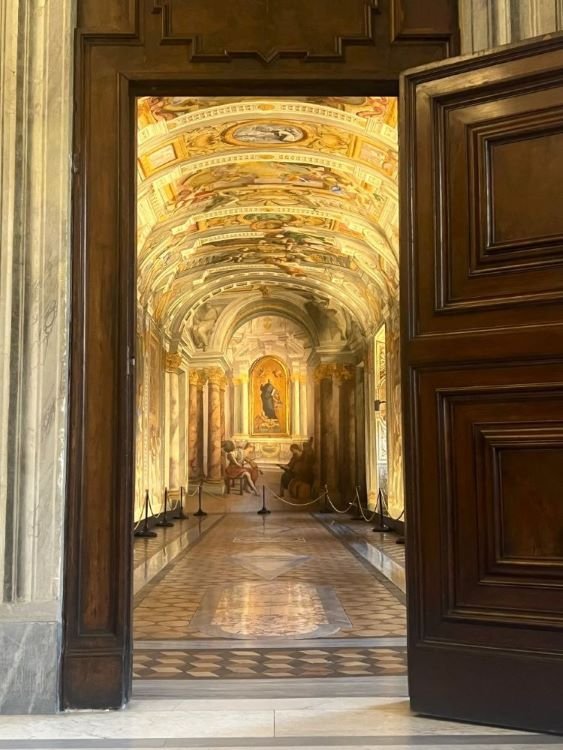
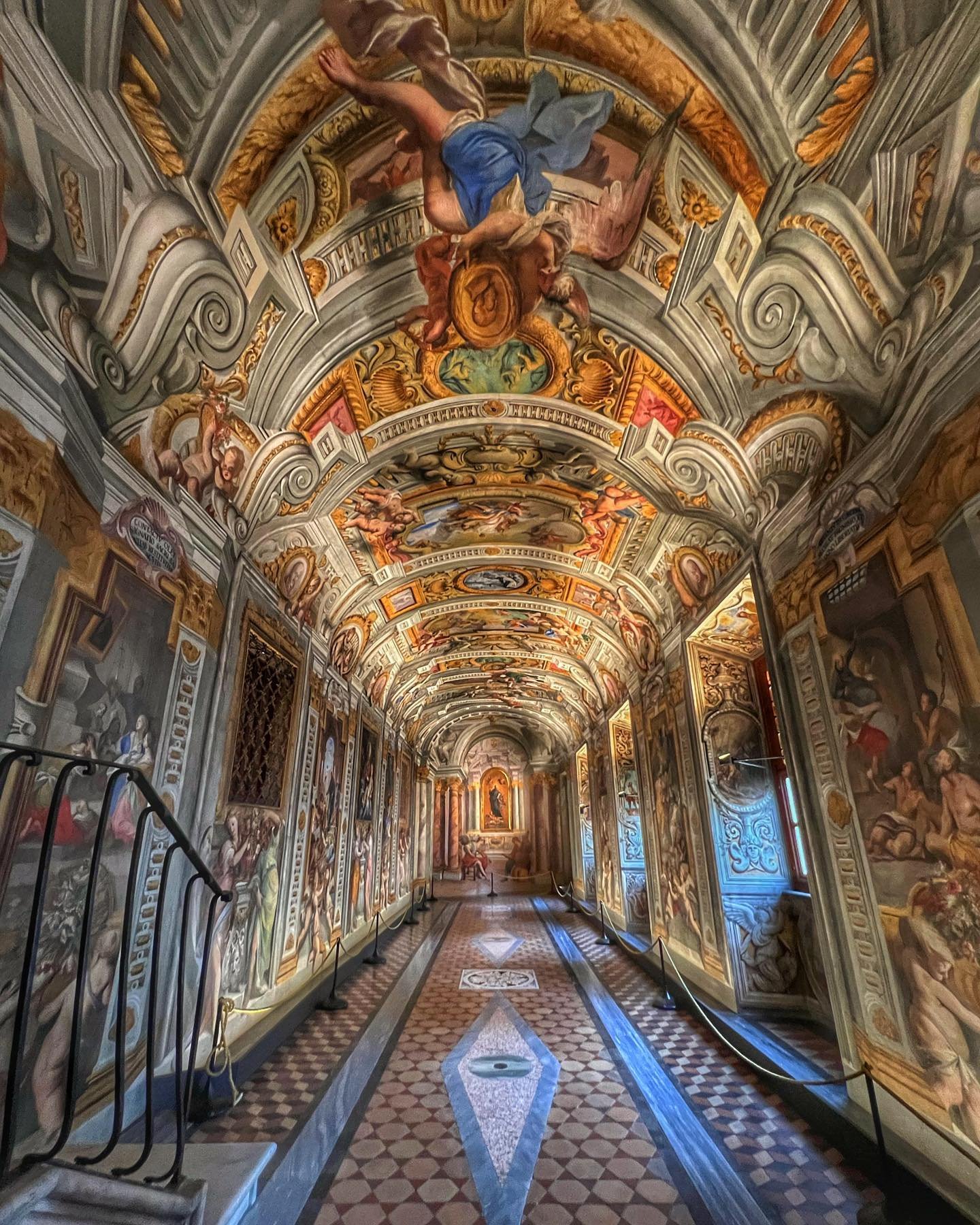
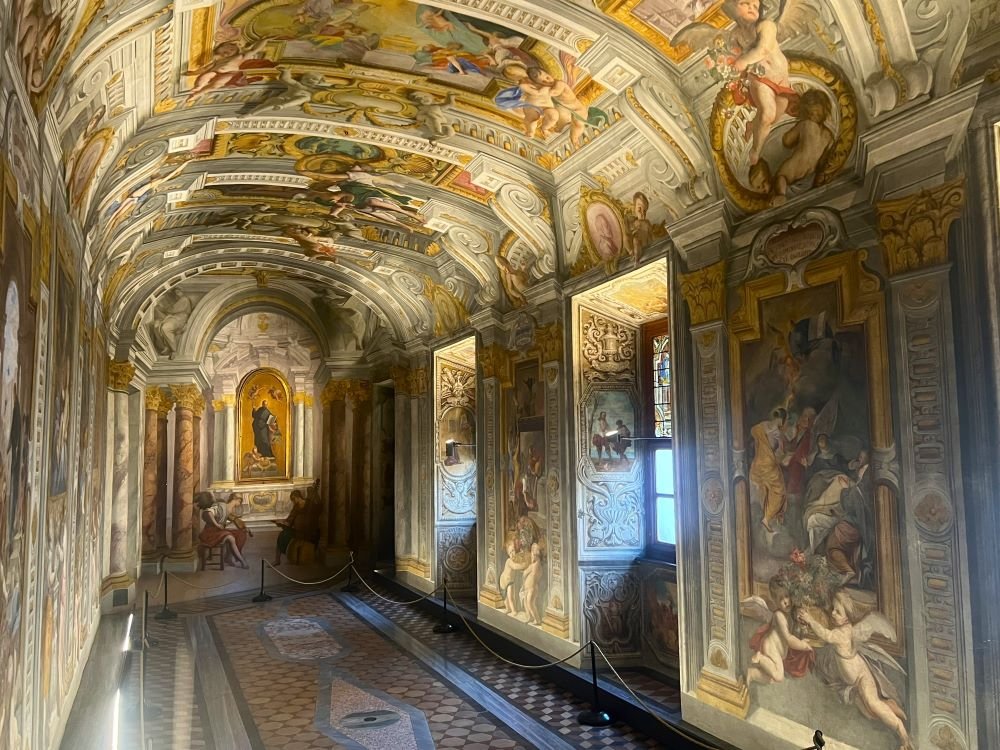
But the surprises did not end there. Our guided tour continues to the rooms where St. Ignatius lived. They date back to 1543 and are virtually intact; the rooms are connected by an illusionistic corridor designed by Andrea Pozzo between 1682 and 1686 and frescoed by Borgognone. Here, visitors are stunned by the admirable perspectives devised by Pozzo, who was able to transform the flat surfaces of the corridor into an incredible triumph of architecture, figures that seem to spill out of the walls, fake beams, columns and balustrades. A marvel that “works” only at one point; in fact, by standing on a marble rose drawn on the floor, the game of illusions magically comes to life, but all it takes is to move because everything around us collapses inexorably. In Andrea Pozzo’s intentions this constitutes not only a perspective artifice, but also the deeper meaning of a theological doctrine that invites the faithful to consider reality from a single point of view, the divine one.