Nestled in the greenery where two of Rome’s seven hills meet, the Palatine and the Caelian, stand three places of irresistible charm. Adjacent to the church of St. Gregory the Great, the oratories of St. Andrew, St. Barbara and St. Silvia are veritable treasure troves of artistic masterpieces.
Oratory of Santa Barbara
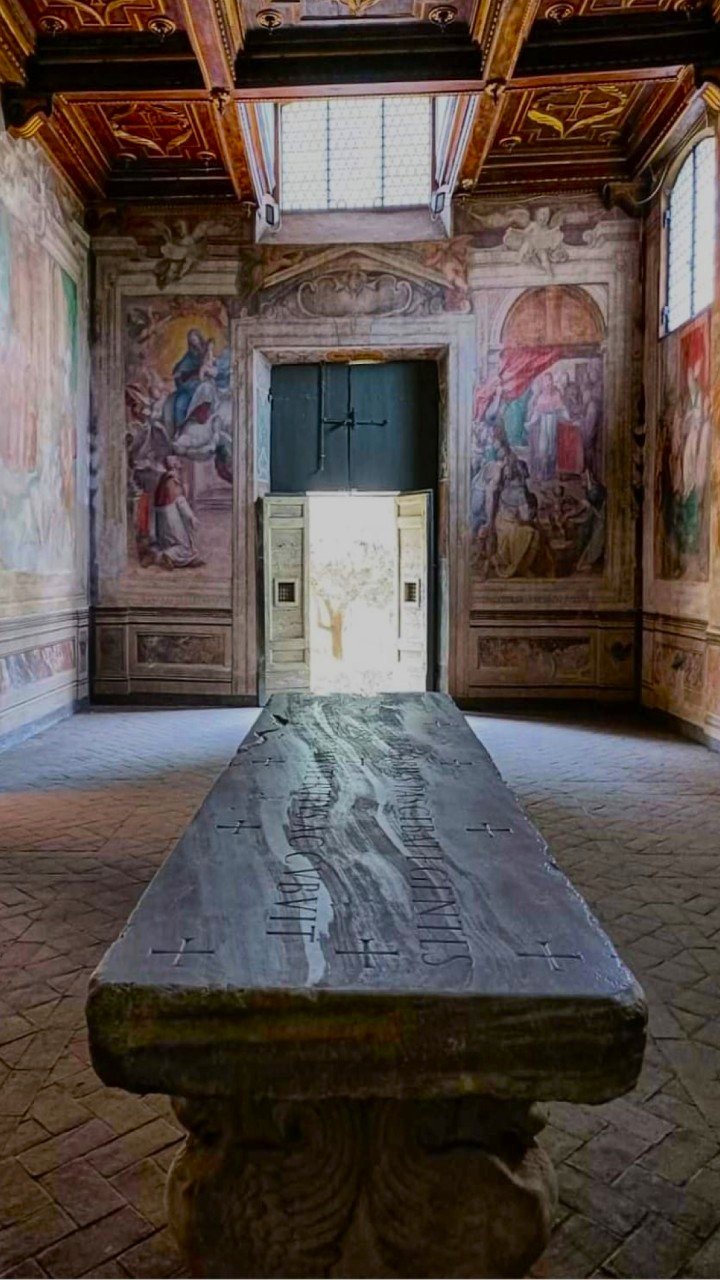
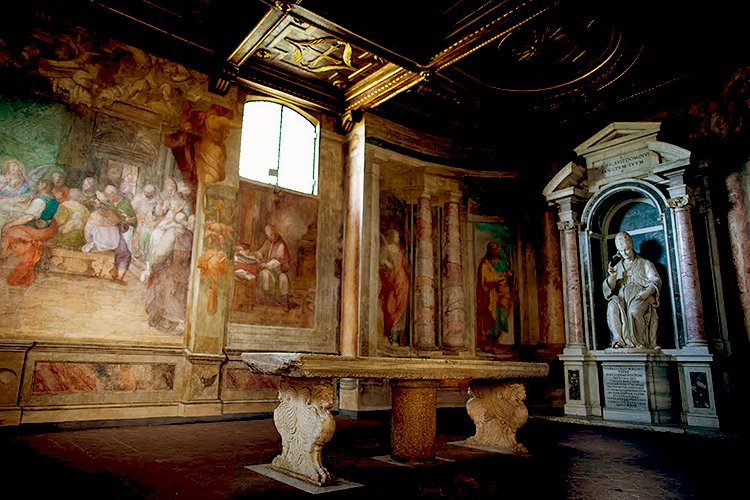
The oldest of the three oratories, it dates back to the 12th-13th century and stands on the remains of a Roman insula (apartment building) with tabernae (today’s commercial premises) from the 2nd-3rd century. It is also known as the Oratory of the “triclinium pauperum” (poor people’s table = soup kitchen) because, according to tradition, Gregory the Great, who ascended to the papal throne in 590, and his mother Saint Silvia served a daily meal to 12 poor people, like the apostles of Jesus. Even today, the marble table dating back to the 6th century, used to serve food, still stands in the centre of the oratory. Legend has it that one day an angel sat at the table dressed as a poor man: in memory of this event, in the 15th century, the Latin phrase Bis senos hic Gregorius pascebat egentes / angelus et decimus tertius accubuit (Here St. Gregory fed the poor / and an angel sat as the thirteenth guest) was engraved on the table, and every Holy Thursday until 1870, the Pope served lunch here to thirteen poor people.
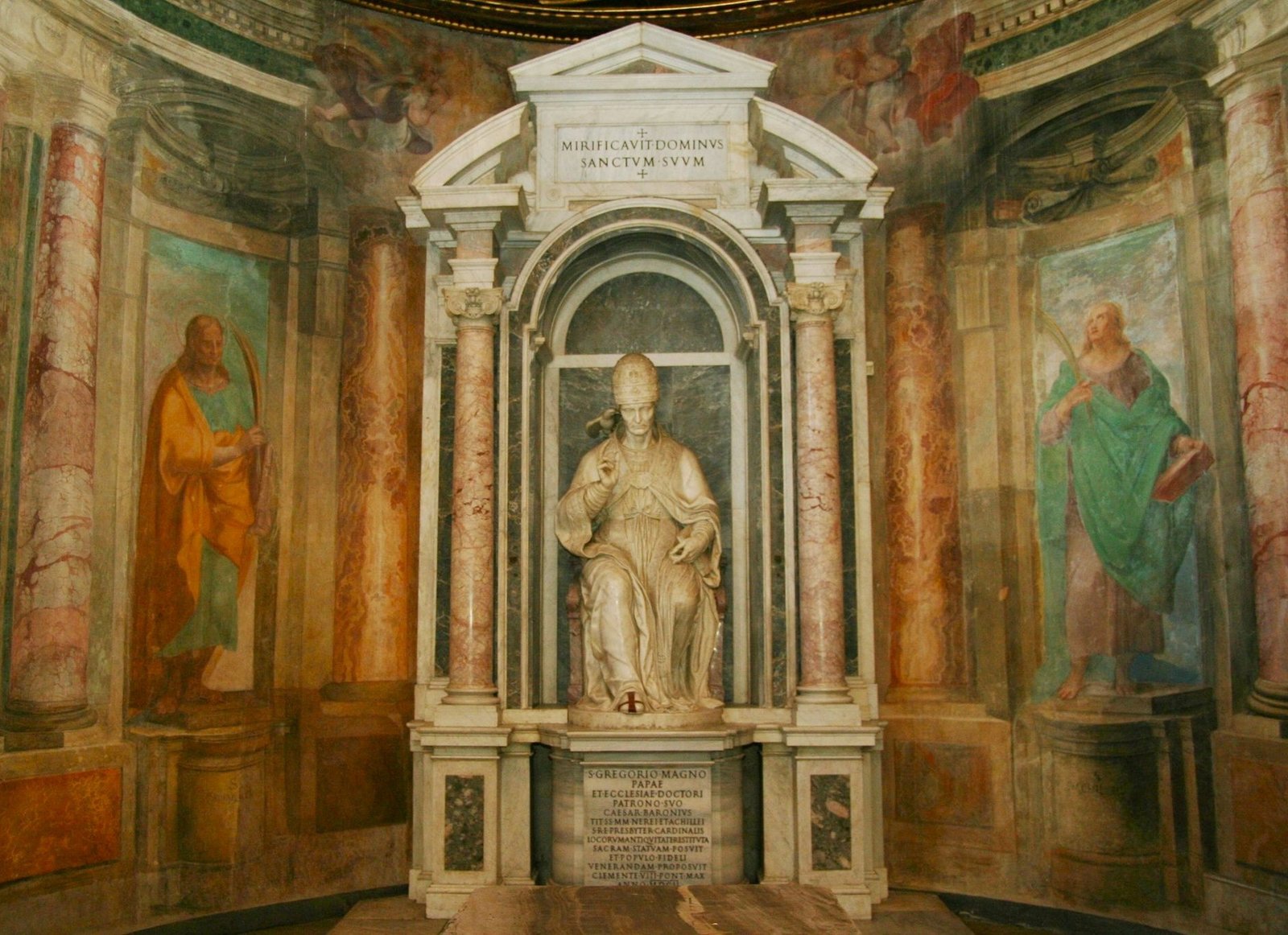
The oratory was restored in the early 1600s at the behest of Cardinal Cesare Baronio, who had the walls embellished with a cycle of frescoes dated 1602 by Antonio Viviani, known as The Deaf from Urbino, depicting 11 moments in the life of St. Gregory the Great, including the Apparition of the Angel at the Poor Table and the statue of Saint Gregory the Great giving his blessing, created by Nicolas Cordier, also in 1602.
Oratory of Saint Andrew
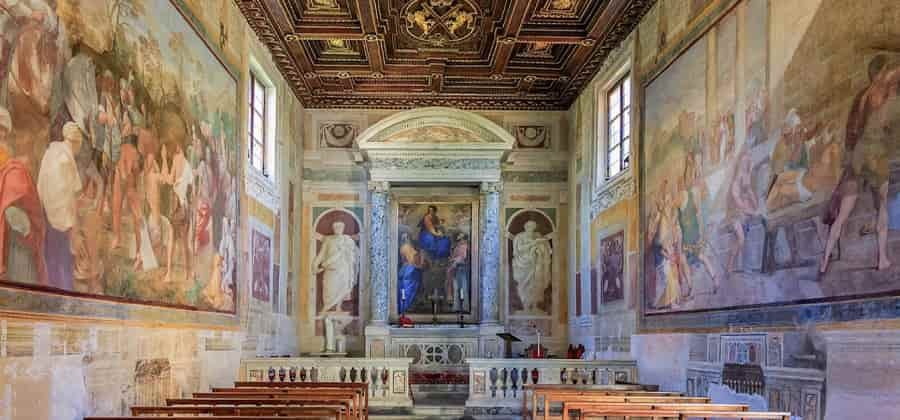
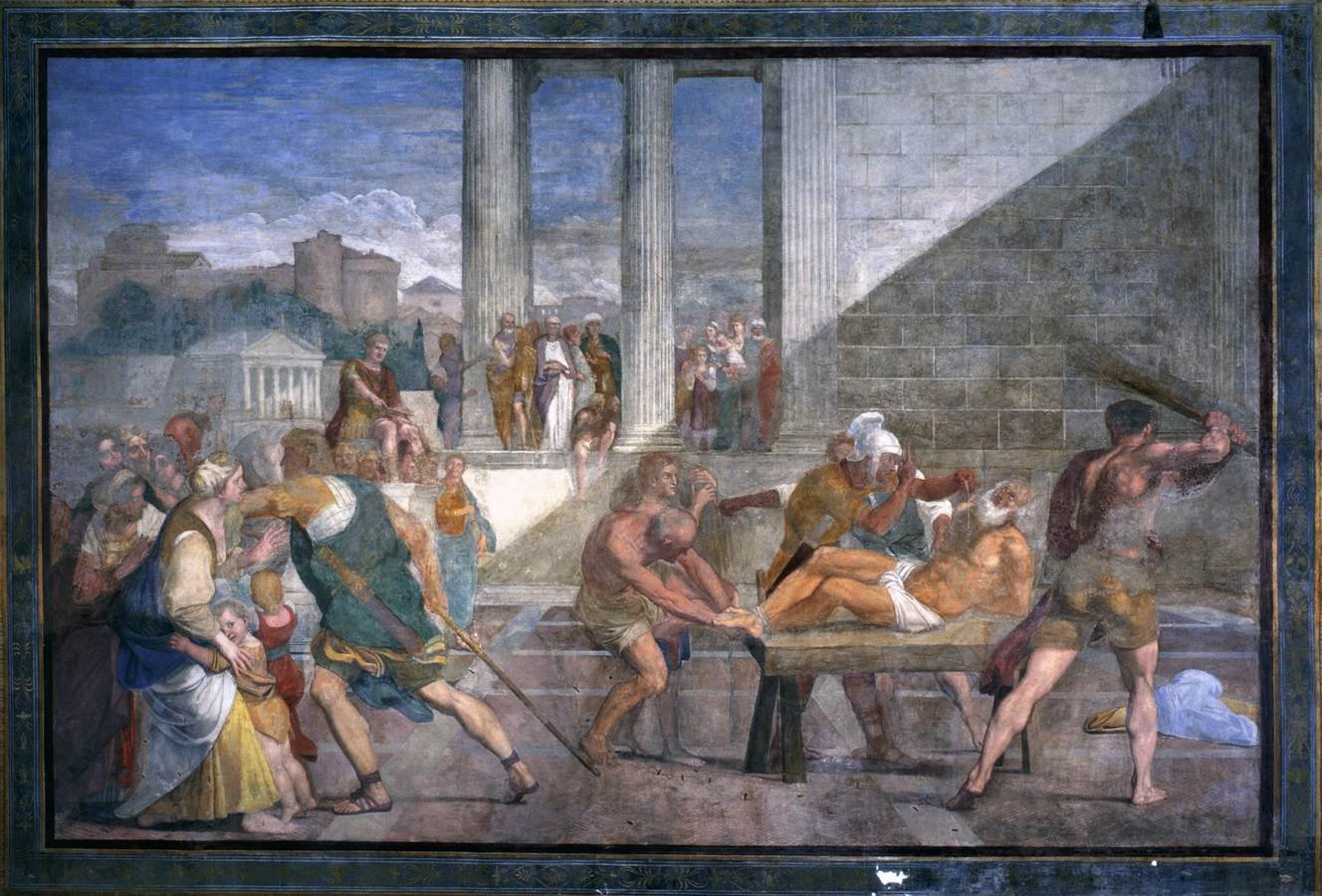
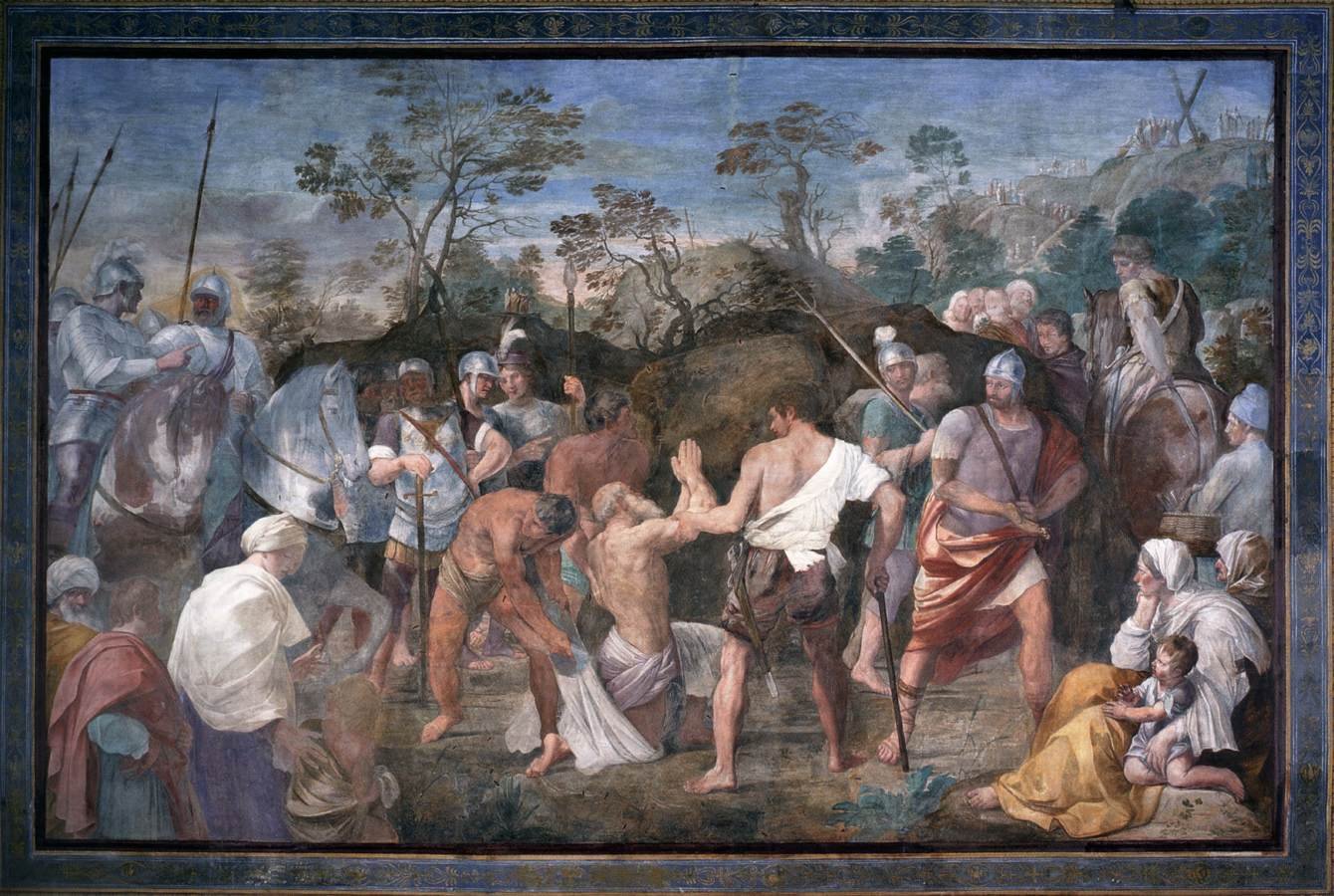
It stands on the site where the house of Saint Gregory and his mother Silvia once stood. It was also restored at the behest of Cardinal Cesare Baronio, then by Cardinal Scipione Borghese, and when the work was completed around 1608, the oratory was renovated with a series of extraordinary masterpieces created between 1602 and 1608 by the great masters of the 17th century, including Guido Reni, Domenichino, Pomarancio and Giovanni Lanfranco, as well as a wooden coffered ceiling, created by Vittorio Ronconi in 1607, which features the Borghese family crest.
Oratory of Santa Silvia
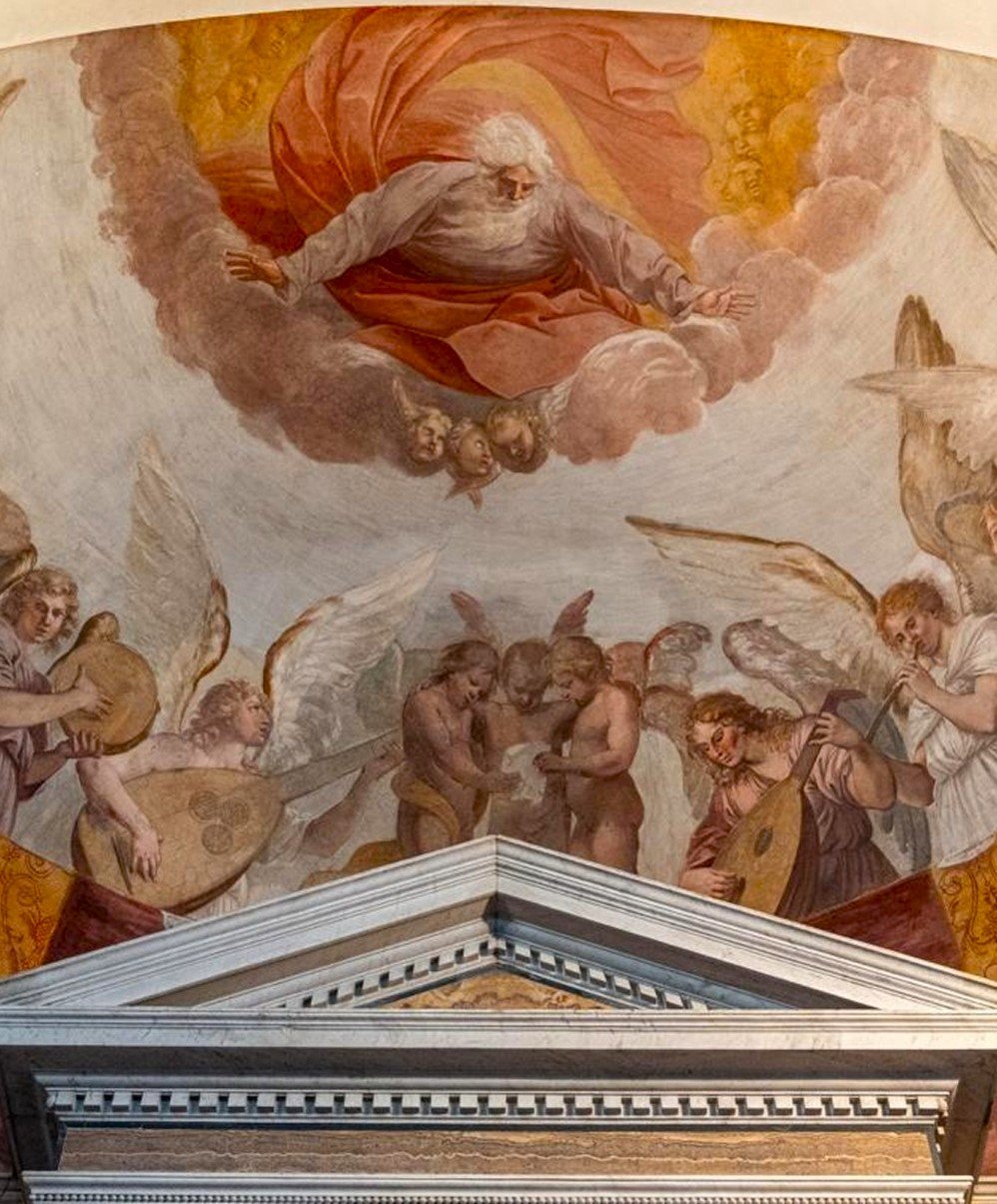
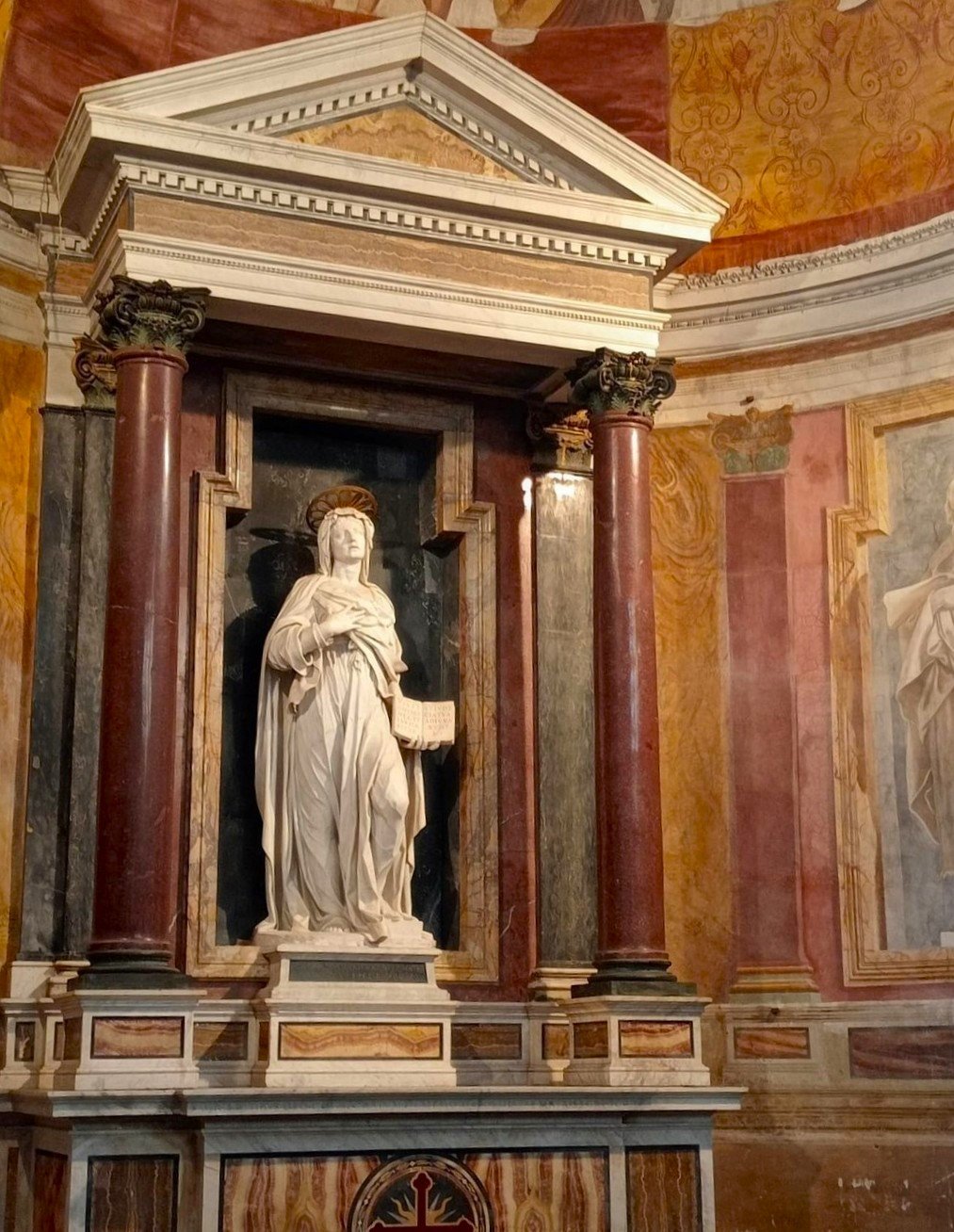
While the oratories of Santa Barbara and Sant’Andrea were built in medieval times, the one dedicated to Santa Silvia, mother of St. Gregory the Great, was erected by Cardinal Cesare Baronio in 1603, at the same time as the renovation work carried out on the other two oratories. Guido Reni was again called upon for the decorations. Together with Sisto Badalocchio, he painted an exceptional Concert of Angels on the apse dome, while the sculptor Nicolas Cordier created the statue of Santa Silvia.