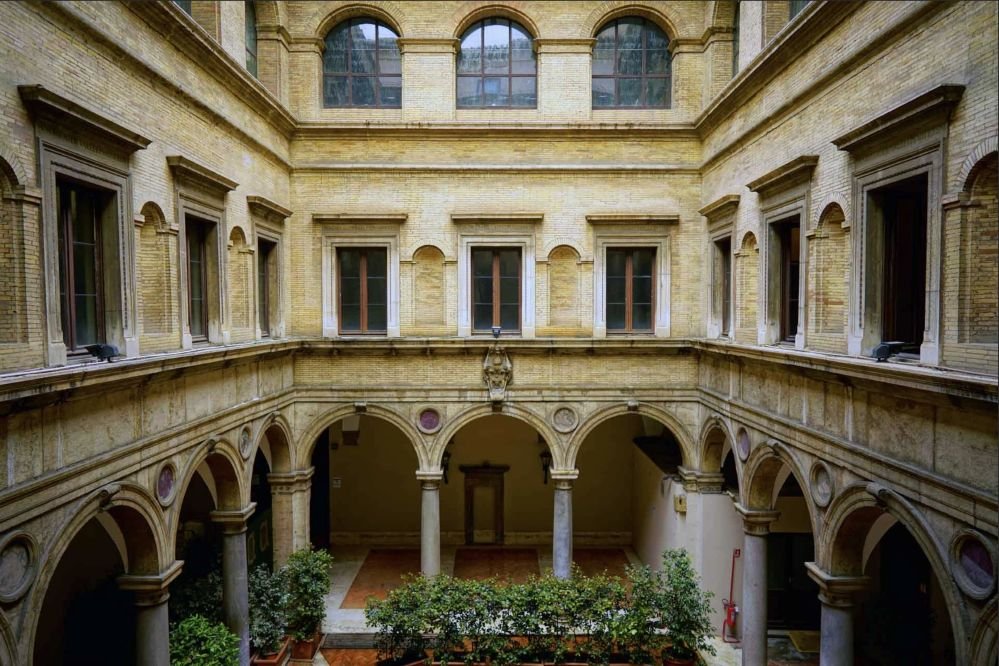
In the heart of Corso Vittorio Emanuele II, along the ancient Via Papalis, so called because it was once crossed by papal processions, lies one of the most elegant and least known noble residences of the Roman Renaissance: the evocative Palazzo della Valle. A quiet and reserved building, it tells stories of enlightened patrons and pioneering collectors who have marked the history of the city.
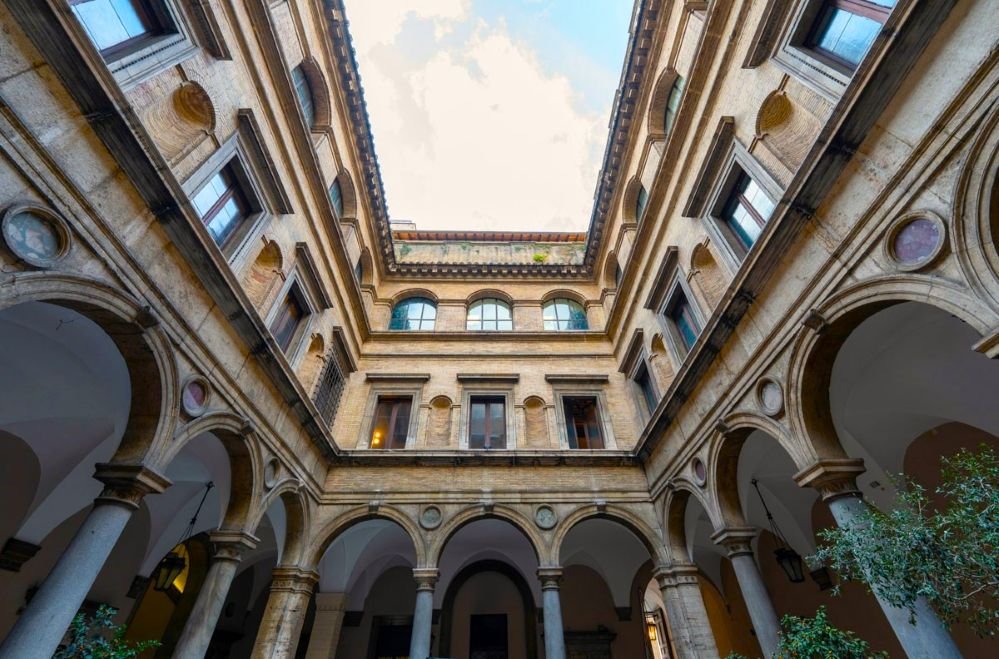
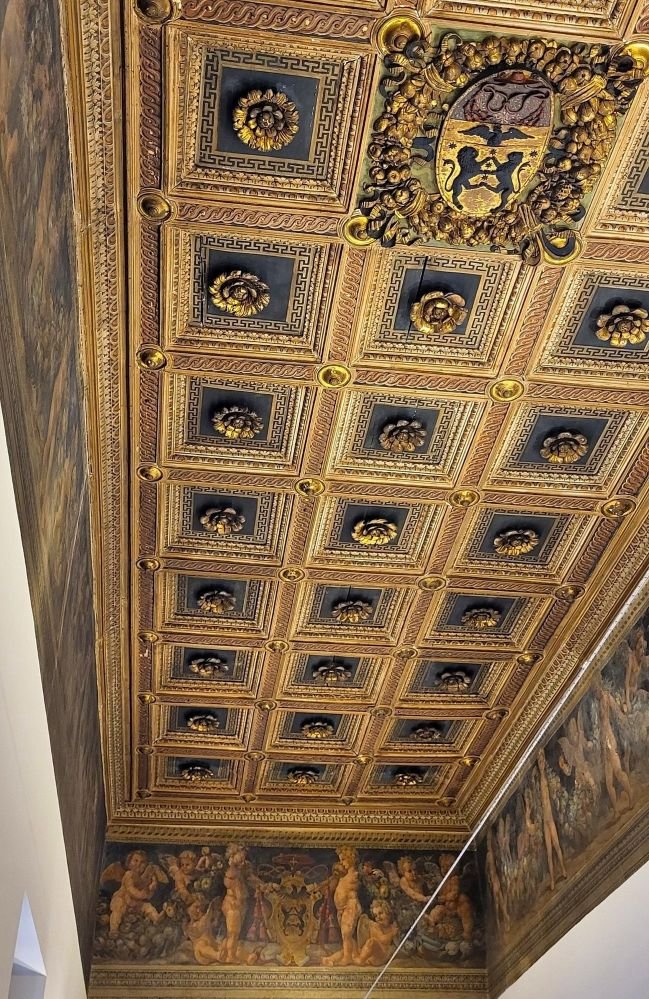
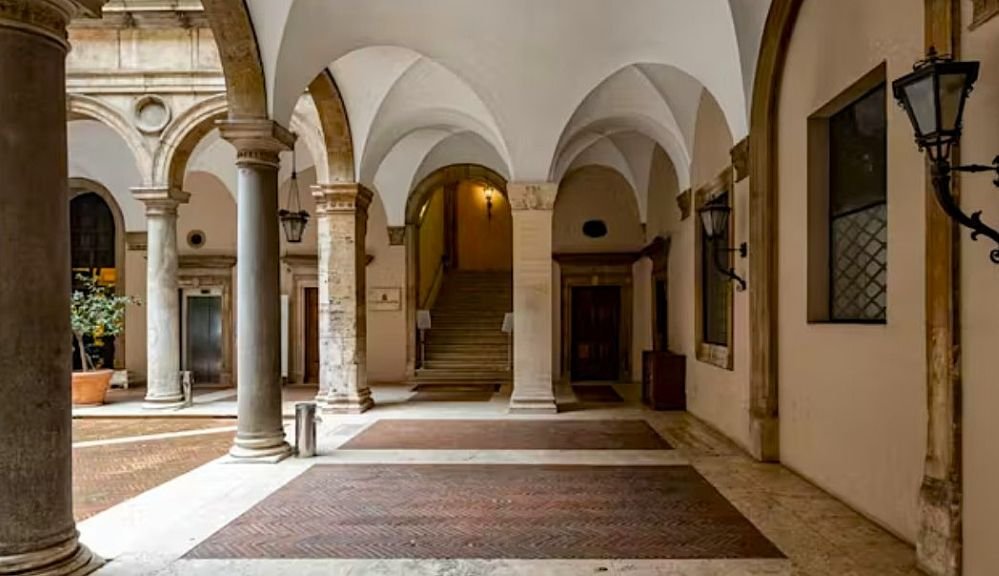
Its construction began in 1510, at the behest of Cardinal Andrea Della Valle, bishop of Crotone and Mileto, a central figure in early 16th-century Rome, famous for his passion for art and antiquity. According to Vasari, the architect responsible for the design was Lorenzo Lotti, known as Lorenzetto, an architect and sculptor, as well as a direct pupil of Raphael. The result was a noble residence of extraordinary refinement, with a slightly convex façade that elegantly follows the curve of the street, a harmonious 16th-century courtyard, and interiors decorated with frescoed ceilings and rooms of great artistic value.
In the early decades of the 17th century, the palace was enlarged and in the 18th century an additional floor was added.
After several changes of ownership, the palace came into the possession of the Del Bufalo family, who sold it to the Fascist Confederation of Merchants in 1941. The architect Carlo Forti oversaw its restoration, which restored the interior courtyard to its former glory, reopening arches and windows that had been walled up in previous centuries.
Since 1948, it has been the headquarters of Confagricoltura – the national organisation that represents and protects Italian agricultural businesses – and is rarely open to the public.
The visit is therefore a precious opportunity to access a private place where art is the real protagonist.
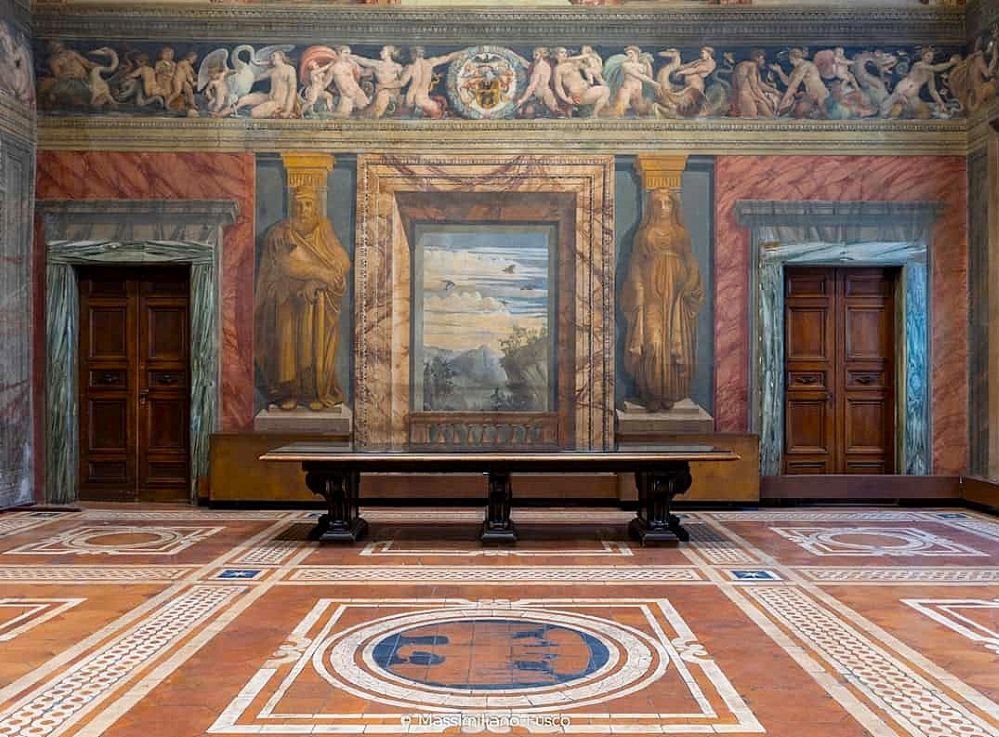
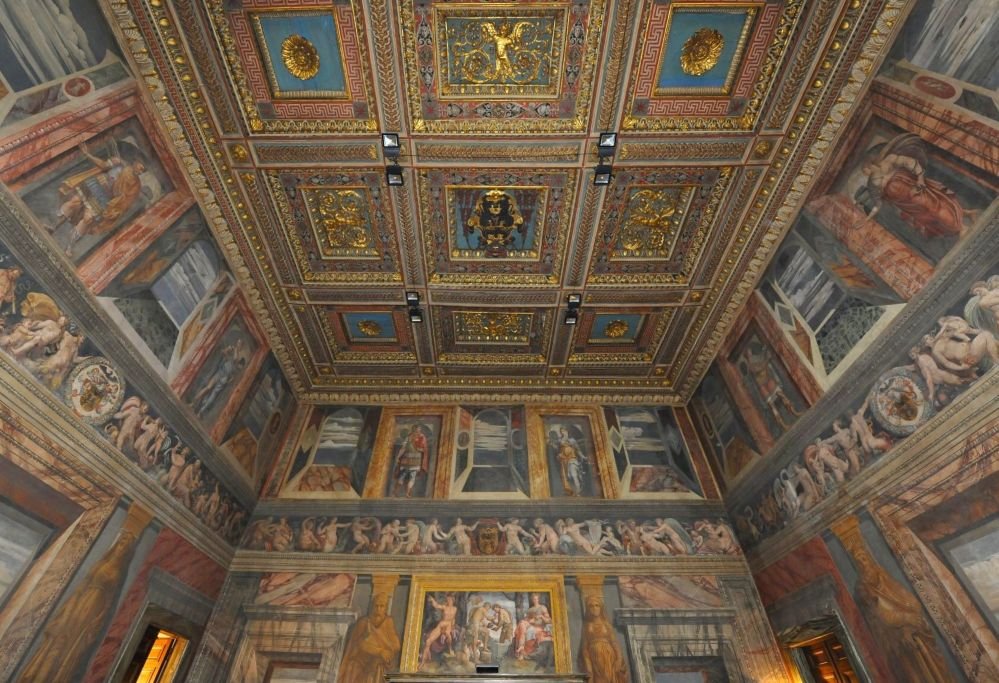
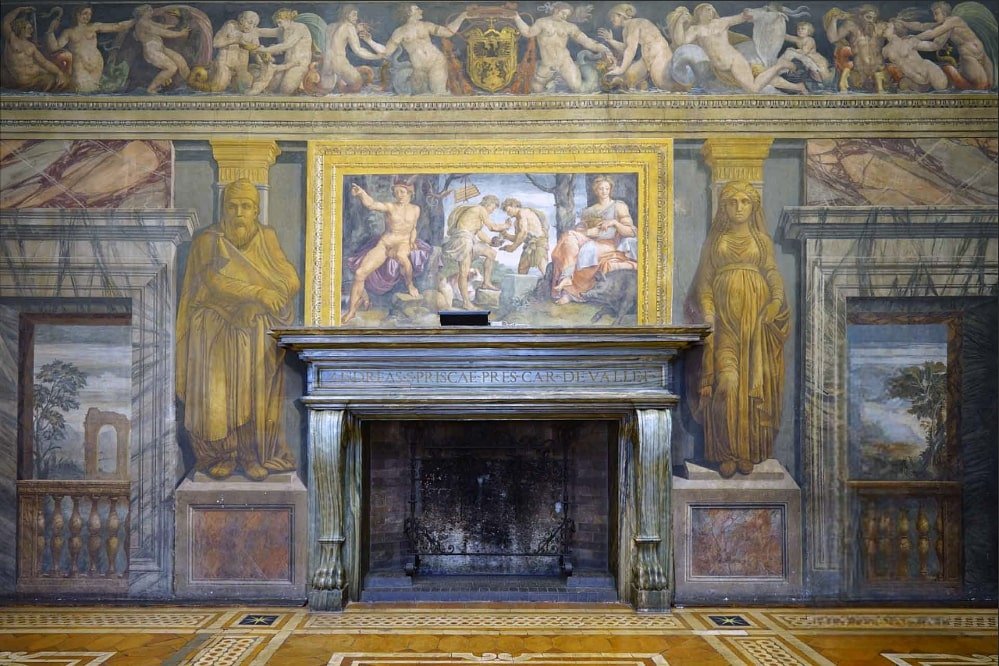
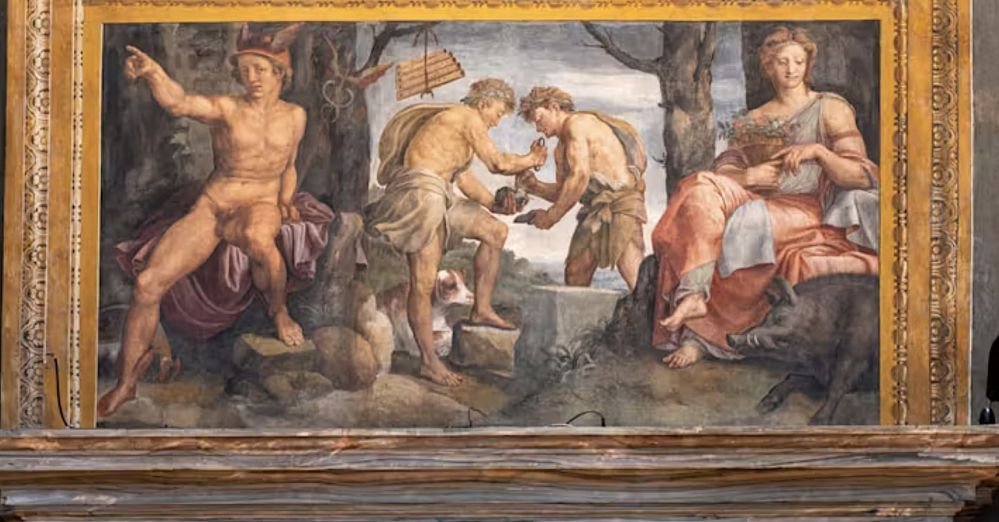
Cardinal Andrea Della Valle was one of the first collectors to exhibit and restore ancient works according to a systematic and modern approach, anticipating museum logic by centuries. As Vasari points out, he was “the first to bring together ancient objects and have them restored”, not only a collector but also a true pioneer of restoration. Statues, busts and reliefs filled the hanging garden, which soon became one of the most admired in Rome. Today, his cultural legacy lives on in the architectural and decorative details that still embellish the interior. Among these, the Sala dei Serpieri stands out, vast and spectacular, with frescoed ceilings and walls animated by views of rural landscapes with ruins, female figures and warriors, alternating with false windows that expand the space and visual impact.
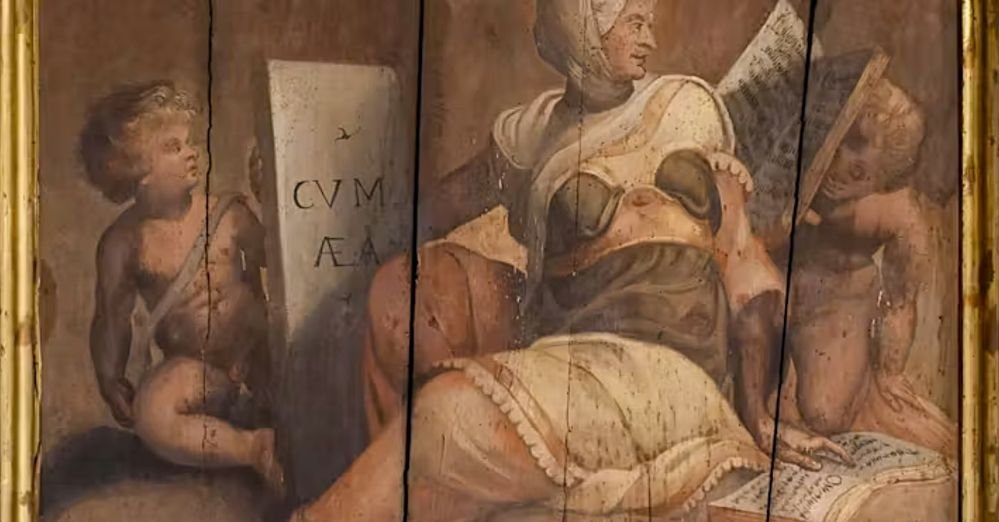
The main floor also houses other 16th-century reception rooms, which bear witness to the refined and cultured taste of its illustrious patron.
It is an encounter with a Rome that does not show itself: between art and refinement, in the silent heart of a palace that has much to tell.