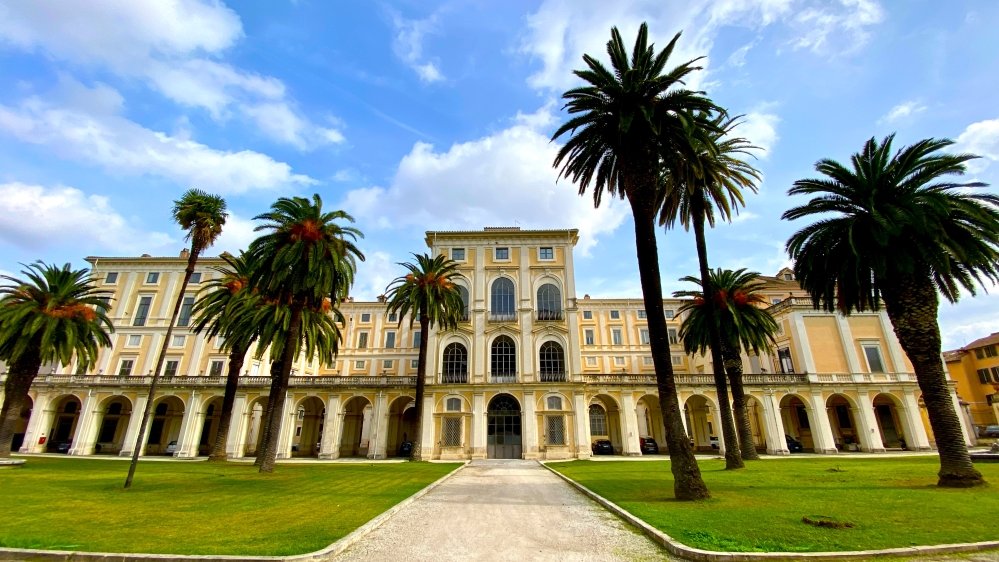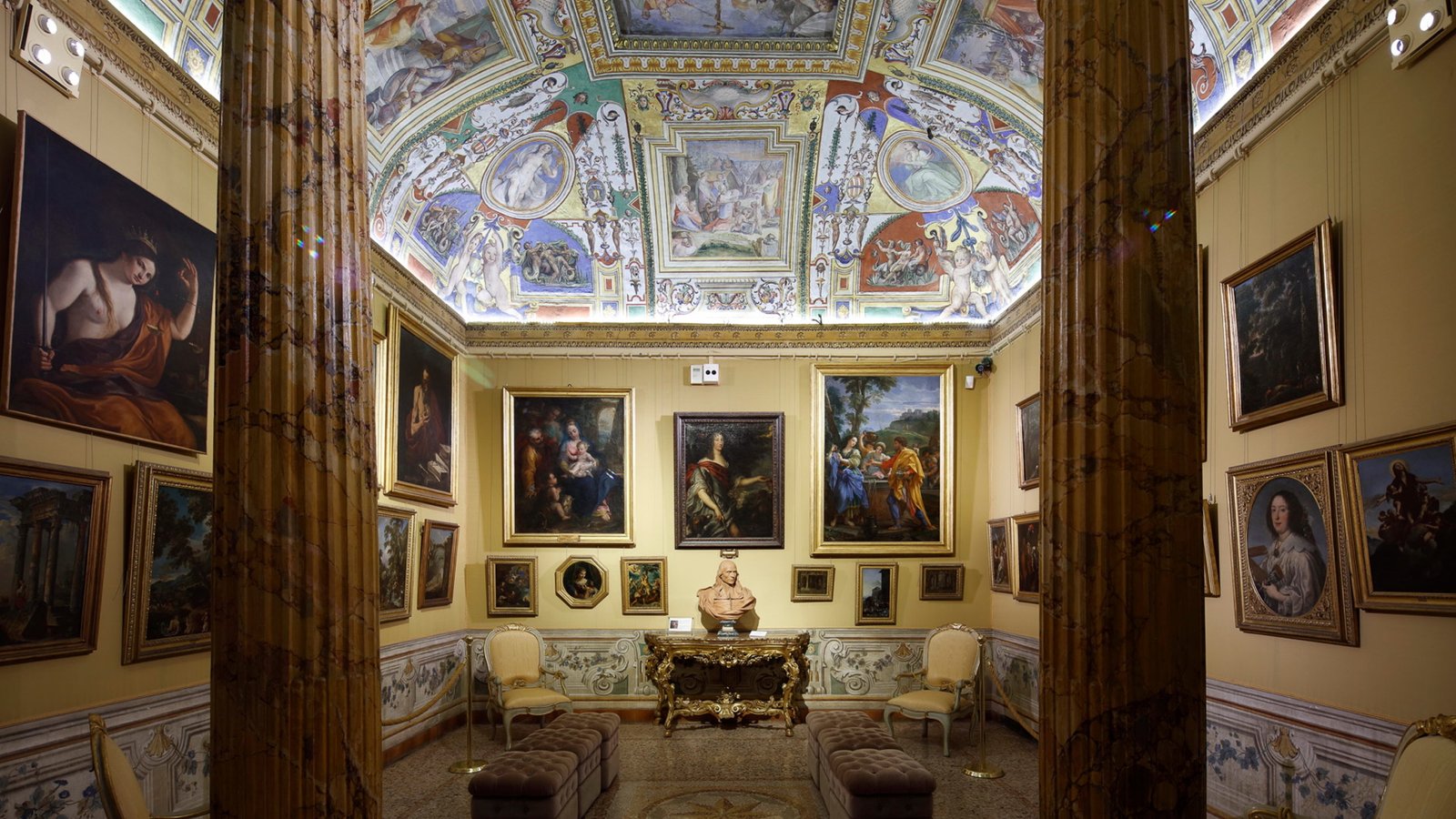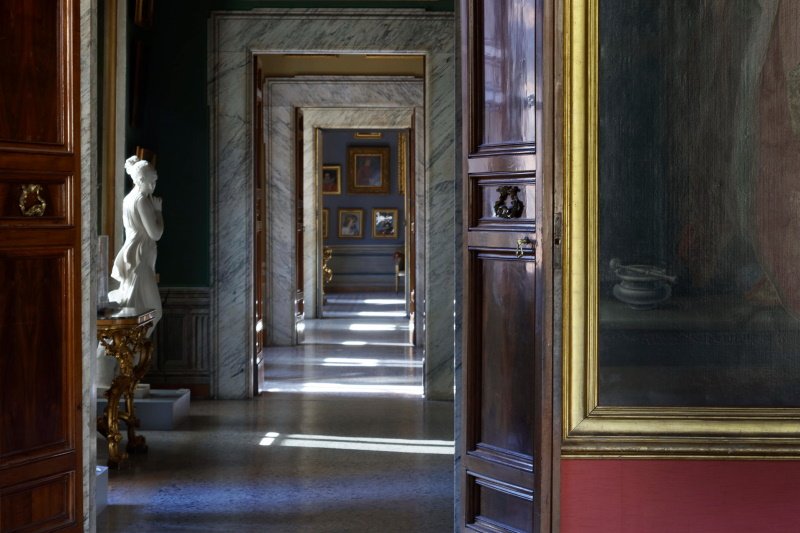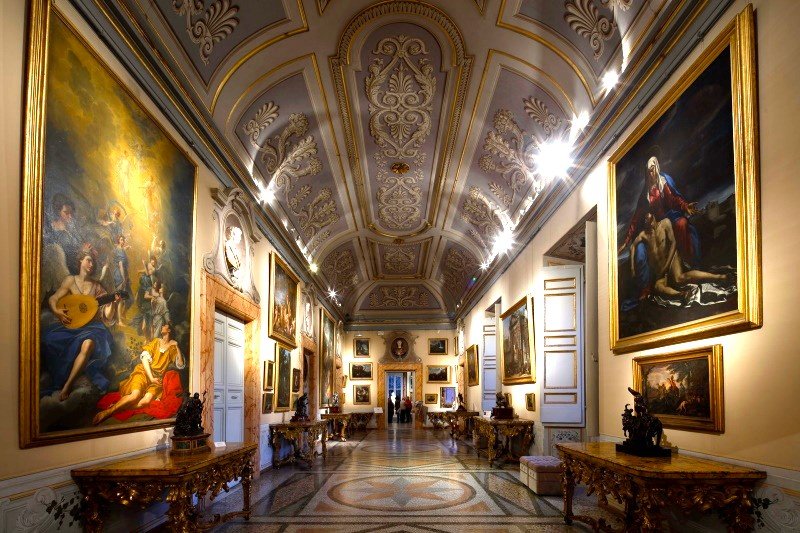
The Corsini Gallery is not only a museum that houses famous works of art; it is also the only 18th-century art collection that has remained unaltered.
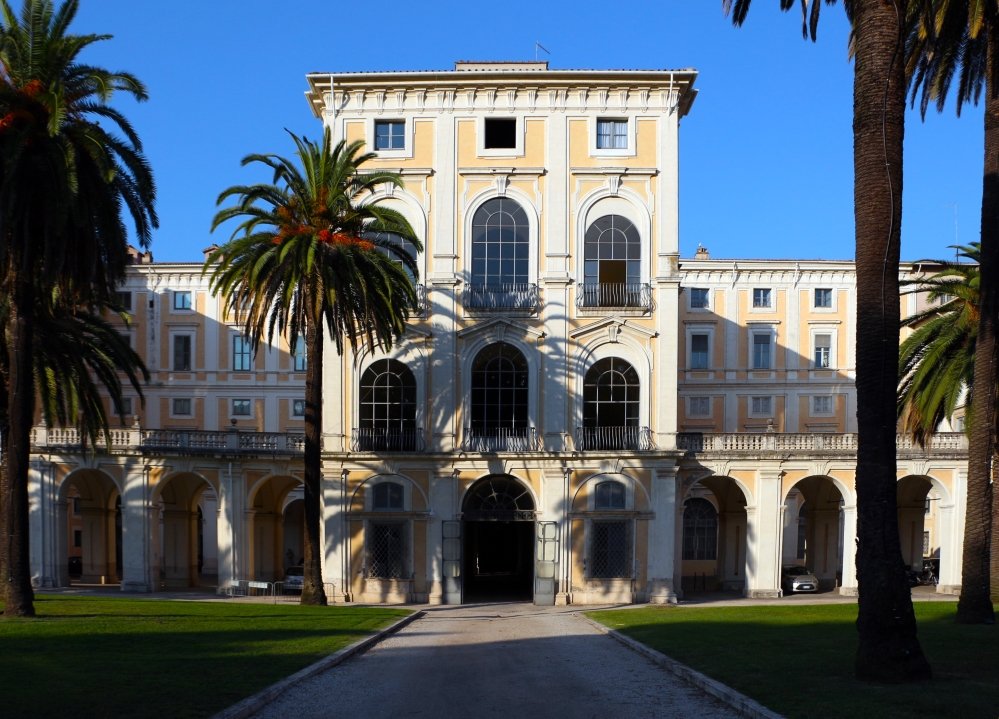
The palace was built in 1511 by Cardinal Raffaele Riario, nephew of Pope Sixtus IV della Rovere, but made history when it became the residence of Queen Christina of Sweden, who moved to Rome in 1655 after converting to Catholicism. The sovereign made her residence a circle of intellectuals and had the building altered between 1659 and 1689 to house the statue collection on the ground floor and the picture gallery on the piano nobile. The palace passed to the wealthy Florentine Corsini family in 1736, after Lorenzo, who had become Pope Clement XII, was elected to the papal throne. The Corsini commissioned the architect Ferdinando Fuga to transform the building into a veritable palace. The paintings can still be admired today exactly as they were placed in the palace in the 18th century by Cardinal Neri Maria Corsini. When Prince Tommaso Corsini sold the palace to the Kingdom of Italy in 1883, he donated the entire collection of works. In 1892, the Kingdom of Italy enriched the collection through the acquisition of the Torlonia collection, and thus the first Italian National Gallery was born, which opened its doors in 1893. Later the Chigi, Monte di Pietà and Hertz collections also converged here.
Today, in addition to the Corsini Gallery, the palace houses the Accademia dei Lincei while the garden constitutes the Botanical Garden of Rome.
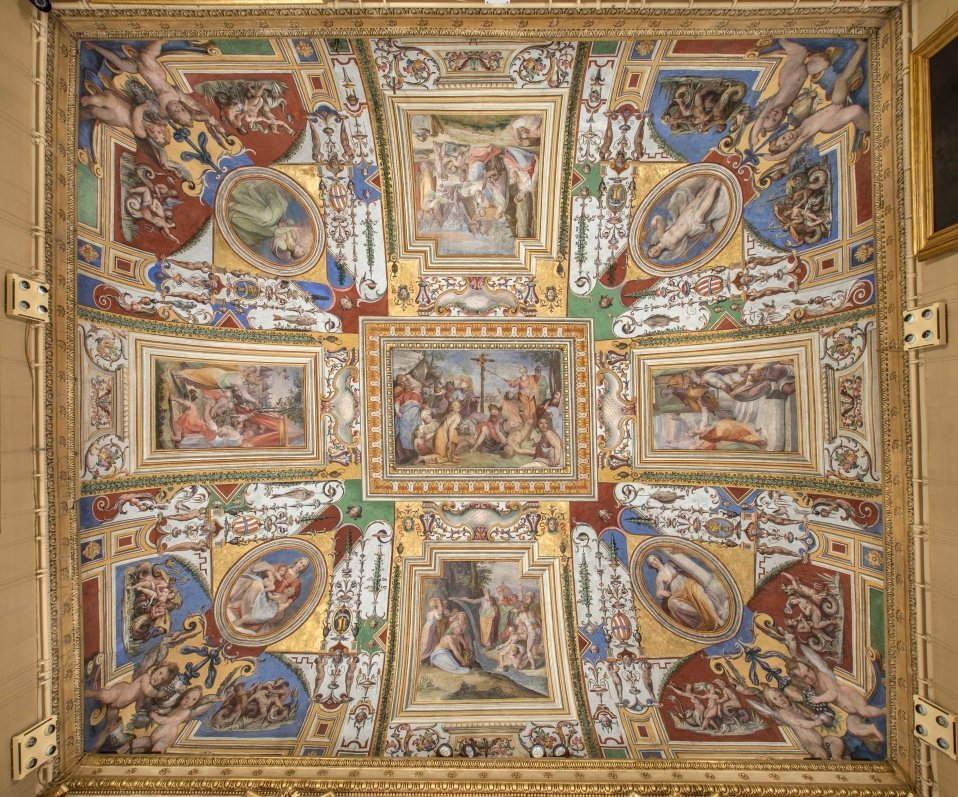
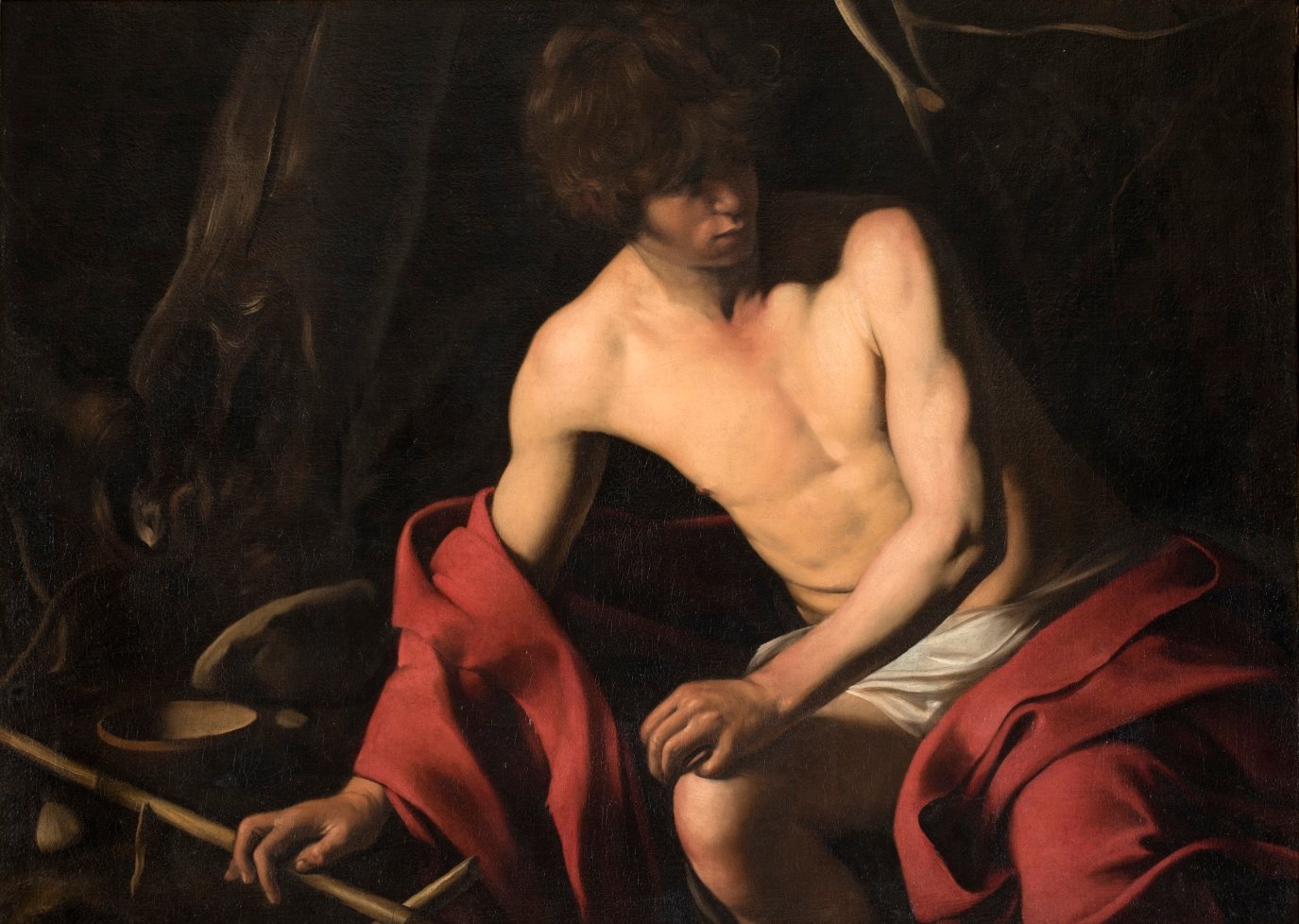
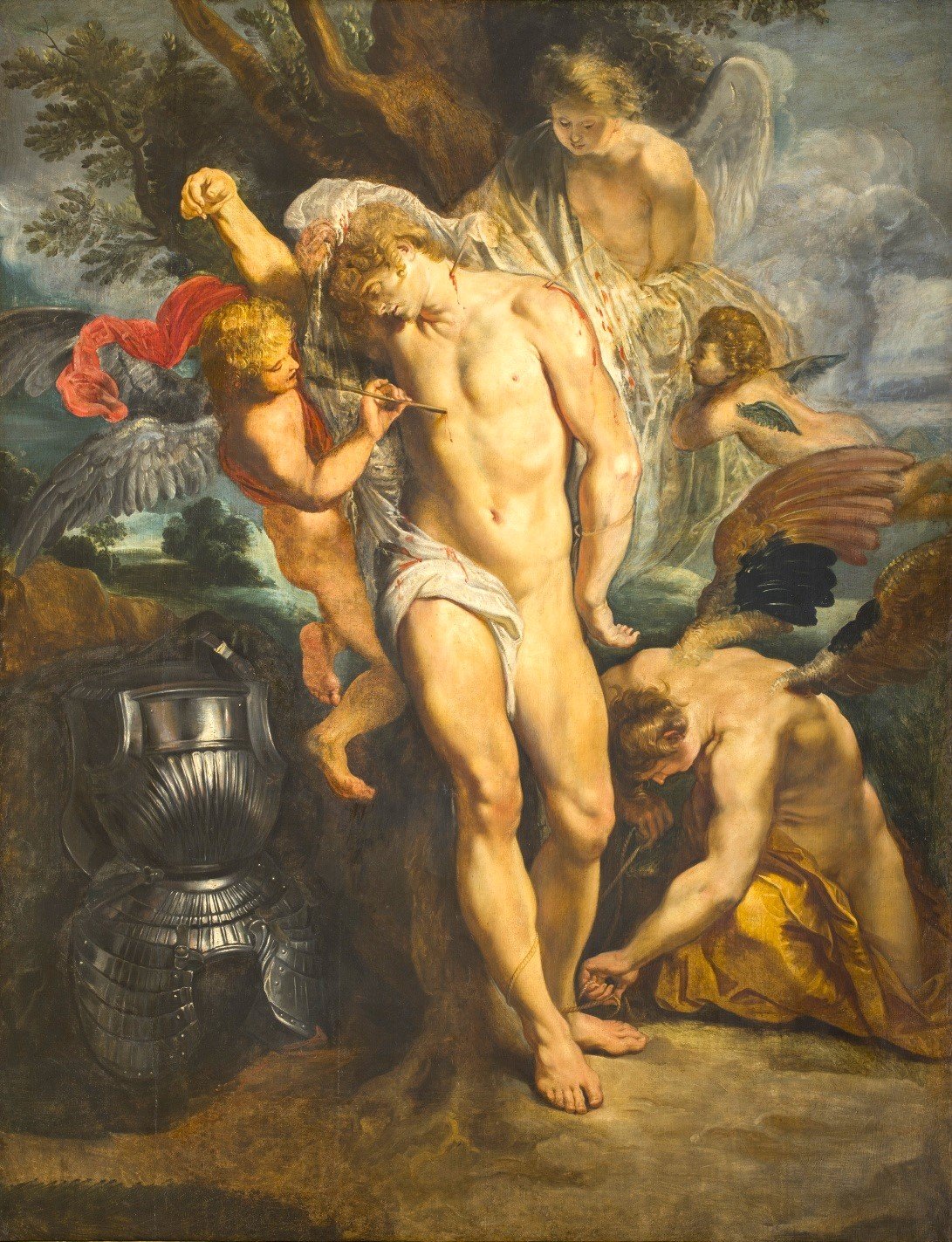
This tour leads visitors to discover the wonderful ‘Alcove of Christina of Sweden‘, with its 16th century stuccoes and frescoes, and the monumental rooms of Palazzo Corsini, which house great masterpieces of art and archaeology, including the marvellous ‘Corsini Throne’, Caravaggio’s St. John the Baptist, Beato Angelico‘s Triptych of the Last Judgement, Salvator Rosa‘s Prometheus, Rubens‘ St. Sebastian and works by other great protagonists of art history including Guido Reni, Luca Giordano, Andrea del Sarto and Jacopo Bassano.