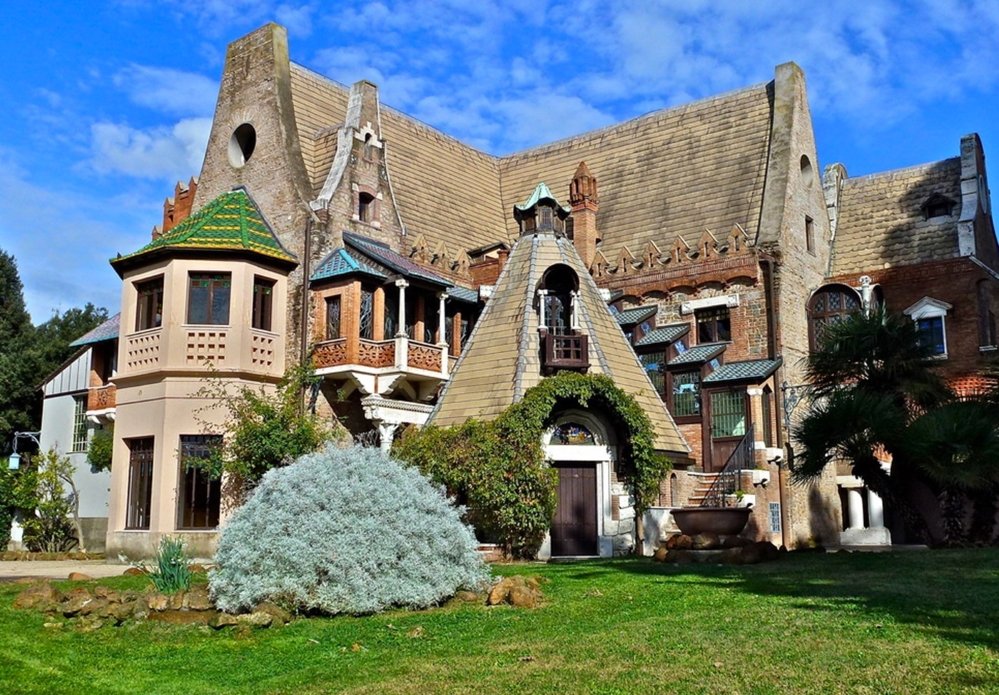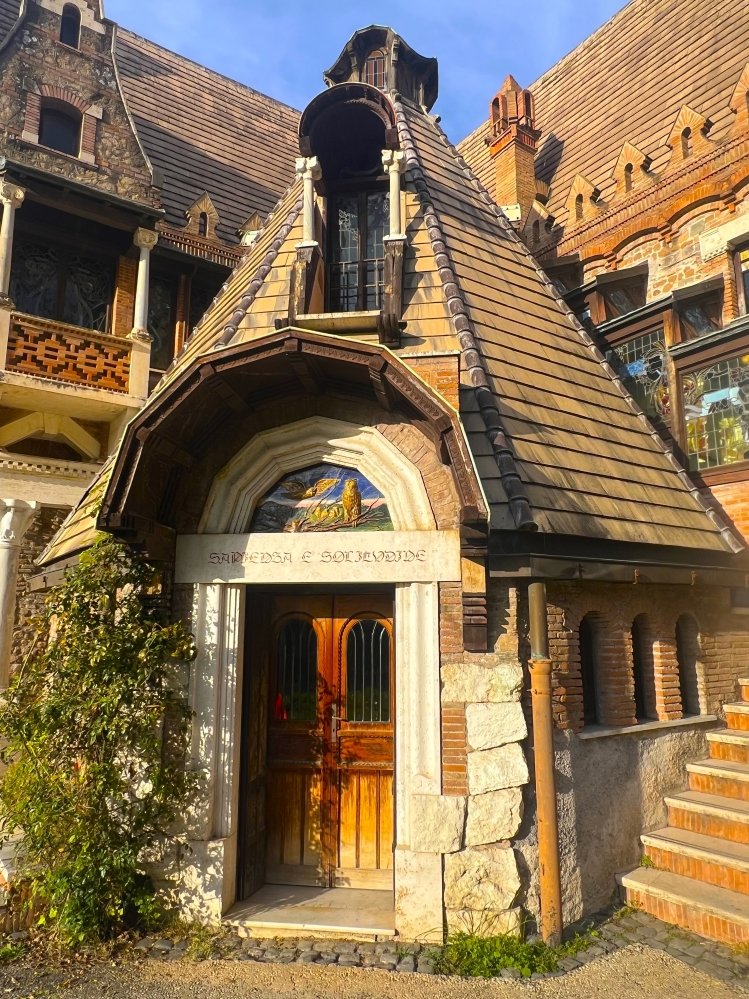
The Casina delle Civette (House of the Owls) is one of the most eclectic and mysterious buildings in all of Rome: it looks like the fairytale house we would expect to see in a fantasy film.
Immersed in the park of Villa Torlonia, it was built at the behest of Prince Alessandro Torlonia in 1840 to a design by landscape architect Giuseppe Jappelli. It originally had the appearance of a rustic mountain hut, complete with stable and cow shed, and was called the ‘Swiss Hut’. It represented a place of escape for the prince from the formal and official family residence, the Casino Nobile.
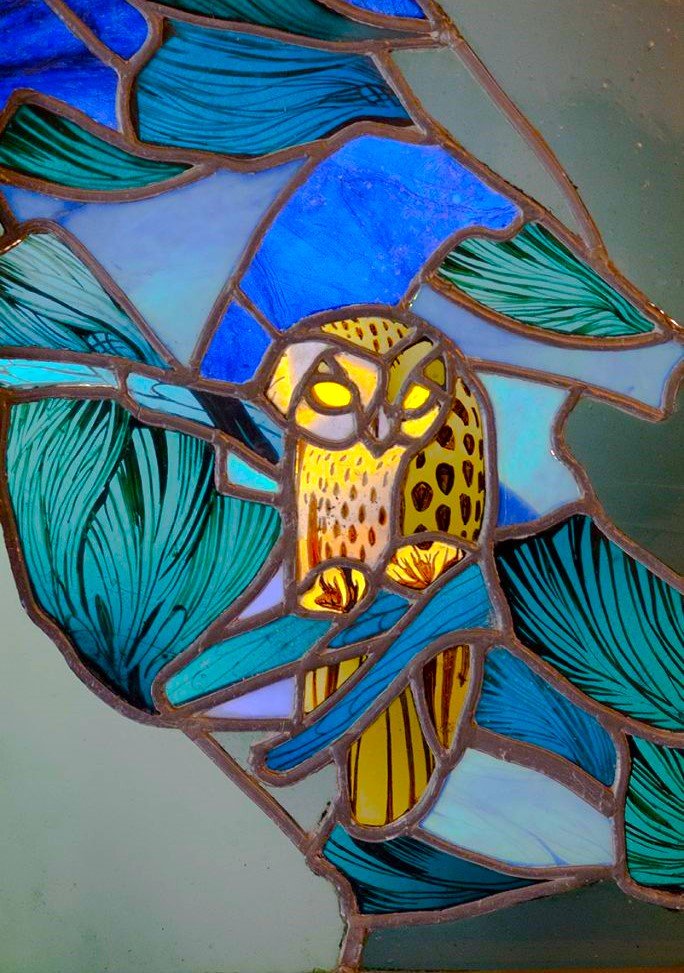
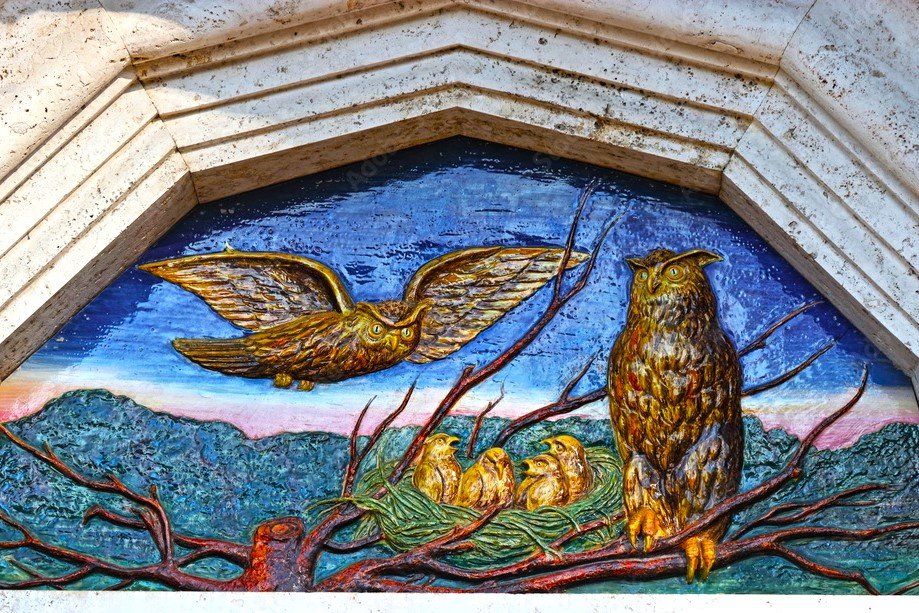
In 1908, Giovanni Torlonia Jr., Alessandro’s nephew, entrusted architects Enrico Gennari first and Vincenzo Fasolo later with a major expansion and transformation of the building, which became a refined and extravagant residence, unique in its kind, named the ‘Medieval Village’, in which neo-Gothic taste and Art Nouveau style merge; turrets, loggias and porticoes, large windows and small dormer windows, sloping roofs with yellow, green and blue majolica tiles, and polychrome stained glass windows all spring up. Even the interiors amaze with the variety of decorations and materials used: from wooden panelling to wrought iron, from wall fabrics to stucco, from mosaics to marble sculptures. Giovanni Torlonia, a misanthropic and esotericist enthusiast, filled his visionary residence with esoteric and naturalistic symbols, first and foremost the owl, present in almost every room of the house from the entrance door. Chosen by the prince precisely because of its symbolic significance, the owl had both a positive (for the Greeks and Romans, it was the representation of knowledge and wisdom) and negative (being a nocturnal predator, it was associated with darkness, nightmares and death, to the point that seeing an owl or an owl during the day was an ominous omen) meaning in ancient times. Since 1916, the building has been known as the ‘Casina delle civette’.
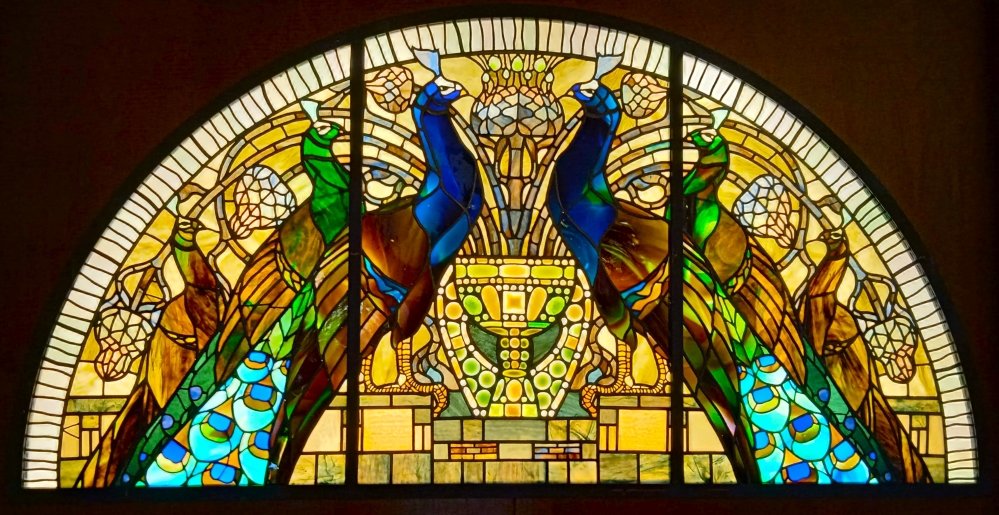
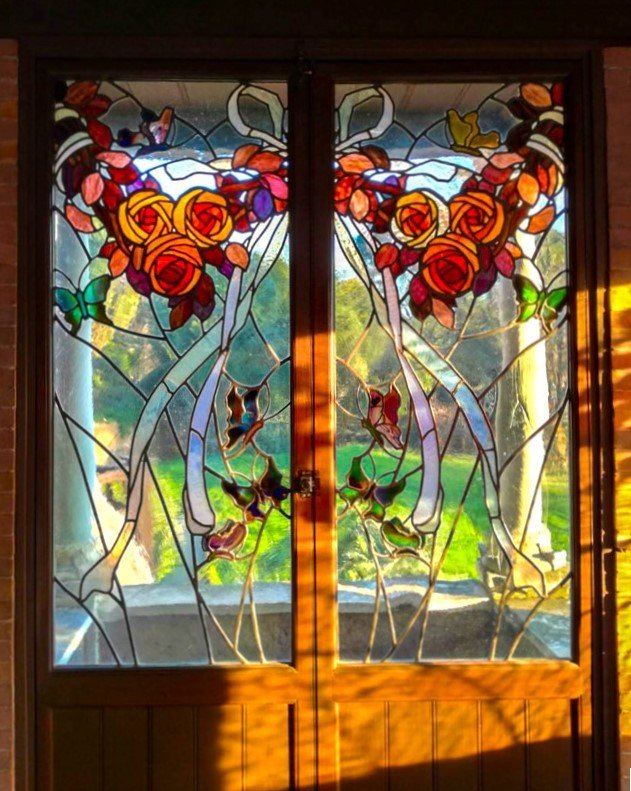
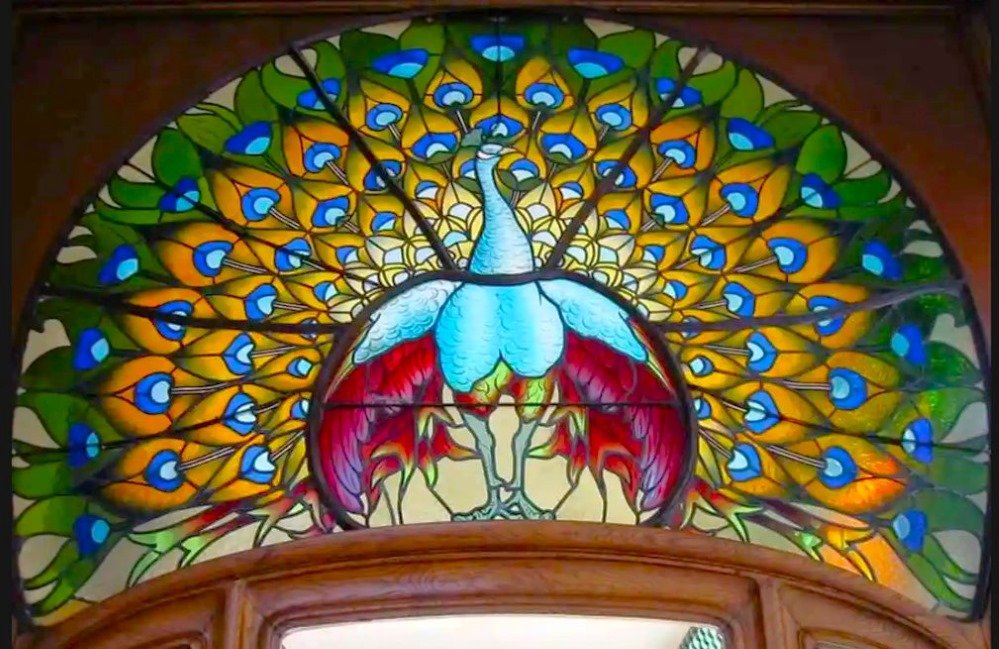
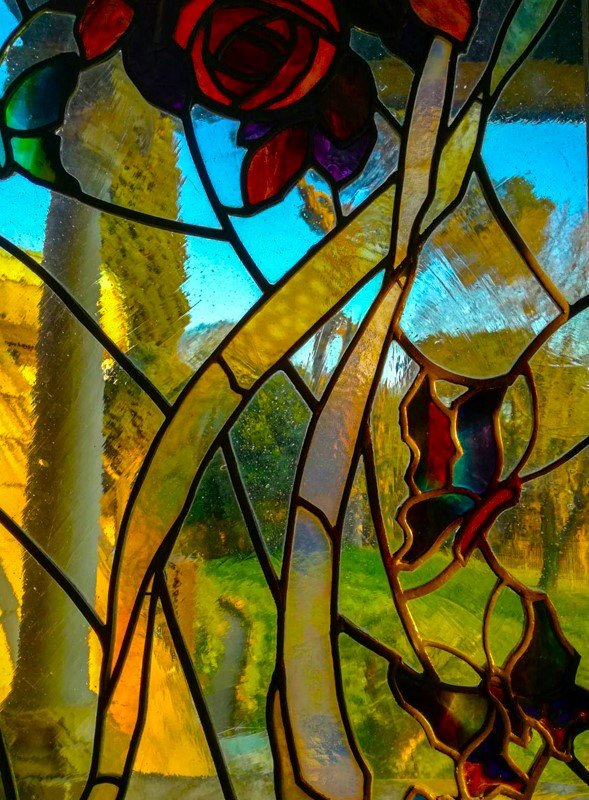
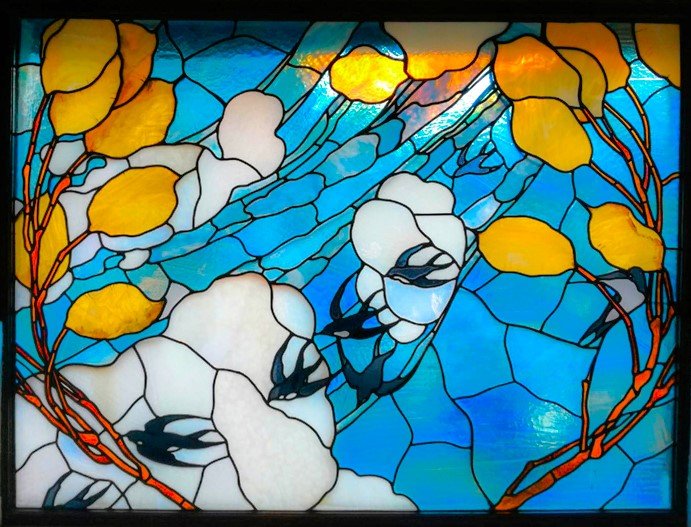
The true masterpiece of the Casina is the leaded Art Nouveau stained glass windows on a nature and fauna theme that Giovanni Torlonia had made between 1908 and 1930, in a blaze of peacocks, swans, seagulls, swallows, owls, butterflies, flowers and plants, vines and bunches of grapes, ponds and ponds: an artistic unicum on an international level consisting of no less than 72 stained glass windows produced by the famous Cesare Picchiarini workshop to designs by Duilio Cambellotti, Umberto Bottazzi, Vittorio Grassi and Paolo Paschetto, and over one hundred preparatory sketches.
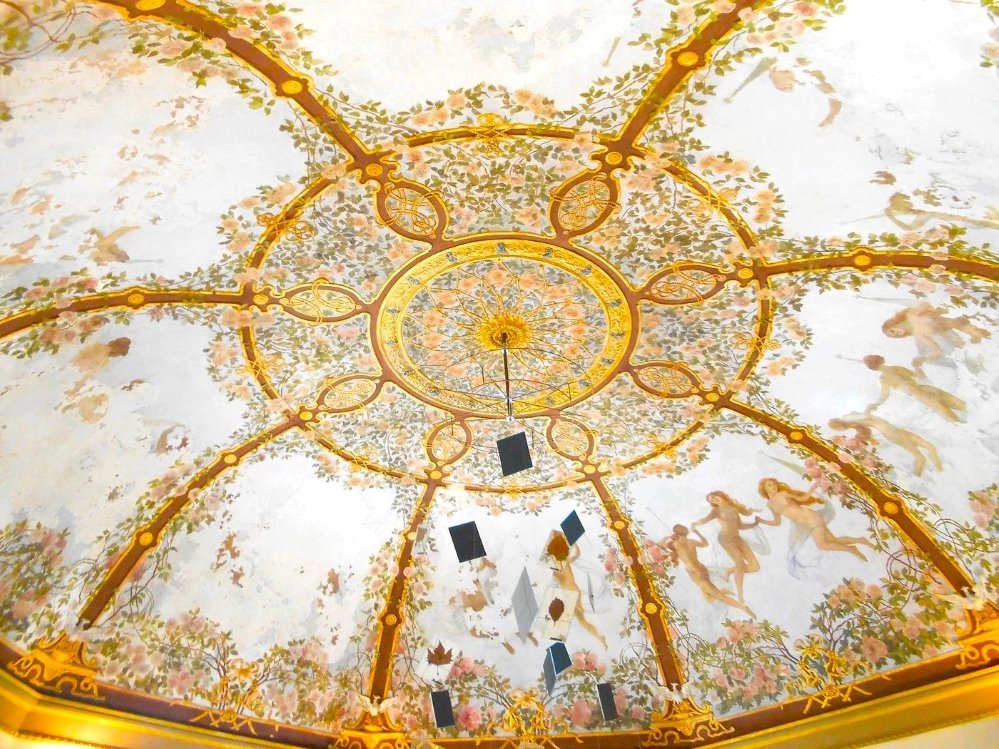
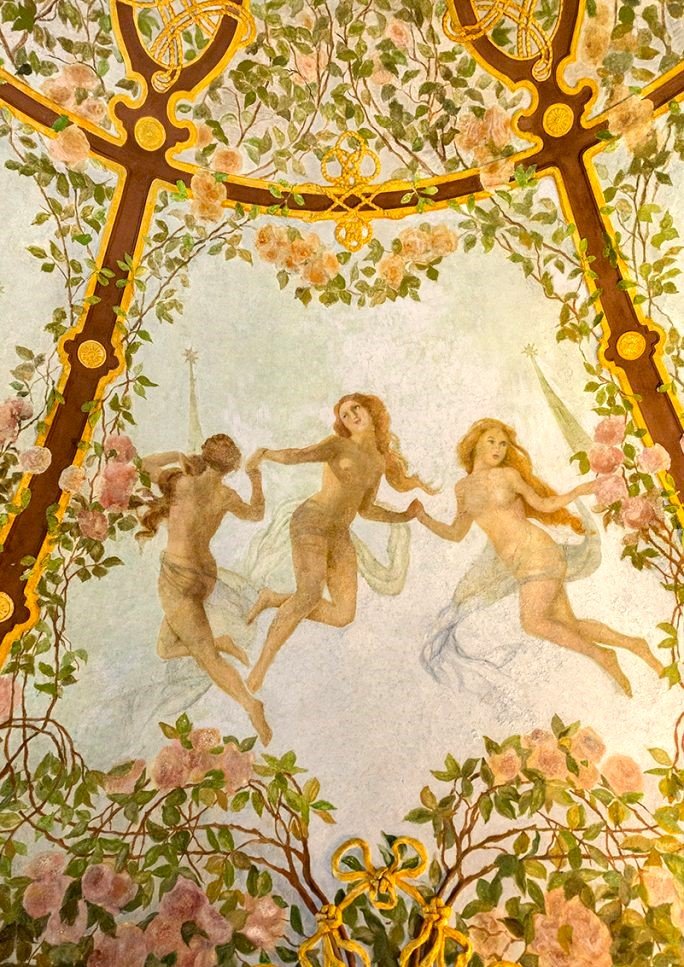
The guided tour leads to the discovery of this magical place and winds its way through the two floors of the Casina, through the many rooms including the Dining Room, decorated with refined wood panelling on the partitions, the Prince’s Room, with its ceiling decorated with a flight of bats with outstretched black wings the Guest Room known as the Stanza dei Ciclamini (Cyclamen Room) because of its delightful floor decorations, the Bathroom decorated with polychrome majolica tiles, the Salottino delle 24 ore (24-hour Lounge) with its domed vault painted by Giovanni Capranesi in 1909 and its floor decorated with a polychrome 19th-century mosaic; A covered wooden passageway then connects the Casina delle Civette to the Dipendenza, which was once used as servants’ quarters and where the stables were located, and now houses the Applied Arts Library.